How to make roasted vegetables: Cut fresh vegetables into evenly sized pieces, coat them lightly with olive oil and seasonings, then spread them across a large sheet pan. Roast at 425°F until the centers turn tender and the edges become golden brown and caramelized. Give every piece room to roast instead of steam.
In this Article
The Story & Intro
Why Roasted Vegetables Always Take Me Back to Simple Family Dinners
Some of my favorite dinners start with the sound of vegetables hitting a hot sheet pan.
I’m Abby Pinkmann, a 36-year-old chef living just outside Austin, Texas, and the founder of EAT WELL WELL. I grew up in a big, busy family where dinner rarely involved anything fancy. My mom could look through the pantry and refrigerator, pull together a few basics, and have something comforting on the table in about 30 minutes.
She taught me early that food doesn’t need a long ingredient list to bring people together.
That lesson still shapes the way I cook. How to make roasted vegetables is a perfect example. A handful of carrots, broccoli, peppers, onions, or whatever vegetables you have can turn into a colorful side dish with little more than olive oil, salt, seasonings, and a hot oven.
And the aroma tells you when something good is happening.
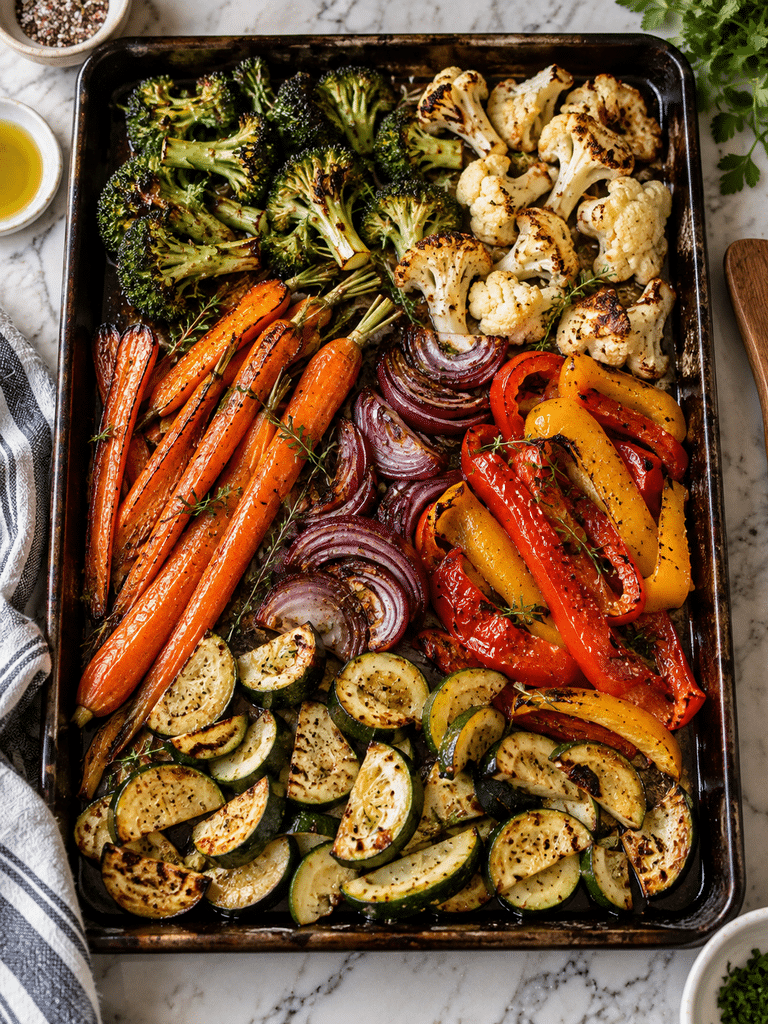
Onions become sweet and caramelized. Broccoli develops crisp, browned tips. Carrots turn tender with lightly charred edges. Garlic and herbs perfume the kitchen while the vegetables sizzle against the pan.
That contrast between a tender center and golden-brown exterior is what makes roasted vegetables so satisfying.
At EAT WELL WELL, that’s the kind of cooking I return to again and again: familiar ingredients, practical methods, and food made with care. If you’re building confidence with everyday kitchen skills, my guide to basic cooking techniques covers more simple methods you can use at home.
What Are Roasted Vegetables, and Why Does Roasting Work So Well?
Roasted vegetables are vegetables cooked with dry oven heat, usually with a small amount of oil and seasoning, until they become tender inside and browned around the edges. The method works with everything from dense sweet potatoes and carrots to cauliflower, zucchini, Brussels sprouts, bell peppers, and red onions.
Roasting matters because it changes both texture and flavor.
High oven heat removes surface moisture while the vegetables cook. Their surfaces brown, their flavors become more concentrated, and many vegetables develop sweeter, deeper notes. Instead of the soft texture you might associate with boiled vegetables, oven roasting can give you crisp edges and a tender bite.
The method also fits real-life cooking.
You can make an easy oven roasted vegetables side for a weeknight dinner, prepare a larger batch for meal prep, or roast seasonal vegetables for Thanksgiving and other gatherings. Leftovers work well in salads, grain bowls, pasta, omelets, and soups.
Most importantly, you don’t need complicated equipment. A sharp chef’s knife, cutting board, mixing bowl, rimmed baking sheet, and reliable oven will handle the job.
The technique matters more than the exact vegetable combination. Once you understand temperature, spacing, cutting size, oil, and roasting time, you can open the refrigerator and work with what you already have.
That’s when cooking vegetables in the oven becomes less of a strict recipe and more of a dependable kitchen skill.
KEY TAKEAWAYS: What You Need to Know
If you’re learning how to make roasted vegetables, focus on four things: high oven heat, even cuts, enough olive oil, and plenty of space on the pan. Roast most vegetables at 425°F and check them as they brown. The goal is a tender center with crisp, caramelized edges.
The Five Rules for Better Oven-Roasted Vegetables
Once you understand how to make roasted vegetables, the method becomes easy to repeat with whatever produce you have on hand. The vegetable may change, but the basic roasting rules stay remarkably consistent.
1. Preheat the oven completely. A hot oven helps the vegetables start roasting as soon as the sheet pan goes inside. I like 425°F for roasted vegetables because the high heat encourages good browning while giving the centers enough time to become tender.
2. Cut vegetables with cooking time in mind. Similar-sized pieces cook more evenly. However, density matters too. A one-inch piece of carrot takes longer to soften than a one-inch piece of zucchini. When you make a mixed tray, cut firm root vegetables smaller than softer vegetables.
3. Coat the vegetables with oil, but don’t drench them. Olive oil helps seasonings cling to the surface and supports that golden-brown finish we want. Toss everything thoroughly so each piece gets a light coating.
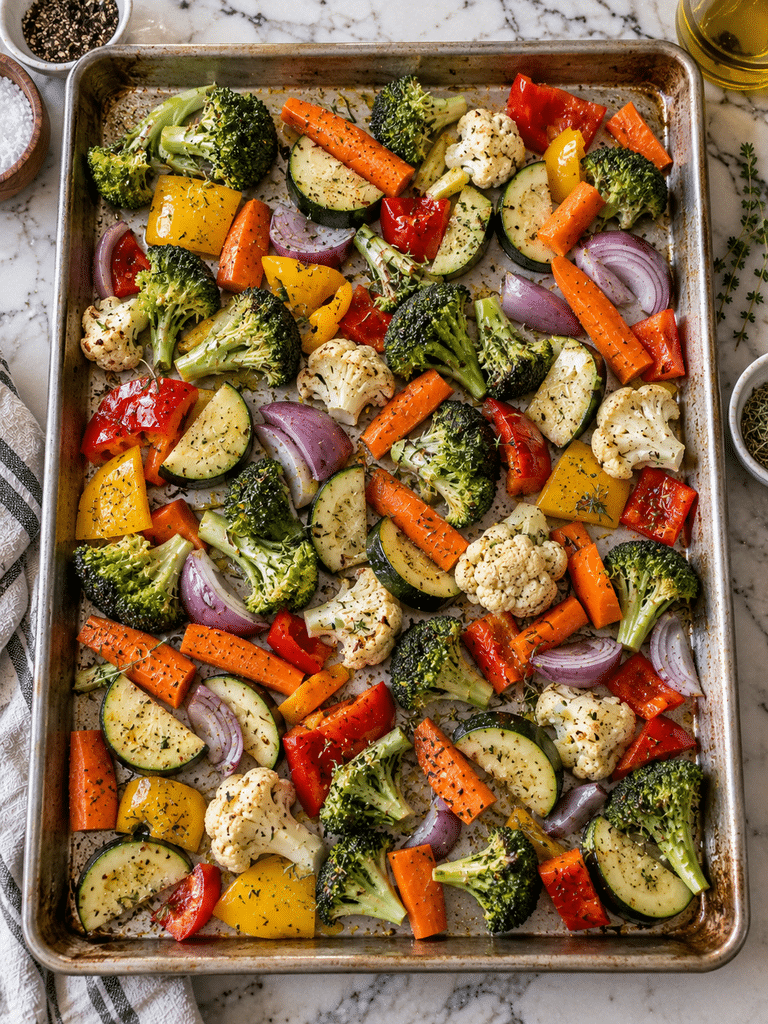
4. Give the vegetables room. This is one of the most important lessons in how to make roasted vegetables with crisp edges. Spread the pieces in a single layer rather than piling them together. When vegetables crowd the pan, moisture collects around them. You get soft, steamy vegetables instead of deeply browned surfaces.
5. Watch the vegetables, not just the timer. Roasting times provide a useful guide, but ovens and vegetables vary. Look for caramelized edges, concentrated color, and centers that feel tender when pierced with a fork.
I also check the underside of a few pieces. When carrots, cauliflower, or Brussels sprouts develop those dark golden patches where they touch the pan, you know real browning has taken place.
Roasted Vegetable Temperature and Timing at a Glance
For an easy oven roasted vegetables recipe, 425°F makes a practical starting point. Still, cooking time changes with the vegetable’s water content, density, thickness, and cut size.
These times work as a guide rather than a strict finish line. Smaller pieces roast faster. Larger or denser pieces need more time. Your oven can also run hotter or cooler than its displayed temperature.
When deciding how to make roasted vegetables together on one sheet pan, pair vegetables with similar cooking times whenever possible. Another option is to cut slower-cooking vegetables into smaller pieces or give them a head start before adding quick-cooking vegetables.
For example, carrots and sweet potatoes can start roasting before you add zucchini or bell peppers. That small timing adjustment helps everything reach the table with the texture you want.
You’ll know your roasted vegetables are ready when a fork slides easily into the thicker pieces while the edges look browned and slightly crisp. Don’t wait for every piece to look identical. Those irregular caramelized spots add savory depth and make a simple tray of vegetables much more appealing.
That balance of heat, space, oil, size, and timing sits at the heart of how to make roasted vegetables successfully. Once those basics become familiar, you can start choosing vegetables based on season, flavor, color, and what you already have in your kitchen.
What Are the Best Vegetables for Roasting?
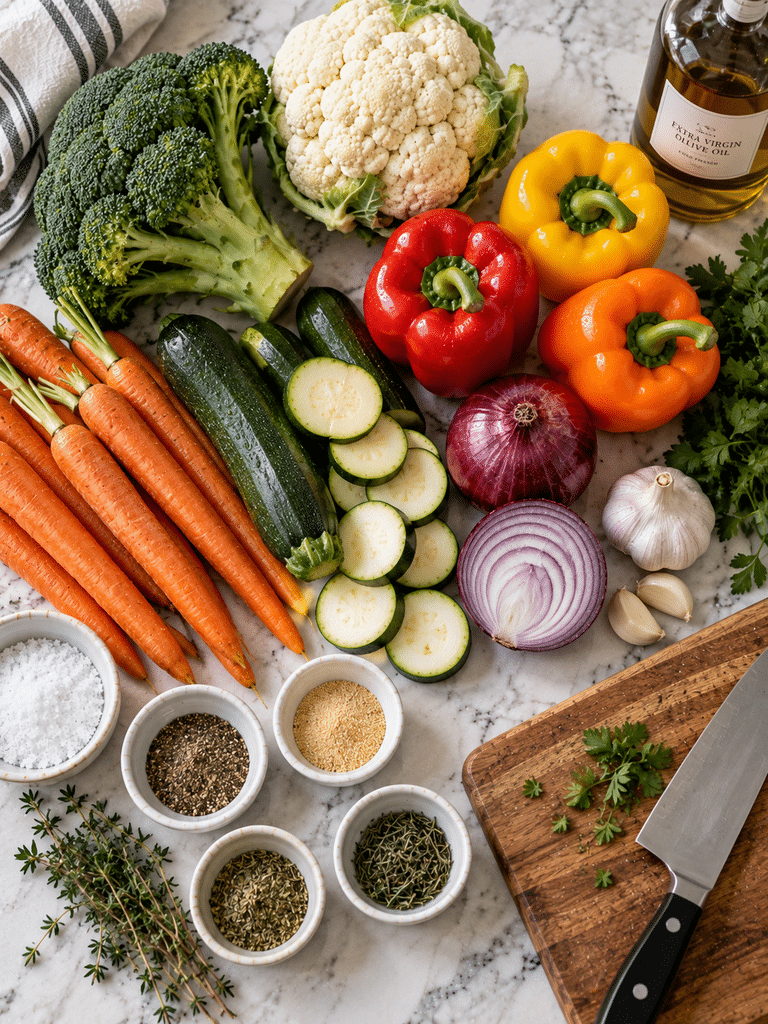
When learning how to make roasted vegetables, start with vegetables that handle high heat well. Carrots, broccoli, cauliflower, Brussels sprouts, potatoes, sweet potatoes, bell peppers, onions, and squash all roast beautifully. The key is matching vegetables with similar cooking times or adjusting their size so everything finishes together.
Which Vegetables Give You the Best Flavor and Texture?
One reason I love teaching people how to make roasted vegetables is the flexibility. You don’t need one exact combination. You can choose vegetables by season, color, texture, or simply what needs using in your refrigerator.
Root vegetables work especially well. Carrots develop sweet, caramelized edges, while potatoes turn golden outside and creamy inside. Sweet potatoes become soft and rich with browned corners.
Broccoli, cauliflower, and Brussels sprouts also love a hot oven. Their edges become crisp and deeply browned while their centers stay tender.
Bell peppers and red onions add color and natural sweetness. Zucchini, asparagus, mushrooms, and green beans cook more quickly, which makes them useful when you need an easy side without a long roasting time.
In fall and winter, I often reach for carrots, sweet potatoes, Brussels sprouts, cauliflower, and butternut squash. Spring asparagus works beautifully in the oven, while summer brings plenty of zucchini and peppers.
Which Vegetables Can You Roast Together?
The secret to how to make roasted vegetables together is matching their cooking speeds.
Dense vegetables usually need more oven time than vegetables with softer flesh or higher water content. If you put large carrot chunks beside thin zucchini slices, the zucchini may soften long before the carrots become tender.
Use this guide when planning a mixed sheet pan:
| Roasting Speed | Vegetables That Work Well Together |
|---|---|
| Faster | Zucchini, asparagus, green beans, bell peppers |
| Medium | Broccoli, cauliflower, Brussels sprouts, red onion |
| Slower | Carrots, potatoes, sweet potatoes, beets, winter squash |
You can still mix vegetables from different groups. Cut dense vegetables smaller or start them first. Add quick-cooking vegetables later.
That little adjustment makes how to make roasted vegetables in the oven much more predictable.
How to Make Roasted Vegetables in the Oven
To learn how to make roasted vegetables in the oven, wash and dry your vegetables, cut them into suitable pieces, and toss them with olive oil, salt, pepper, and seasonings. Spread them across an uncrowded sheet pan. Roast at 425°F until fork-tender with browned, crisp edges.
Ingredients and Tools You’ll Need
You don’t need much for a reliable roasted vegetables recipe. That simplicity reminds me of the way my mom cooked when I was growing up. She worked with what we had rather than turning dinner into a complicated project.
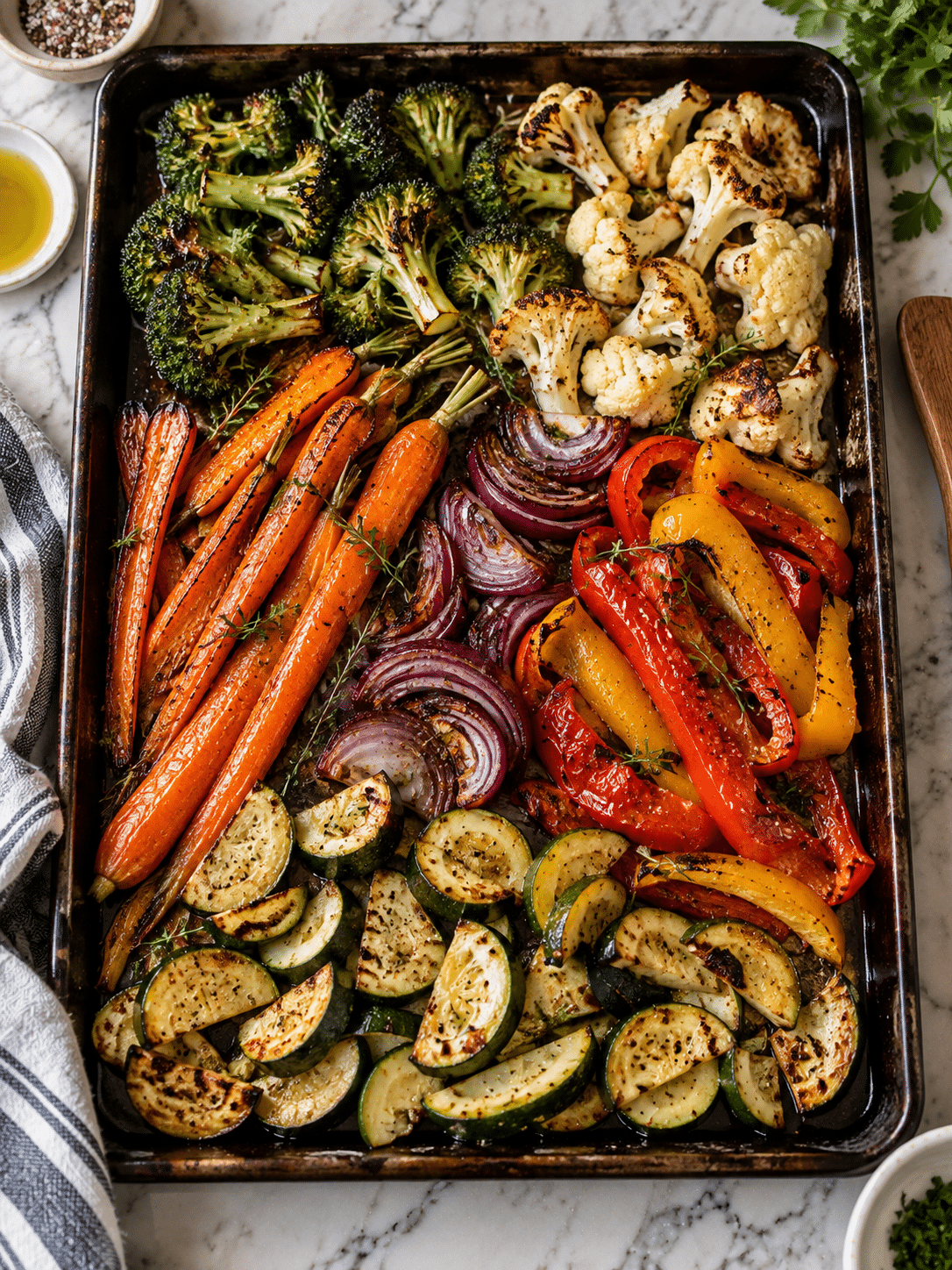
For a basic mixed tray, I use broccoli, cauliflower, carrots, bell peppers, red onion, and zucchini. You can swap those for seasonal vegetables you prefer.
You’ll also need extra-virgin olive oil, kosher salt, black pepper, and garlic powder. Italian seasoning makes an easy addition. Rosemary, thyme, paprika, cumin, chile flakes, lemon, Parmesan, or balsamic vinegar can take the flavor in another direction.
A large rimmed sheet pan matters almost as much as the ingredients. You’ll also want a sharp chef’s knife, cutting board, mixing bowl, and sturdy spatula or tongs.
If you’re building your collection of everyday cooking methods, my how-to-cook guide covers other practical kitchen skills.

How to Make Roasted Vegetables
Ingredients
Equipment
Method
- Preheat the oven to 425°F. Give it time to reach temperature before the vegetables go inside.
- Wash and dry the vegetables well. Surface moisture works against browning, so don’t leave freshly washed vegetables dripping wet.
- Cut with cooking time in mind. Keep similar vegetables reasonably uniform. Cut dense carrots and sweet potatoes smaller when roasting them beside quicker-cooking vegetables.
- Add oil and seasoning. Toss the vegetables with enough olive oil to give each piece a light coating. Add salt, black pepper, garlic powder, and your chosen herbs or spices.
- Spread them out. Arrange the vegetables in one layer. Use two pans rather than crowding everything onto one.
- Roast until browned. Depending on your vegetable mix and size, this may take roughly 20 to 40 minutes. Turn or toss the vegetables when needed so more surfaces contact the hot pan.
- Check doneness. Pierce a dense piece with a fork. It should feel tender without collapsing. Look for golden-brown edges and darker caramelized patches.
- Finish and serve. Add fresh herbs, lemon juice, Parmesan, or another finishing ingredient after roasting when appropriate.
Notes
Step-by-Step: Easy Oven Roasted Vegetables
Here’s how to make roasted vegetables using the method I return to most often.
1. Preheat the oven to 425°F. Give it time to reach temperature before the vegetables go inside.
2. Wash and dry the vegetables well. Surface moisture works against browning, so don’t leave freshly washed vegetables dripping wet.
3. Cut with cooking time in mind. Keep similar vegetables reasonably uniform. Cut dense carrots and sweet potatoes smaller when roasting them beside quicker-cooking vegetables.
4. Add oil and seasoning. Toss the vegetables with enough olive oil to give each piece a light coating. Add salt, black pepper, garlic powder, and your chosen herbs or spices.
5. Spread them out. Arrange the vegetables in one layer. Use two pans rather than crowding everything onto one.
6. Roast until browned. Depending on your vegetable mix and size, this may take roughly 20 to 40 minutes. Turn or toss the vegetables when needed so more surfaces contact the hot pan.
7. Check doneness. Pierce a dense piece with a fork. It should feel tender without collapsing. Look for golden-brown edges and darker caramelized patches.
8. Finish and serve. Add fresh herbs, lemon juice, Parmesan, or another finishing ingredient after roasting when appropriate.
That’s the core of how to make roasted vegetables. You can change the vegetables and seasoning without changing the fundamental technique.
A bright simple salad dressing can also work as a tangy finishing drizzle. For a comforting dinner, serve the vegetables alongside homemade garlic bread.
How Do You Make Perfect Roast Vegetables Instead of Soggy Ones?
Why Do Roasted Vegetables Turn Soggy?
When someone asks me how to make roasted vegetables crisp rather than soggy, I usually look at the pan first.
Crowding causes one of the biggest problems.
Vegetables release moisture as they cook. When you pack them tightly together, that moisture surrounds the food and limits surface browning. Give each piece some breathing room.
Wet vegetables can cause a similar problem. Dry them before adding oil.
Also, don’t cover the pan. You want dry oven heat around the vegetables, not trapped steam.
Uneven cutting creates another issue. Tiny pieces may burn while thick pieces remain firm. Think about density as you cut rather than making every vegetable exactly the same physical size.
Too much oil can leave vegetables greasy, while too little can produce dry surfaces. Aim for a thin, even coating.
Learning these visual cues makes how to make roasted vegetables easier than relying on a timer alone.
What Are the Best Seasonings for Roast Vegetables?
Salt, black pepper, and olive oil make a strong starting point. From there, choose seasonings that suit the rest of your meal.
For a garlic-herb version, use garlic powder, rosemary, and thyme. For Mediterranean-style vegetables, try oregano, garlic, black pepper, and fresh lemon at the end.
Smoked paprika and cumin bring warm, savory depth to carrots, cauliflower, and sweet potatoes. Parmesan tastes especially good with broccoli, zucchini, Brussels sprouts, and cauliflower.
Fresh herbs usually taste brighter when added near the end. Lemon juice also works best as a finishing touch.
Watch sugary sauces and glazes because they can darken quickly under high heat. When using a sweet balsamic glaze, I prefer adding it near the end or after roasting.
The browning that gives roasted foods much of their characteristic flavor connects with chemical reactions such as the Maillard reaction, which occurs between amino acids and reducing sugars during cooking.
Understanding how to make roasted vegetables also means handling fresh produce carefully. The USDA advises consumers to rinse fresh produce under running water before preparation; its food-safety guidance for fruits and vegetables provides additional safe-handling information.
If you enjoy the sweet, savory depth that onions develop through slow browning, my guide to making caramelized onions covers that technique in more detail.
Serving, Storage, and Frequently Asked Questions
What Can You Serve With Roasted Vegetables?
Once you know how to make roasted vegetables, they can fill far more roles than a basic dinner side.
Serve them beside chicken, fish, steak, eggs, beans, or lentils. Add them to pasta or grain bowls. Cool them slightly and toss them into a salad with a sharp vinaigrette.
They also work well on a casual grazing table. If you’re planning one, use my charcuterie board guide for ideas on arranging contrasting flavors and textures.
Leftover roasted vegetables can go into omelets, wraps, pasta, salads, and soups. If I have a few odds and ends left from dinner, I’ll often pair them with homemade soup stock and turn yesterday’s side dish into tomorrow’s lunch.
Store cooled leftovers in a covered container in the refrigerator. For the best texture, reheat them on a sheet pan in a hot oven rather than relying on the microwave. The dry heat helps bring back some of those browned edges.
Frequently Asked Questions
How to make perfect roast vegetables?
For perfect roast vegetables, preheat the oven to 425°F, cut the vegetables according to their cooking speed, coat them lightly with olive oil, and leave space around each piece. Roast until the centers become tender and the edges turn golden brown. Avoid overcrowding the sheet pan.
What are the best vegetables for roasting?
Carrots, potatoes, sweet potatoes, broccoli, cauliflower, Brussels sprouts, onions, bell peppers, zucchini, asparagus, mushrooms, and winter squash all roast well. For mixed roasted vegetables, pair varieties with similar cooking times or adjust their size so they finish together.
Do you need to boil veggies before roasting?
No. You can roast most vegetables from raw, so boiling isn’t a required step when learning how to make roasted vegetables. Parboiling can help certain dense vegetables, especially potatoes, when you want a soft interior and crisp exterior, but most mixed vegetable trays don’t need it.
What are the best seasonings for roast vegetables?
Start with olive oil, salt, black pepper, and garlic. Then try rosemary, thyme, oregano, Italian seasoning, smoked paprika, cumin, chile flakes, Parmesan, or lemon. Choose seasonings that complement the main dish rather than masking the vegetables’ roasted flavor.
Final Thoughts: How to Make Roasted Vegetables You’ll Want Again
Learning how to make roasted vegetables comes down to a few dependable habits: use a hot oven, think about vegetable density when cutting, add enough oil for an even coating, and give everything room on the sheet pan.
Then trust your senses.
Look for deep golden edges. Check the thickest pieces for tenderness. Listen for the quiet sizzle when the pan comes out of the oven. Notice the sweet, savory aroma of onions, carrots, broccoli, and garlic as their flavors deepen.
Those cues tell you more than a timer ever can.
I’m Abby Pinkmann, and this kind of cooking sits at the heart of EAT WELL WELL. Growing up, I watched my mom turn ordinary pantry and refrigerator staples into comforting meals for our busy family. She taught me that care matters more than complexity.
A colorful pan of roasted vegetables still reminds me of that lesson.
Once you know how to make roasted vegetables, you don’t really need one fixed combination. Use what’s in season. Use what your family likes. Most of all, use what you already have and roast it until the centers turn tender and those beautifully caramelized edges appear.