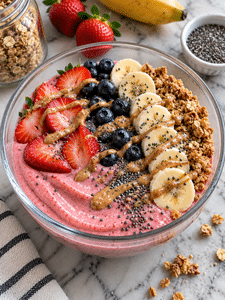
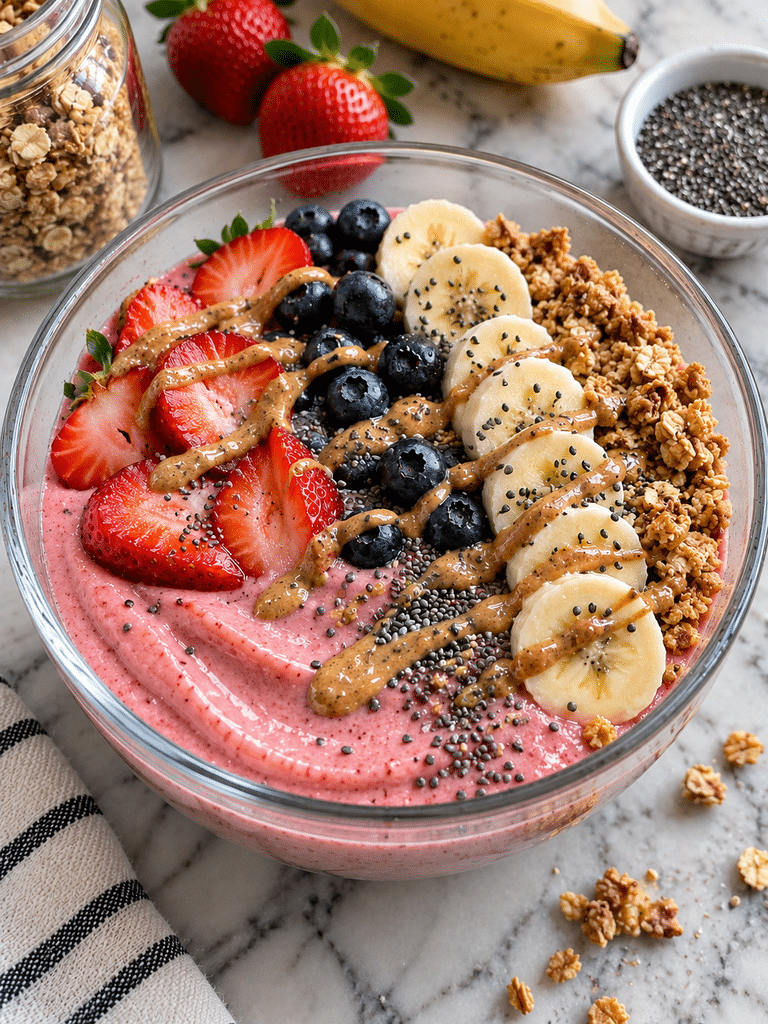
How to make a smoothie bowl: blend frozen fruit with a small splash of milk until thick, creamy, and spoonable. Start with about 2 cups of frozen fruit and 1/4 cup of liquid. Blend slowly, scrape the blender as needed, then finish your bowl with fresh fruit, granola, seeds, or nut butter.
In this Article
The Story & Intro
A warm Texas morning always makes me want breakfast that feels cold, fresh, and satisfying without keeping me in the kitchen for long. That’s where a thick smoothie bowl earns its place in my breakfast rotation.
Hi, I’m Abby Pinkmann, a 36-year-old chef just outside Austin, Texas, and the founder of EAT WELL WELL. Cooking has always been my love language. I grew up in a big, busy family, and my mom had a knack for turning whatever we had in the pantry into something comforting in about 30 minutes.
That lesson still shapes the way I cook today. Good food doesn’t need a long ingredient list. It needs ingredients that work together and a technique you can trust.
Smoothie bowls fit that philosophy perfectly.
The biggest thing I watch when making one is texture. A smoothie bowl shouldn’t run across the bowl as soon as you spoon it in. I look for a cold, creamy base that forms soft ridges when I move a spoon through it and stays sturdy enough to hold berries, seeds, and crunchy granola.
The method comes down to temperature and liquid. Frozen banana and berries give the mixture body, while a small amount of milk helps the blender blades move. Add too much liquid, though, and you’ll end up with a drinkable smoothie instead of a spoonable bowl.
That distinction matters when learning how to make a smoothie bowl at home.
A smoothie bowl is essentially a thick blended fruit base served in a bowl instead of a glass. You eat it with a spoon and add toppings for contrasting textures. Think creamy frozen fruit against juicy berries, crisp seeds, toasted coconut, or crunchy granola.
It works especially well for busy mornings, warm-weather breakfasts, snacks, or anytime you have frozen fruit waiting in the freezer. You can also change the base according to what you have. Strawberries and banana make a familiar starting point, while mango, pineapple, peaches, berries, avocado, yogurt, and nut butter open up plenty of smoothie bowl recipe ideas.
And you don’t need the fanciest blender in the kitchen.
Later, I’ll show you what to do when your blender struggles with frozen fruit, why smoothie bowls sometimes turn watery, and exactly how to rescue one that’s already too thin. We’ll also cover banana-free options, freezer prep, seasonal combinations, and a vegan smoothie bowl recipe variation.
Once you understand the basic frozen-fruit-to-liquid balance, a homemade smoothie bowl recipe becomes less about following rigid instructions and more about recognizing the right consistency.
That’s the part worth learning. Once you can spot that thick, creamy texture, you can build a bowl around whatever fruit you love.
Key Takeaways: What You Need to Know
- Start with frozen fruit. Frozen banana, mango, peaches, strawberries, and other berries help create the cold, dense texture a smoothie bowl needs.
- Keep the liquid low. About 1/4 cup of liquid for 2 cups of frozen fruit gives you a practical starting point. Add more by the tablespoon only when the blades need help.
- Watch the texture, not just the clock. Stop when the mixture looks creamy and forms soft ridges. Continued blending warms the fruit and can make the bowl thinner.
- Don’t rush to add more milk. When frozen fruit stops moving, switch off the blender, scrape the sides, reposition the fruit, and blend again before adding liquid.
- You can make it without banana. Frozen mango, peaches, avocado, yogurt, or a combination of thick frozen ingredients can replace banana.
- You don’t need a high-speed blender. Smaller frozen fruit pieces, short blending bursts, and patient scraping can help a standard blender handle the mixture.
- Prep the fruit, not the finished toppings. Portion frozen-fruit combinations ahead of time, then blend and garnish when you’re ready to eat.
- Change the bowl with the season. Berries work beautifully in summer-inspired bowls, while pumpkin, banana, cinnamon, apple, and nut butter bring warmer fall flavors.
- A vegan bowl is simple. Use plant milk or plant-based yogurt and finish with fruit, seeds, nuts, coconut, or nut butter.
What Do You Need to Make a Smoothie Bowl?
A basic smoothie bowl needs frozen fruit, a small amount of liquid, and toppings. Start with about 2 cups of frozen fruit and 1/4 cup of milk. Banana adds creamy body, but it isn’t essential. Nut butter, yogurt, seeds, and spices can add flavor and texture.
The Simple Smoothie Bowl Ingredient Formula
When I build a smoothie bowl, I think about what each ingredient contributes rather than adding ingredients just because they sound good together. The fruit creates the structure. The liquid gets the blades moving. Everything else should have a reason for being there.
For a straightforward homemade smoothie bowl recipe, start with 2 cups of frozen fruit and about 1/4 cup of liquid. That small amount of liquid matters. You can always add another tablespoon, but removing excess milk after the bowl turns runny becomes much harder.
Frozen banana makes an especially useful base because it blends into a smooth, soft-serve-like consistency. Very ripe bananas also bring more natural sweetness. Slice them into small pieces before freezing so your blender has less work to do.
Strawberries, blueberries, raspberries, mango, pineapple, and peaches can all join the base. For a banana-free bowl, I like the idea of pairing a naturally creamy frozen fruit, such as mango or peach, with berries rather than relying on berries alone. Frozen avocado can add another creamy element without giving the bowl a strong fruit flavor.
Then choose your liquid. Almond milk, oat milk, soy milk, coconut milk, or dairy milk can all work. The amount has a bigger effect on consistency than the particular milk you choose.
Greek yogurt can add a tangy, creamy texture, while plant-based yogurt works well when you want a vegan smoothie bowl recipe. Peanut butter and almond butter add richness and a nutty flavor. Chia seeds, hemp hearts, cinnamon, vanilla, cocoa powder, or protein powder can also change the finished bowl without requiring a completely different method.
Here’s the basic formula I keep in mind:
| Topping | Texture & Best Pairing |
|---|---|
| Fresh berries | Juicy and bright; pairs well with banana, vanilla, and yogurt bases |
| Granola | Crisp and crunchy; works with nearly any fruit base |
| Chopped nuts | Firm and nutty; especially good with banana, cocoa, and berries |
| Coconut flakes | Light and chewy-crisp; pairs naturally with mango and pineapple |
| Nut butter | Rich and creamy; pairs well with banana, berries, and cocoa |
| Banana chips | Dry and crisp; adds contrast to berry and banana bowls |
If quick breakfasts appeal to you, my overnight chia is another make-ahead option that uses simple ingredients and very little morning prep.
What Are the Best Smoothie Bowl Toppings?
The best toppings give a smoothie bowl contrast. A cold, creamy base tastes more interesting when every spoonful can pick up something crisp, juicy, chewy, or crunchy.
Fresh strawberries, blueberries, raspberries, kiwi, mango, and banana bring bright color and juicy texture. Granola adds crunch, while chopped almonds, walnuts, pecans, or pumpkin seeds give the bowl a firmer bite.
Chia seeds, hemp hearts, cacao nibs, and unsweetened coconut flakes work well in smaller amounts. A drizzle of peanut or almond butter gives the surface a creamy finish and deeper flavor.
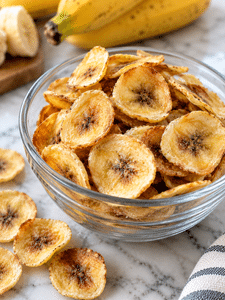
Banana chips also add a crisp contrast to the soft base. If you want to prepare your own, EAT WELL’s guide to making banana chips walks through the process.
I don’t like piling on toppings simply for appearance. Too many can bury the fruit flavor and make the bowl awkward to eat. Instead, I aim for a few distinct textures: something fresh, something crunchy, and one richer finishing ingredient.
| Topping | Texture & Best Pairing |
|---|---|
| Fresh berries | Juicy and bright; pairs well with banana, vanilla, and yogurt bases |
| Granola | Crisp and crunchy; works with nearly any fruit base |
| Chopped nuts | Firm and nutty; especially good with banana, cocoa, and berries |
| Coconut flakes | Light and chewy-crisp; pairs naturally with mango and pineapple |
| Nut butter | Rich and creamy; pairs well with banana, berries, and cocoa |
| Banana chips | Dry and crisp; adds contrast to berry and banana bowls |
The goal isn’t a picture-perfect mountain of toppings. It’s a recipe for smoothie bowls that still tastes balanced from the first spoonful to the last.
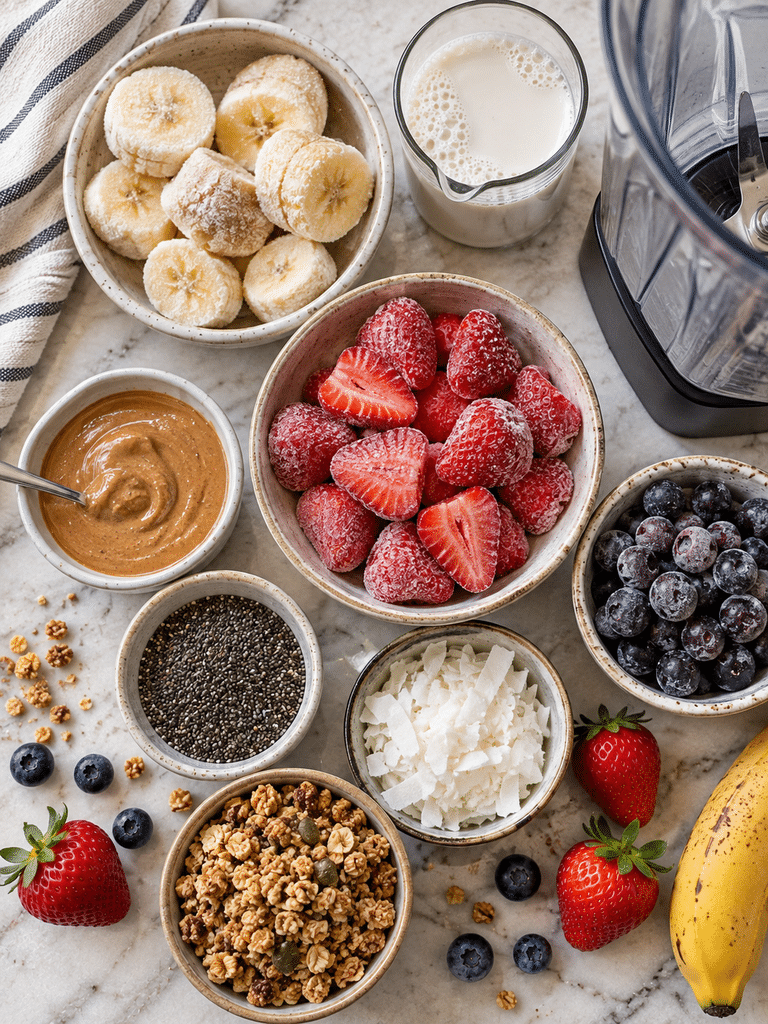
How to Make a Smoothie Bowl Step by Step
How to make a smoothie bowl comes down to one key technique: blend frozen fruit with as little liquid as your blender needs. Start with the liquid, add frozen fruit, and blend in short stages. Stop and scrape often. When the mixture looks thick, creamy, and spoonable, serve it immediately.
What Is the Right Blending Method?
When someone asks me how to make a smoothie bowl, I focus on consistency before toppings, color, or presentation. You want the base thick enough to mound on a spoon rather than pour like a regular smoothie.
For one generous bowl, this is my starting formula:
2 cups frozen fruit + 1/4 cup milk or plant milk
You can add yogurt, nut butter, vanilla, cinnamon, cocoa, or another flavoring, but keep that frozen-fruit-to-liquid balance in mind.
First, pour the milk into the blender jar. Adding the liquid near the blades helps the blender begin moving without forcing you to pour in more than you need.
Next, add any soft ingredients, such as yogurt or nut butter. Finish with the frozen fruit.
I prefer frozen fruit in smaller chunks. Frozen banana coins, strawberries, mango chunks, peaches, and berries move around the blender more easily than large frozen pieces.
Start on low speed.
At first, the fruit may look coarse and uneven. That’s normal. Give the blender a few short bursts and watch how the fruit moves.
If the blades begin spinning underneath the mixture while the frozen fruit sits motionless above them, don’t immediately add more milk.
Switch the blender off.
Use a tamper if your blender includes one, or scrape down the sides with a spatula while the motor remains off. Push the frozen pieces toward the blades, replace the lid, and start again.
This stop-scrape-blend rhythm matters when learning how to make a smoothie bowl thick. Adding extra liquid every time the blender hesitates often creates the watery texture you were trying to avoid.
If the mixture still refuses to move, add milk one tablespoon at a time.
Then blend again.
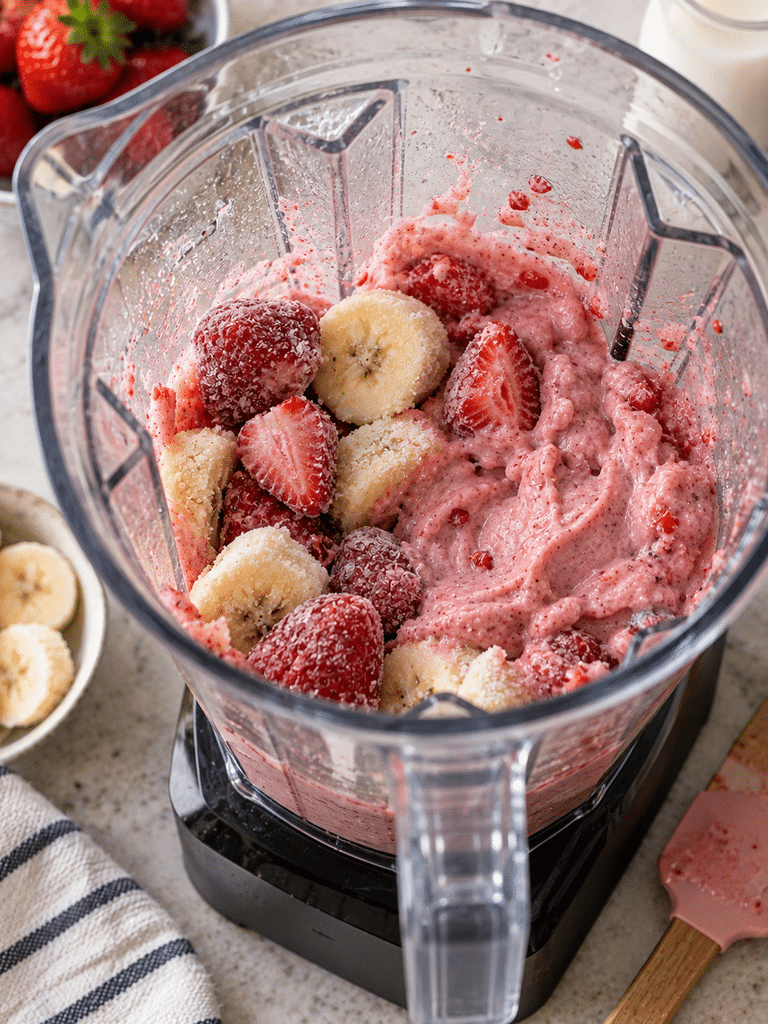
As the fruit breaks down, you’ll see the texture change from icy pieces to a dense, creamy mixture. I stop when the base looks smooth but still forms visible folds and ridges inside the blender jar.
That visual cue tells me more than an exact blending time.
A properly blended smoothie bowl should come out with help from a spoon or spatula. If you can easily pour it into the bowl, you’ve moved closer to regular smoothie consistency.
Spoon the base into a chilled bowl, smooth the surface, and add your toppings right away. Fresh berries, granola, chia seeds, coconut flakes, sliced fruit, or a thin drizzle of nut butter all work well.
If you’re learning how to make a smoothie bowl alongside other basic kitchen techniques, you can find more practical guides in my how to cook collection.
Can You Make a Smoothie Bowl Without a High-Speed Blender?
Yes. You can make a smoothie bowl without a high-speed blender by cutting frozen fruit into smaller pieces, working in short bursts, scraping frequently, and adding liquid gradually. A standard blender may take more time, but patience works better than flooding the jar with extra milk.
This is one place where technique matters more than speed.
Cut bananas into coins before freezing them. Keep mangoes and peaches in bite-size chunks. If your frozen strawberries are very large, smaller pieces will put less strain on the blender.
You can also let rock-hard frozen fruit sit at room temperature for a few minutes before blending. You don’t want it warm or fully thawed. You simply want to take away that freezer-hard edge.
Add the liquid first, followed by softer ingredients and then the frozen fruit.
Pulse. Stop. Scrape. Pulse again.
Always turn the blender off before putting a spatula or other utensil into the jar.
A standard blender may need several rounds before the mixture comes together. Resist the temptation to pour in a large splash of milk. Once that liquid enters the bowl, you can’t take it back out.
This slower method gives you much more control over thickness and makes an easy smoothie bowl recipe possible even without a high-powered machine.
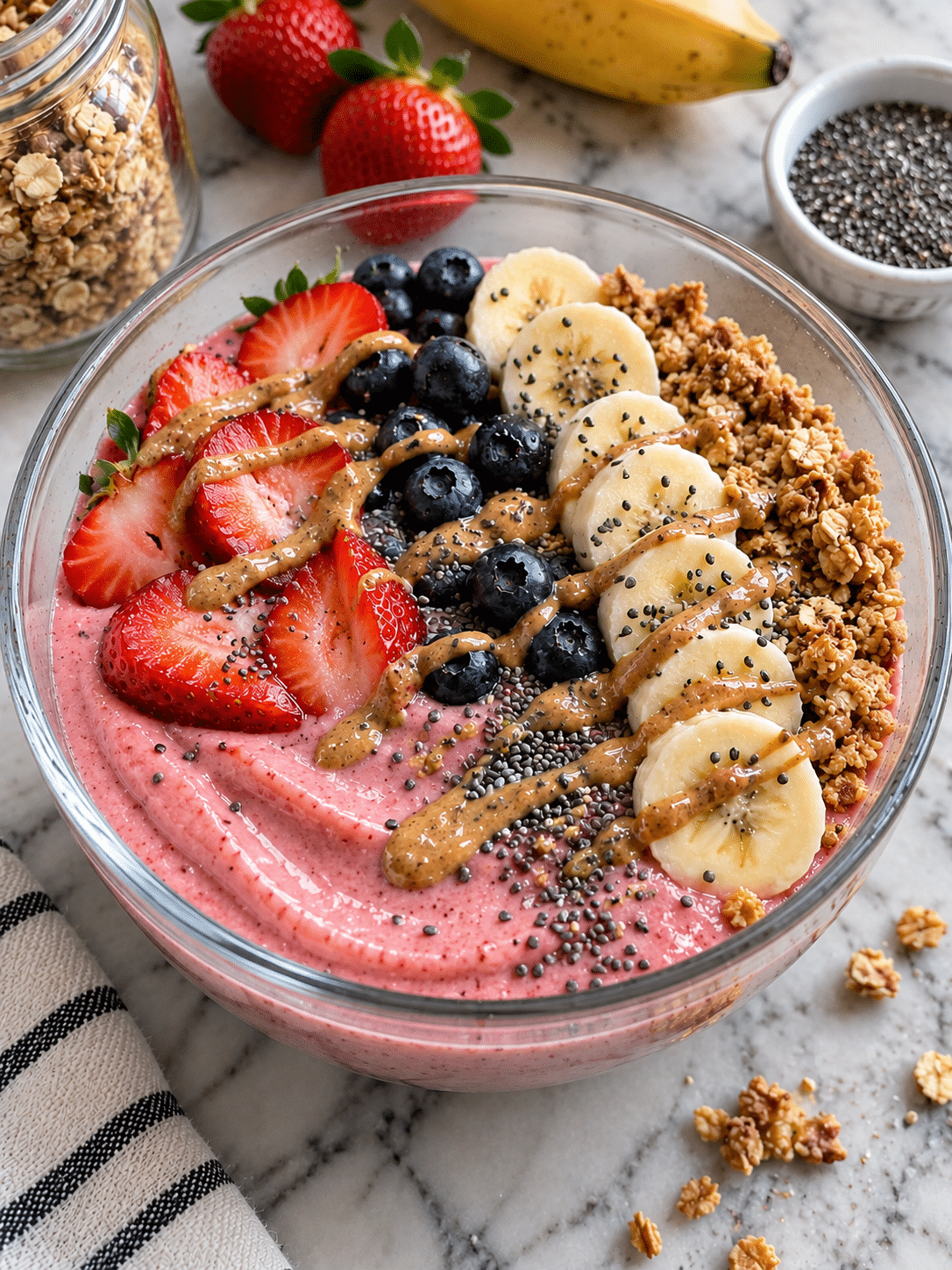

How to Make a Smoothie Bowl
Ingredients
Equipment
Method
- Pour the milk or plant milk into the blender jar first so the liquid sits near the blades.
- Add any soft optional ingredients, such as yogurt or nut butter, then add the frozen fruit.
- Start blending on low speed using short bursts. The fruit may look coarse and uneven at first.
- If the frozen fruit stops moving, switch off the blender and scrape down the sides with a spatula or use the blender tamper. Push the frozen pieces toward the blades before blending again.
- If the mixture still refuses to move, add more milk one tablespoon at a time and blend again.
- Continue blending just until the fruit becomes a dense, smooth, and creamy mixture that forms visible folds and soft ridges. Avoid overblending.
- Spoon the smoothie into a bowl, smooth the surface, and immediately finish with fresh fruit, granola, seeds, nut butter, or your preferred toppings.
Notes
Why Does a Smoothie Bowl Become Watery?
A smoothie bowl usually becomes watery because it contains too much liquid, too much unfrozen fruit, or ingredients that warmed during prolonged blending. Start with frozen fruit and minimal liquid. Blend only until creamy. If your smoothie bowl becomes thin, add more frozen fruit and blend briefly to restore body.
How Do You Fix a Watery Smoothie Bowl?
Knowing how to make a smoothie bowl also means knowing what to do when the texture goes wrong.
The most common problem starts with liquid.
You add 1/4 cup of milk, the blades hesitate, and another generous splash seems like the quickest solution. Suddenly the mixture spins beautifully, but it pours.
Instead, scrape and reposition the fruit first. Add another tablespoon of liquid only when the blender genuinely needs it.
Fresh fruit can also change the consistency. Strawberries, pineapple, peaches, and other juicy fresh fruits contribute their own moisture. They taste great, but a bowl made mostly from fresh fruit won’t have the same cold structure as one built around frozen fruit.
Overblending creates another problem. The longer frozen ingredients move around a blender jar, the more their temperature rises. Stop once the mixture turns smooth and creamy.
If your bowl already looks too thin, don’t discard it.
Add a handful of frozen banana, mango, berries, or another frozen fruit that suits the flavor. Blend briefly and check again.
For a banana-free bowl, frozen mango or peaches can add body. Frozen avocado can also contribute creaminess. Thick yogurt may help, although adding more frozen ingredients generally gives you greater control over a very runny base.
Chia seeds can absorb moisture, but they need time to hydrate, so they aren’t my first choice when I want to serve the bowl immediately.
Here’s a quick troubleshooting guide:
| Problem | Cause & Fix |
|---|---|
| Smoothie bowl is watery | Too much liquid may be the cause. Blend in more frozen fruit a little at a time. |
| Fruit won’t blend | Stop the blender, scrape the sides, reposition the fruit, and restart before adding more liquid. |
| Mixture gets thinner while blending | The ingredients may be warming. Stop as soon as the base becomes smooth and creamy. |
| Texture feels icy | Use a creamy frozen ingredient such as banana, mango, peach, or avocado and blend until smooth. |
| Toppings sink immediately | The base is probably too thin. Add frozen fruit until the surface can support your toppings. |
How Do You Make a Smoothie Bowl Without Banana?
You don’t need banana to learn how to make a smoothie bowl with a creamy texture.
Banana works well because frozen ripe banana becomes sweet and dense when blended. Still, it isn’t the only ingredient capable of giving a homemade smoothie bowl recipe some body.
Frozen mango is my first alternative when I want a fruity, creamy result. It creates a smooth golden base and pairs naturally with pineapple, berries, coconut, and lime.
Frozen peaches offer a softer flavor. They work especially well with strawberries, raspberries, vanilla, cinnamon, or yogurt.
Frozen avocado creates a different result. Its flavor stays relatively mild, while its creamy flesh adds richness. Pair it with berries, mango, cocoa, or nut butter rather than expecting it to provide banana-like sweetness.
For a banana-free vegan smoothie bowl recipe, try frozen mango and berries with a small amount of oat, soy, almond, or coconut milk. Plant-based yogurt can add another creamy layer if you like.
The same rule still applies: keep the ingredients cold and the liquid limited.
That rule sits at the heart of how to make a smoothie bowl whether you use banana or leave it out entirely.
Which Smoothie Bowl Recipe Ideas Should You Try?
Once you know how to make a smoothie bowl, you can change the fruit, milk, spices, and toppings without changing the basic technique. Keep the fruit frozen and the liquid low. Then build strawberry, tropical, chocolate, green, vegan, or seasonal bowls from the same thick, creamy foundation.
Easy Smoothie Bowl Recipe Ideas for Every Season
One reason I like teaching how to make a smoothie bowl as a formula instead of one rigid recipe is that frozen fruit gives you plenty of flexibility.
The texture rules stay almost identical. The flavors can change all year.
For a strawberry banana smoothie bowl, blend frozen strawberries and frozen banana with a small splash of milk. Fresh strawberry slices, chia seeds, and crunchy granola make simple toppings.
For a tropical version, use frozen mango and pineapple with coconut milk. Mango gives the mixture a creamy golden texture, while pineapple adds a brighter, tangier note. Finish it with coconut flakes and fresh mango.
A berry bowl can combine frozen blueberries, raspberries, strawberries, and banana. Since berries can create a slightly icier consistency than banana or mango, I like including one creamier frozen fruit in the mixture.
For a chocolate peanut butter bowl, blend frozen banana with cocoa powder, peanut butter, and just enough milk to get the blades moving. Cacao nibs, sliced banana, or chopped nuts add crunch.
Want something green? Blend frozen mango and banana with spinach. If you use leafy greens, blending the spinach with the small amount of liquid before adding the frozen fruit can help create a smoother base.
Once you understand how to make a smoothie bowl, seasonal changes become easy too.
In spring, strawberries and blueberries bring bright color and fresh flavor. Summer calls for peaches, cherries, mango, pineapple, and berries.
When fall arrives, I reach for banana, pumpkin, cinnamon, nutmeg, pecans, and nut butter. Pumpkin puree contains moisture, so start with less milk when adding it to the blender.
Winter bowls can lean into frozen berries, cocoa, peanut butter, cinnamon, coconut, and pantry toppings. Frozen fruit also means you don’t need to wait for berry season to make a cold, colorful bowl.
If the soft, creamy texture of frozen banana is your favorite part, my banana ice cream uses the same useful idea: frozen fruit can create a remarkably creamy consistency when blended correctly.
Here are a few combinations I’d keep in rotation:
| Smoothie Bowl | Flavor Combination |
|---|---|
| Strawberry Banana | Frozen strawberries, banana, milk, granola, fresh berries |
| Tropical Mango | Frozen mango, pineapple, coconut milk, coconut flakes |
| Chocolate Peanut Butter | Frozen banana, cocoa, peanut butter, milk, cacao nibs |
| Green | Frozen mango, banana, spinach, milk, pumpkin seeds |
| Fall | Frozen banana, pumpkin, cinnamon, nut butter, pecans |
These smoothie bowl recipe ideas also make a useful starting point when you have half-used bags of frozen fruit in the freezer. Instead of chasing an exact combination, keep the texture formula steady and change the flavor.
How Do You Make a Vegan Smoothie Bowl Recipe?
Learning how to make a smoothie bowl vegan requires very few changes because fruit already forms the foundation.
Use frozen banana, mango, peaches, berries, pineapple, or avocado for the base. Then choose almond, soy, oat, or coconut milk instead of dairy milk.
If you want yogurt, choose an unsweetened plant-based variety. Nut butter and seed butter also add creamy texture without dairy.
For toppings, try berries, sliced banana, granola that fits your dietary preferences, chia seeds, hemp hearts, pumpkin seeds, chopped nuts, cacao nibs, or coconut flakes.
If you want extra sweetness, taste the finished base first. Very ripe frozen banana and mango may already provide enough. If needed, a small amount of maple syrup can add sweetness.
A simple vegan smoothie bowl recipe could look like this:
2 cups frozen strawberries and banana + 1/4 cup plant milk + 1 tablespoon almond butter + fresh berries and chia seeds.
The blending method doesn’t change. Start with little liquid, scrape the blender when needed, and stop once the mixture becomes thick and creamy.
That’s another reason how to make a smoothie bowl is such a useful technique to learn. One basic method can accommodate dairy-free, banana-free, berry-heavy, tropical, or chocolate variations without turning breakfast into a complicated project.
How Can You Build a Better Breakfast Smoothie Bowl?
How Do You Balance Fruit, Creaminess, Protein, and Crunch?
A good bowl needs more than attractive rows of fruit.
When I think about how to make a smoothie bowl for breakfast, I build it in layers: a frozen fruit base, a creamy element, an optional protein-rich ingredient, and something crunchy on top.
Fruit creates most of the flavor and color. Banana, berries, mango, peaches, cherries, and pineapple all work, but their textures differ. Banana and mango tend to produce more body than juicy fruits alone.
Next comes the creamy element. That might be yogurt, plant-based yogurt, avocado, peanut butter, almond butter, or another seed or nut butter.
Then consider the toppings.
Seeds, nuts, granola, or nut butter create contrast against the cold fruit base. Fresh fruit adds a juicy finish. You don’t need all of them in the same bowl.
Nutrition also depends on what actually goes into your blender and onto the bowl. A smoothie can contain fruit, vegetables, milk, yogurt, and other ingredients, and its nutritional profile changes with those ingredients and proportions, as the Wikipedia overview of smoothies explains.
For current federal food guidance, the U.S. Department of Agriculture directs readers to the latest Dietary Guidelines for Americans. Rather than calling every smoothie bowl “healthy,” I prefer describing the ingredients clearly so you can build one that fits your own needs.
If you enjoy grab-and-go breakfasts on days when there’s no time for a blender, these homemade granola bars give you another practical option. You can also pair fruit with one of my banana muffins when you want something baked instead.
Can You Prep a Smoothie Bowl Ahead of Time?
Yes, but I prefer prepping the ingredients rather than leaving a fully blended smoothie bowl in the refrigerator overnight.
When you’re learning how to make a smoothie bowl, temperature matters. A freshly blended base gets its thick texture from frozen ingredients. Leave that base in the refrigerator for hours and the frozen fruit thaws, changing the texture.
Instead, make freezer packs.
Portion your frozen fruit into freezer-safe bags or containers. One pack can hold strawberries and banana. Another might contain mango and pineapple. A fall pack could contain frozen banana with measured spices stored separately.
Then, when breakfast time arrives, put the liquid in your blender, add one frozen pack, and blend.
Keep granola, nuts, seeds, coconut, and other dry toppings outside the freezer pack so they stay crisp.
You can also portion nut butter, protein powder, cocoa, or chia seeds separately if that makes your morning easier.
Fresh toppings should generally wait until serving. Sliced strawberries, kiwi, banana, or other fresh fruit look and taste better when you cut them close to mealtime.
If you must store a blended base, freezing makes more sense than refrigerating it for an extended period. Let it soften enough to become spoonable before serving, then add fresh toppings.
For me, though, freezer packs strike the better balance. They do the repetitive measuring ahead of time without sacrificing the cold, thick texture that makes how to make a smoothie bowl different from preparing an ordinary drinkable smoothie.
What Should You Serve With a Smoothie Bowl?
A smoothie bowl can stand on its own, but sometimes I like pairing its cold, fruity texture with a simple drink.
An iced matcha latte works nicely alongside berry, mango, or coconut bowls. For something lighter, cold brew tea makes an easy pairing.
If you’re leaning into tropical flavors, guava juice carries those bright fruit notes into the rest of breakfast.
Keep the pairing simple. The smoothie bowl already has several textures and flavors, so it doesn’t need a crowded plate beside it.
Smoothie Bowl FAQs
What Is the Best Liquid for a Smoothie Bowl?
Milk, almond milk, oat milk, soy milk, and coconut milk can all work. When learning how to make a smoothie bowl, the amount matters more than finding one perfect liquid. Start with about 1/4 cup for 2 cups of frozen fruit and add more by the tablespoon only when needed.
How Do You Make a Smoothie Bowl Thick and Creamy?
Use frozen fruit, keep the liquid low, and stop blending once the mixture becomes smooth. Frozen banana, mango, peach, or avocado can add creamy body. If you want to know how to make a smoothie bowl thick enough for toppings, aim for a base that holds soft ridges instead of pouring freely.
Can You Make a Smoothie Bowl Without Banana?
Yes. Use frozen mango, peaches, avocado, or a combination of frozen berries with another creamy ingredient. Yogurt can add body too. For a banana-free vegan version, combine frozen mango and berries with a small amount of plant milk and optional plant-based yogurt.
Can You Make a Smoothie Bowl Without a High-Speed Blender?
Yes. Cut the fruit into small pieces before freezing, let extremely hard fruit soften for a few minutes, and work in short blending bursts. Stop and scrape frequently. When learning how to make a smoothie bowl with a standard blender, patience works better than adding a large amount of extra liquid.
Can You Make Smoothie Bowls Ahead of Time?
The easiest method is to prepare frozen fruit packs ahead of time and blend them when you’re ready to eat. Keep crunchy and fresh toppings separate. This preserves the thick texture better than leaving a finished bowl in the refrigerator for hours.
What Is the Difference Between a Smoothie Bowl and an Acai Bowl?
A smoothie bowl describes the broader style: a thick blended mixture served in a bowl with toppings. An açaí bowl uses açaí as a defining ingredient in its base. In other words, an açaí bowl can fit within the broader smoothie-bowl category, while smoothie bowls can use many other fruits.
Final Thoughts: Your Homemade Smoothie Bowl Formula
Once you understand how to make a smoothie bowl, remember one simple formula: frozen fruit + minimal liquid + controlled blending.
That combination gives you the thick, creamy consistency that separates a spoonable bowl from a drinkable smoothie.
Start with about 2 cups of frozen fruit and 1/4 cup of liquid. Blend slowly. Scrape the blender before reaching for more milk. Stop when the mixture forms soft ridges and needs a spoon or spatula to move it into the bowl.
If it turns watery, add frozen fruit.
If you don’t like banana, use mango, peaches, avocado, or another creamy ingredient.
If you don’t own a high-speed blender, use smaller fruit pieces and work patiently.
If mornings feel rushed, prepare freezer packs ahead of time.
And when you want something different, change the fruit with the season or use plant milk and dairy-free toppings for a vegan smoothie bowl recipe.
That flexibility is what I love about this method.
I’m Abby Pinkmann, a 36-year-old chef just outside Austin, Texas, and founder of EAT WELL WELL. Growing up in a busy family taught me to pay attention to what simple ingredients can do when you treat them with care. My mom could turn pantry basics into comforting food in about 30 minutes, and that practical approach still shapes the recipes I share.
With smoothie bowls, the useful lesson isn’t memorizing one combination of fruit and toppings. It’s learning what the right consistency looks and feels like.
Once you recognize it, you’ll know how to make a smoothie bowl from whatever combination makes sense in your kitchen.