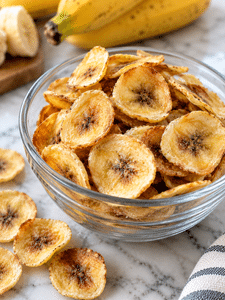
How to Make Banana Chips
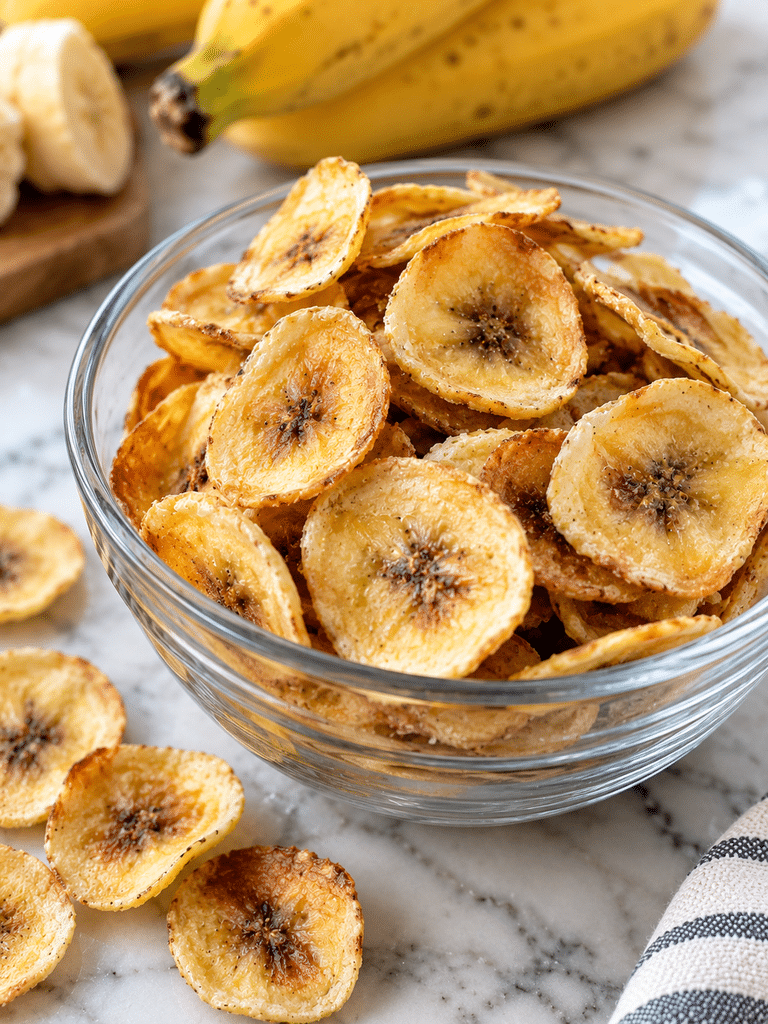
To make banana chips, cut firm bananas into thin, even slices. Arrange them in a single layer, bake at a low temperature, and let them cool completely. Ripeness, thickness, and cooking method determine whether you get crisp edges, chewy centers, or a firmer crunch.
In this Article
What Should You Know Before Making Banana Chips?
Why make homemade banana chips?
Learning how to make banana chips gives you control over the ingredients and flavor. You can skip added sugar, add a little cinnamon, or keep things simple with bananas and an optional brush of lemon water.
At EAT WELL WELL, simple ingredients and practical techniques guide our approach to cooking. This snack fits that approach: you spend a few minutes slicing and arranging, then let the oven handle the slow drying. Just plan ahead, it takes longer than a quick batch of cookies.
A homemade baked banana chips recipe works well for afternoon snacks, breakfast toppings, and small snack boxes. If you’re building confidence in the kitchen, our guide to everyday cooking techniques offers more starting points.
Key takeaways: What helps banana chips turn crisp?
Before you start, understand one essential difference: baked banana chips won’t necessarily match the hard crunch of store-bought fried chips. Firm yellow bananas can produce crisp edges with slightly chewy centers. Green bananas and plantains give a starchier, less sweet result.
Keep these basics in mind:
- Choose firm fruit. Very soft bananas make neat, consistent slices difficult.
- Slice evenly. Thin pieces dry faster than thick ones.
- Leave space. Overlapping slices trap moisture and dry unevenly.
- Cool before judging. Warm slices may feel softer than the finished chips.
- Watch texture and color. Extra heat can burn the edges before the centers dry.
Which Bananas and Ingredients Make the Best Banana Chips?
Should you use green, yellow, or overripe bananas?
When learning how to make banana chips, start with firm yellow bananas that hold their shape as you slice. They offer natural sweetness without the soft, sticky texture of heavily spotted fruit.
Choose your bananas according to the result you want:
| Banana type | Sweetness | What to expect |
|---|---|---|
| Green bananas | Low | Starchy, less sweet chips; results depend on the cooking method |
| Firm yellow bananas | Moderate | Sweet baked slices with crisp edges and potentially chewy centers |
| Very ripe, soft bananas | High | Difficult slicing and a greater tendency toward sticky, chewy results |
| Green plantains | Low | Firm, starchy slices commonly used for savory chips |
Plantains belong to the banana family, but they contain more starch and need their own cooking adjustments. Avoid swapping them into this baked banana chips recipe and expecting identical timing.
Save soft, heavily spotted fruit for homemade banana muffins, where its sweetness and moisture help the batter.
Do you need lemon juice, oil, or sugar?
For one small batch of homemade baked banana chips, gather:
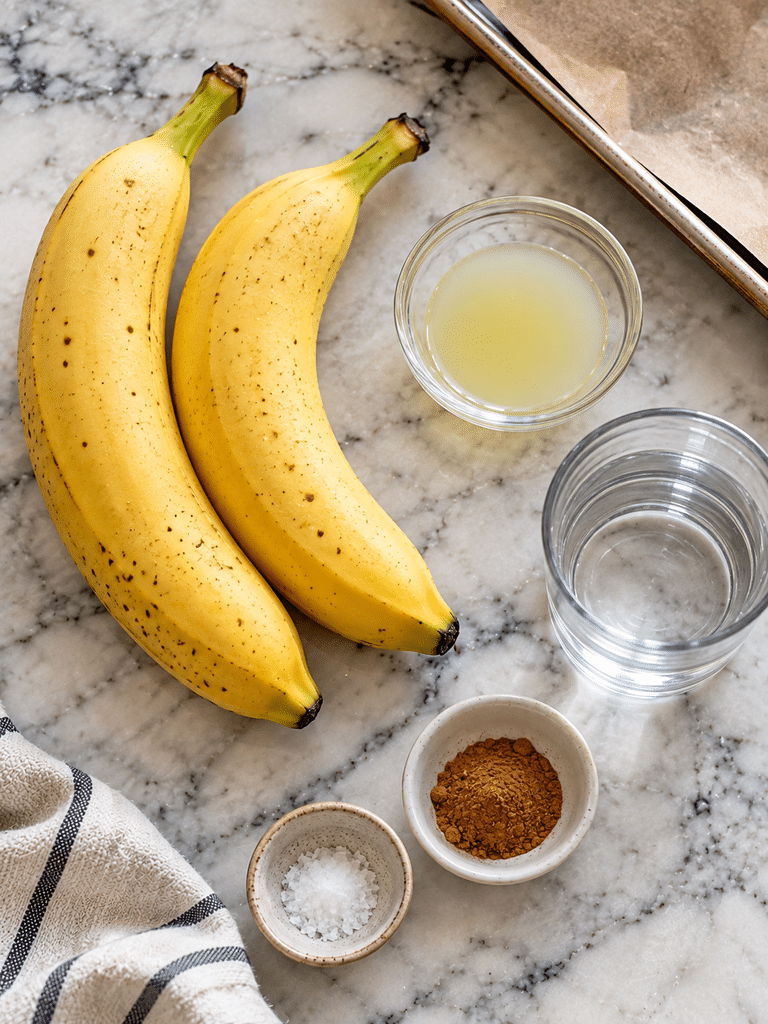
- 2 medium firm yellow bananas
- 1 tablespoon lemon juice mixed with 4 tablespoons water, optional, for lightly brushing the slices
- ¼ teaspoon ground cinnamon, optional
- A small pinch of salt, optional
Lemon juice helps reduce browning; it doesn’t guarantee crispness. Brush lightly so you don’t add unnecessary moisture. You don’t need to use the whole mixture.
This oven version needs no added oil or sugar. Bananas supply sweetness, and parchment helps prevent sticking. Keep the first batch plain so you can judge the texture before experimenting with seasonings.
You’ll also need a baking sheet, parchment paper, a sharp knife, and a cooling rack. A mandoline can help create uniform slices, but always use its hand guard.
How to Make Banana Chips in the Oven
To make banana chips in the oven, slice firm bananas about ⅛ inch thick and arrange them on parchment. Bake at 200°F (95°C), allowing roughly two to three hours. Flip once the slices release easily, then cool completely before checking whether they need more drying.
How do you prepare and arrange banana slices?
The key to how to make banana chips with consistent texture starts with your knife work. Thick and thin slices on the same tray won’t finish together.
1. Preheat the oven and prepare your tray.
Heat a conventional oven to 200°F (95°C). Line a baking sheet with parchment paper. Start with one tray on the middle rack so you can monitor the batch easily.
2. Cut the bananas into even rounds.
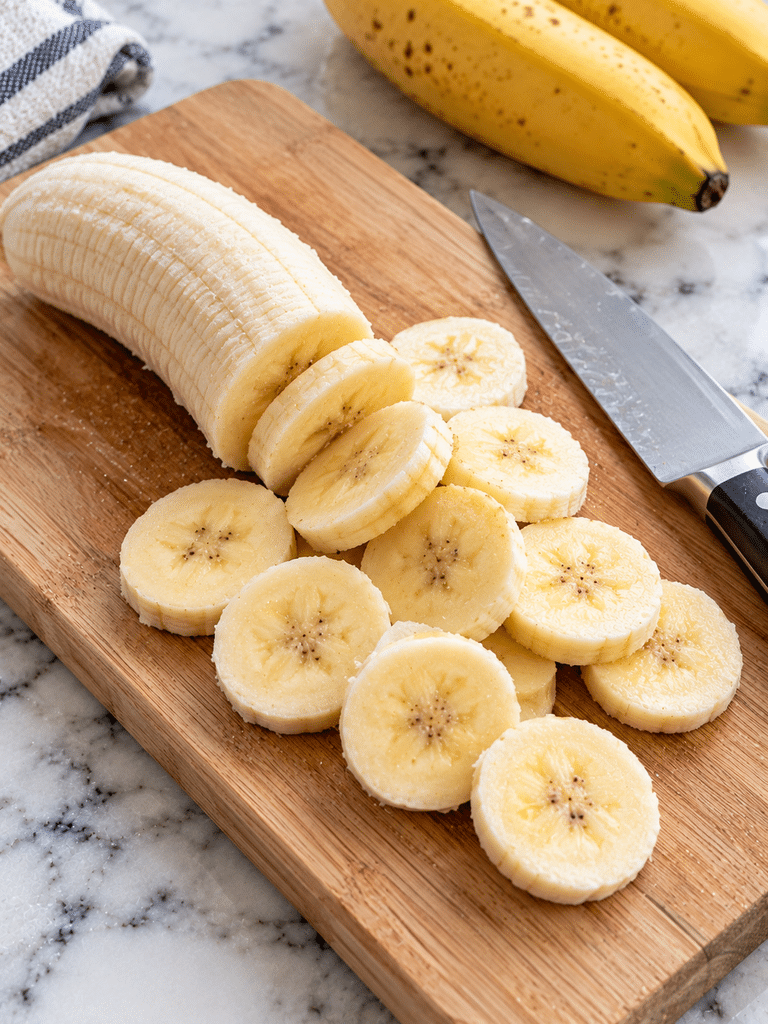
Peel two firm yellow bananas and slice them approximately ⅛ inch (3 mm) thick. Keep the thickness consistent from one end to the other. Very thin edges can scorch while thicker centers still hold moisture.
Use a sharp knife on a stable cutting board. If you use a mandoline, keep the hand guard in place.
3. Brush lightly and leave space.
Arrange the rounds in a single layer without touching or overlapping. If you want to reduce browning, lightly brush them with the lemon-water mixture from the ingredients section. Blot any puddles and add optional cinnamon sparingly.
When learning how to make banana chips, don’t squeeze extra slices onto a crowded tray. Space allows moisture to escape.
How long should you bake and cool banana chips?
4. Bake gently and flip when the slices release.
Start checking after about 60 minutes. Lift one slice gently with a thin spatula. If it sticks or tears, give it more time before trying again.
Flip the slices once they release, then continue baking. Expect approximately two to three hours total, though thickness, ripeness, and oven performance can change that range. Check more frequently toward the end and remove thinner pieces as they finish.
Look for shrunken slices, dry-looking surfaces, and lightly golden edges. Don’t wait for every piece to turn dark brown.
5. Cool completely and check the texture.
Transfer the parchment with the chips onto a cooling rack. Let them cool for 20–30 minutes, then test a slice.
If the cooled chips still feel moist or softer than you want, return them to the oven for 15–20 minutes and check again after cooling. Firm yellow bananas may retain some chew; extra baking won’t always produce a fried-chip crunch.
Knowing how to make banana chips means using texture alongside the timer.
| Recipe detail | Approximate amount |
|---|---|
| Preparation | 10 minutes |
| Baking | 2–3 hours; allow longer if needed |
| Cooling | 20–30 minutes |
| Yield | 2 small snack portions |
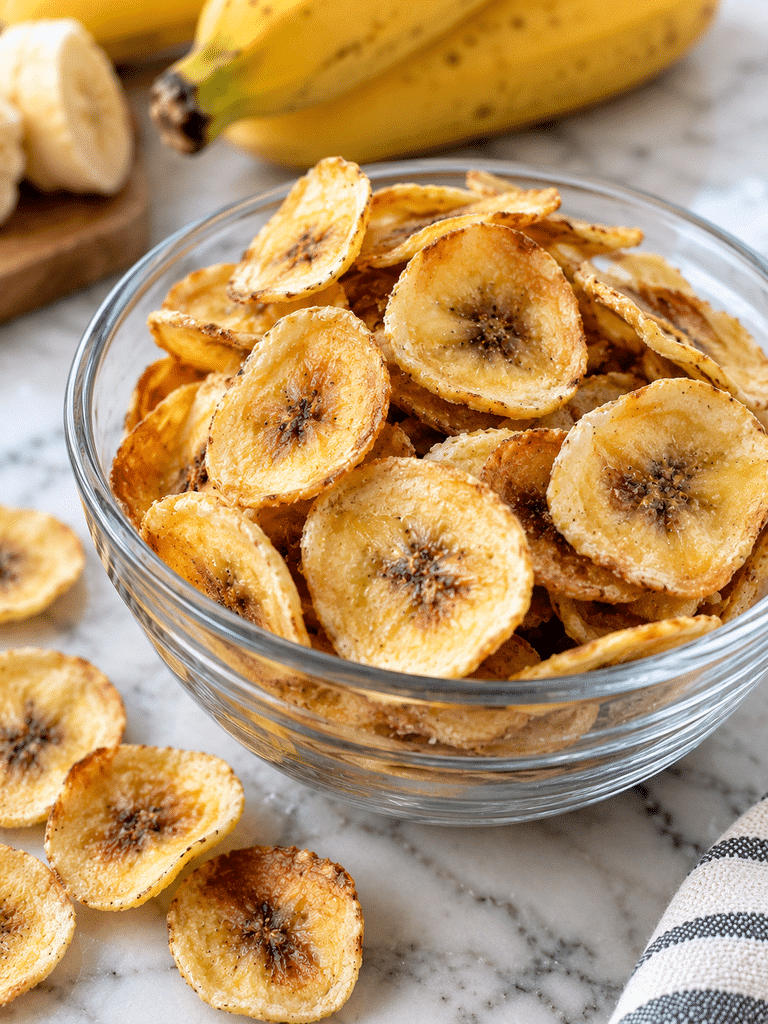

How to Make Banana Chips
Ingredients
Equipment
Method
- Preheat a conventional oven to 200°F (95°C). Line a baking sheet with parchment paper and position one tray on the middle rack.
- Peel two firm yellow bananas and cut them into even rounds approximately ⅛ inch (3 mm) thick. Keep the thickness as consistent as possible.
- Arrange the banana rounds in a single layer on the prepared baking sheet without touching or overlapping. If desired, lightly brush the slices with the lemon-water mixture, blot away any puddles, and add the optional cinnamon sparingly.
- Bake gently and start checking after about 60 minutes. When a slice releases easily without sticking or tearing, flip the slices and continue baking. Allow approximately 2–3 hours total, checking more frequently toward the end and removing thinner pieces as they finish.
- Transfer the parchment with the banana chips to a cooling rack and let the chips cool completely for 20–30 minutes before checking their texture. If the cooled chips still feel moist or softer than desired, return them to the oven for another 15–20 minutes and check again after cooling.
Notes
Can You Make Banana Chips in an Air Fryer or Microwave?
You can make banana chips in either appliance, but expect different results. An air fryer suits small batches and allows frequent checks. A microwave dries slices less evenly, which makes consistent crispness harder to achieve.
How does the banana chips air fryer method work?
If you’re learning how to make banana chips in an air fryer, start with firm bananas and the same even, ⅛-inch slices as the oven version.
- Set the air fryer to 300°F (150°C). Follow your appliance’s preheating instructions.
- Lightly coat the slices with oil, if desired, to reduce sticking. Avoid excess lemon water.
- Arrange one layer in the basket without overlapping.
- Check after 8–10 minutes and gently flip slices when they release.
- Continue in short intervals. Allow approximately 20–25 minutes overall, but remove pieces earlier if their edges darken.
- Cool completely before judging the texture.
Published air fryer guidance varies with temperature and appliance; MOMables gives approximately 25 minutes at 300°F. Treat that as a starting point, not a guaranteed finishing time.
Understanding how to make banana chips in your particular air fryer takes observation: browned edges don’t always mean dry centers.
Is microwave cooking a reliable alternative?
For banana chips microwave cooking, arrange a small batch on a microwave-safe plate. Heat for one minute, turn the slices, then use short 20–30-second bursts, checking between each.
Stop if you notice scorching or smell burning. Let the slices cool before deciding whether they need more drying. Microwave wattage and uneven heating make a fixed cooking time unreliable.
When deciding how to make banana chips, use this comparison:
| Method | Batch size | Monitoring | Expected texture |
|---|---|---|---|
| Oven | A baking sheet | More frequent near the end | Crisp edges; possible chewy centers |
| Air fryer | Small, single-layer batches | Frequent checks | Variable crispness with faster browning |
| Microwave | A few slices | Check every short burst | Less consistent; often chewy |
| Dehydrator | Several trays | Follow appliance guidance | Dried fruit texture; not necessarily crunchy |
Choose the oven or air fryer when your priority is learning how to make banana chips with more predictable results.
Why Aren’t Your Banana Chips Crispy, and How Should You Store Them?
Banana chips often stay soft because thick slices retain moisture, crowded trays restrict airflow, or very ripe fruit produces a chewier texture. Let a sample cool before judging it. If the center still feels moist, continue drying gently rather than raising the heat and burning the edges.
Why do banana chips turn chewy, sticky, or burnt?
Learning how to make banana chips means recognizing the difference between incomplete drying and a naturally chewy result. Wikipedia’s overview of banana chips distinguishes crunchy fried chips from dehydrated slices, which can have a leathery texture. Your baked yellow bananas may retain some chew even after sufficient drying.
Use these clues to adjust your next batch:
| Problem | Likely cause | What to do |
|---|---|---|
| Moist centers | Thick slices or insufficient drying | Continue at low heat; check again after cooling |
| Uneven texture | Different slice thicknesses or overlapping | Separate slices and remove finished pieces first |
| Sticky, chewy chips | Very ripe fruit or remaining moisture | Try firmer bananas next time; dry moist pieces longer |
| Burnt edges | Excessive heat or very thin edges | Lower the temperature and check earlier |
Small brown centers don’t automatically mean burning. Blackened edges and a bitter, scorched smell signal excessive cooking. More heat won’t fix uneven slices.
How do you store, season, and serve homemade banana chips?
Knowing how to make banana chips also means protecting them from moisture afterward. Cool the chips completely, then place thoroughly dried pieces in a clean, airtight container in a cool, dark cupboard.
The USDA’s guidance on storing dry goods explains that dampness can allow mold to develop. Avoid adding bread or other moist foods to the container.
Make small batches for the next few days rather than assuming this recipe produces a shelf-stable snack. Residual moisture and humidity affect keeping quality. If you see condensation, the fruit needs further drying; discard any moldy chips. Don’t rely on reheating to rescue spoiled food.
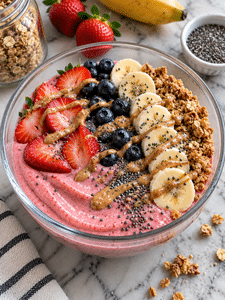
Keep your homemade baked banana chips unsweetened, add cinnamon before baking, or finish with a small pinch of salt. Sprinkle them over a smoothie bowl or overnight chia immediately before eating so the wet toppings don’t soften them.
Frequently Asked Questions About Making Banana Chips
Banana choice and preparation
What kind of banana is best for making banana chips?
Use firm yellow bananas for this baked recipe. They offer sweetness and hold their shape during slicing. Green bananas produce a starchier, less sweet result. Avoid very soft, heavily spotted bananas if your goal is crisp edges rather than chewy fruit.
How thin should you slice bananas for crispy banana chips?
Aim for even slices approximately ⅛ inch (3 mm) thick. Consistent thickness matters more than perfectly round shapes. When learning how to make banana chips, check thinner pieces early and remove them individually so they don’t burn while thicker slices finish drying.
Can you make banana chips without oil or lemon juice?
Yes. This oven method uses parchment paper and requires neither ingredient. Lemon juice helps reduce browning, but it doesn’t make the chips crispy. Without oil or lemon juice, you can still make naturally sweet baked banana slices; expect some browning as they dry.
Cooking results and storage
Why are my homemade banana chips chewy instead of crispy?
Thick slices, very ripe bananas, crowded trays, and incomplete drying can create chewy chips. Cool a sample before checking it. If it still feels moist, continue drying gently. Remember that baked yellow bananas may retain some chew even when you follow the recipe correctly.
Can you make banana chips in an air fryer instead of an oven?
Yes. Arrange thin slices in one layer and cook at 300°F (150°C), checking after 8–10 minutes. Flip when they release easily and continue in short intervals. Allow roughly 20–25 minutes overall, adjusting for your appliance. Cool completely before judging the texture.
How long do homemade banana chips last, and how do you keep them crisp?
For this recipe, make small batches to enjoy within a few days. Cool thoroughly dried chips completely, then seal them in an airtight container away from heat and humidity. Dryness determines keeping quality; the cooking time alone doesn’t establish shelf stability. Discard chips that develop mold.
Final Thoughts: How Can You Get Better Results?
Which method should you start with?
Start with the oven when learning how to make banana chips. A baking sheet gives you room to spread the slices and monitor their progress. Choose firm bananas, slice evenly, and check the texture after cooling. Expect some chew from baked yellow bananas rather than chasing a deep-fried crunch.
What should you record for your next batch?
Note the banana ripeness, slice thickness, oven temperature, and cooking time. Record the cooled texture, too. These details help you adjust your homemade baked banana chips recipe without guessing. Change one variable at a time so you can identify what improves the next batch.