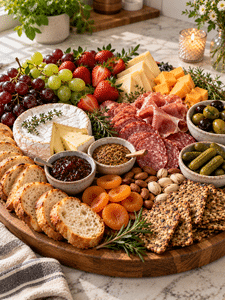
How to make a charcuterie board is simple: arrange a few contrasting cheeses and cured meats with crackers, fresh or dried fruit, nuts, something briny, and a spread. Place bowls and cheeses first, add the meats, then fill the remaining spaces with crackers, fruit, nuts, pickles, and herbs.
In this Article
The Story & Intro
Why I Love a Simple Charcuterie Board
Hi, I’m Abby Pinkmann, a 36-year-old chef just outside Austin, Texas, and founder of EAT WELL WELL. I love a charcuterie board because it turns simple ingredients into food that feels made for sharing.
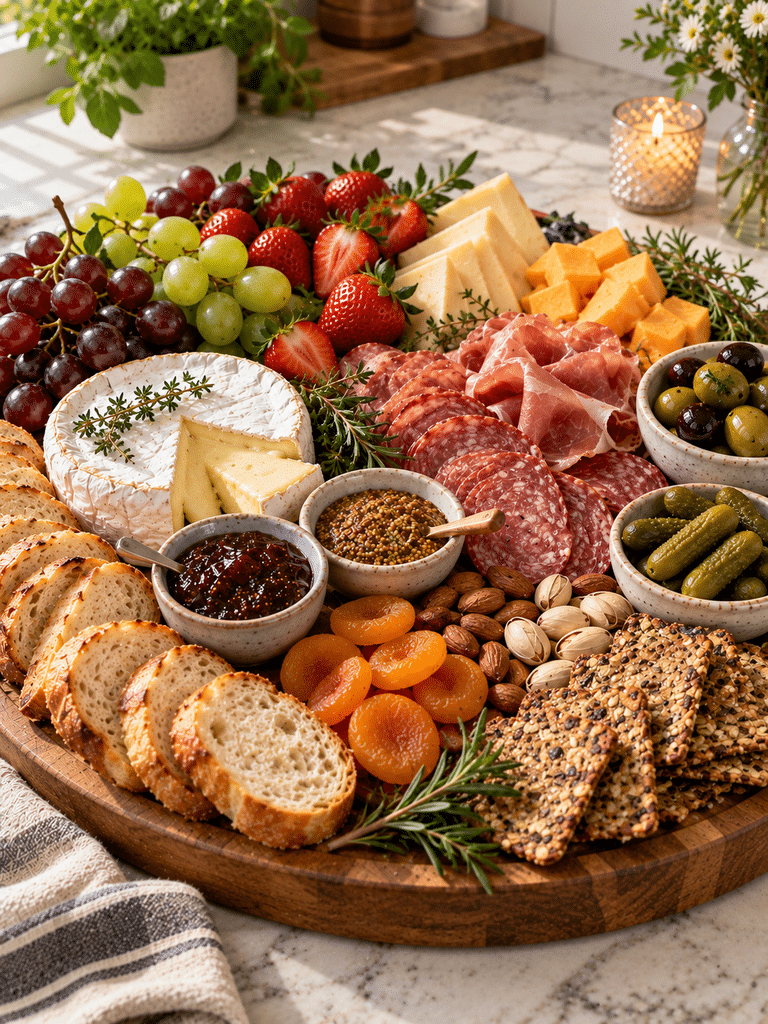
There’s something inviting about setting down a board filled with creamy Brie, ribbons of prosciutto, sharp cheddar, glossy olives, crisp crackers, juicy grapes, toasted nuts, and a spoonful of fig jam. People gather around it almost immediately.
That always takes me back to growing up in my big, busy family. My mom could turn pantry basics into comforting meals in about 30 minutes. She taught me that food didn’t need to be complicated to bring people together. That lesson still shapes how I cook and share food at EAT WELL WELL.
A good charcuterie board follows the same principle. You don’t need expensive ingredients or elaborate decorations. Choose foods that taste good together, create some contrast, and arrange everything so your guests can easily help themselves.
What Is a Charcuterie Board?
A charcuterie board is a serving board centered traditionally around prepared or cured meats, often accompanied by cheeses, bread, crackers, fruit, pickles, nuts, and condiments. The term comes from the French culinary tradition of charcuterie, which centers on prepared meat products.
Modern American charcuterie boards often take a broader approach. You’ll commonly see salami and prosciutto beside Brie, cheddar, grapes, berries, almonds, olives, cornichons, crackers, honey, mustard, or jam.
For home entertaining, that flexibility matters. You can make a small board for two or build a larger appetizer spread for family and friends.
KEY TAKEAWAYS: What You Need to Know
- Start with variety. Combine salty meats, contrasting cheeses, fresh fruit, something crunchy, and something tangy or sweet.
- Mix your textures. Creamy cheese tastes more interesting beside crisp crackers, tender cured meat, juicy grapes, and crunchy nuts.
- Arrange large ingredients first. Bowls and cheeses create anchors before you add meats, crackers, and smaller foods.
- Keep the board practical. Guests need enough room to cut, scoop, pick up, and combine ingredients comfortably.
- Match the quantity to the occasion. An appetizer board needs less food than a charcuterie board served as the main event.
What Items Should You Put on a Charcuterie Board?
A balanced charcuterie board usually contains cured meats, two or three contrasting cheeses, crackers or sliced bread, fresh or dried fruit, nuts, olives or pickles, and a spread such as mustard, honey, or jam. Choose contrasting flavors, colors, and textures while keeping each ingredient easy for guests to serve.
The Essential Charcuterie Board Ingredients
When I’m deciding what to put on a board, I think about contrast rather than trying to buy as many ingredients as possible.
For the meats, salami and prosciutto make approachable choices. Soppressata or another favorite cured meat can add another flavor.
Next comes cheese. I like pairing something soft and creamy, such as Brie or goat cheese, with a firmer cheese such as aged cheddar, Gouda, or Manchego. If the board is large, add a third cheese with a noticeably different texture or flavor.
Then add something crisp. Plain crackers let stronger cheeses and meats stand out, while seeded crackers bring more texture. Thin baguette slices also work well.
Fruit adds freshness and color. Grapes and berries need little preparation. Apples and pears bring a crisp bite, while dried apricots or figs add concentrated sweetness.
Finally, fill out the flavor profile with olives or cornichons, almonds or pistachios, and a small bowl of fig jam, whole-grain mustard, or honey.
Fresh rosemary or thyme can finish the board, but I treat herbs as a garnish rather than something used to hide empty spaces.
How Much Meat and Cheese Do You Need Per Person?
Your quantities depend on whether the charcuterie board acts as an appetizer or replaces a meal.
For an appetizer, about 1–2 ounces of cheese per person provides a practical starting point. For meat, plan several slices per guest and increase the amount when charcuterie forms a substantial part of the meal.
If you’re serving a larger group, add quantity before adding endless varieties. Guests usually benefit more from enough of three good cheeses than tiny portions of eight different ones.
| Board Element | What to Plan |
|---|---|
| Cured meats | Several slices per guest for an appetizer board |
| Cheese | About 1–2 ounces per person for an appetizer |
| Crackers or bread | Enough for guests to try several meat, cheese, and spread combinations |
| Fruit, nuts & extras | Add enough for freshness, crunch, color, and flavor contrast |
If the board will serve as dinner rather than an appetizer, increase the meat, cheese, crackers, bread, and substantial accompaniments accordingly.
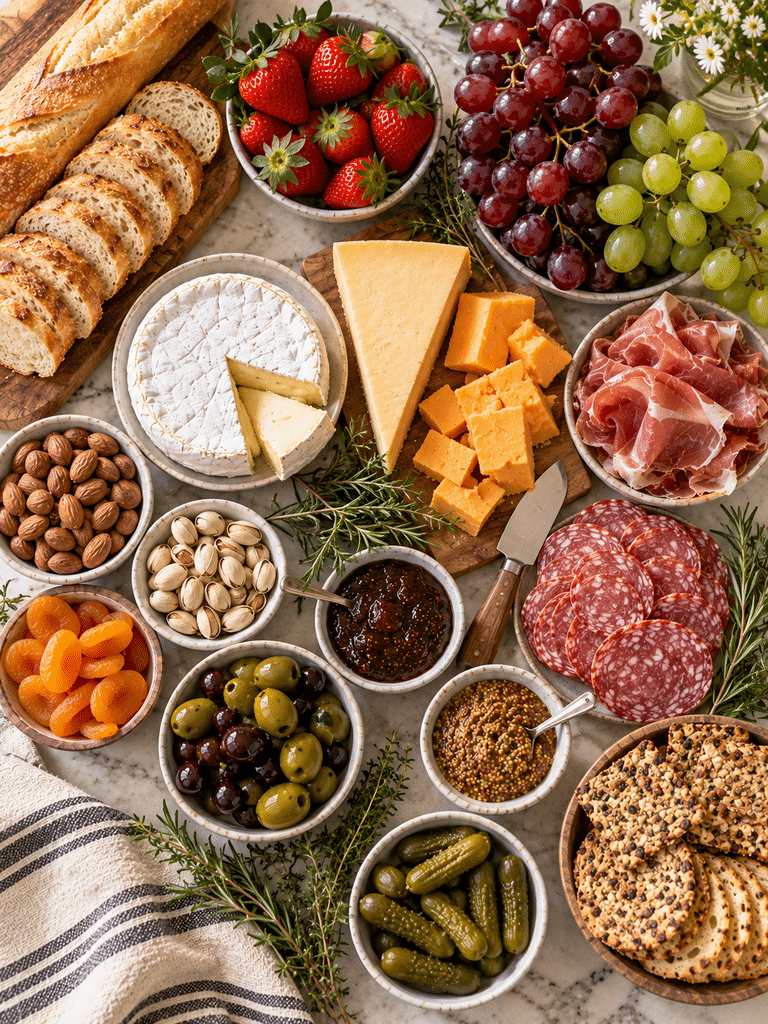
How to Make a Charcuterie Board Step by Step
Start with a clean serving board and position small bowls for olives, jam, mustard, or other loose ingredients. Add your cheeses next, leaving room between them. Arrange folded meats around the cheese, add crackers and fruit, then fill smaller spaces with nuts, dried fruit, pickles, and fresh herbs.
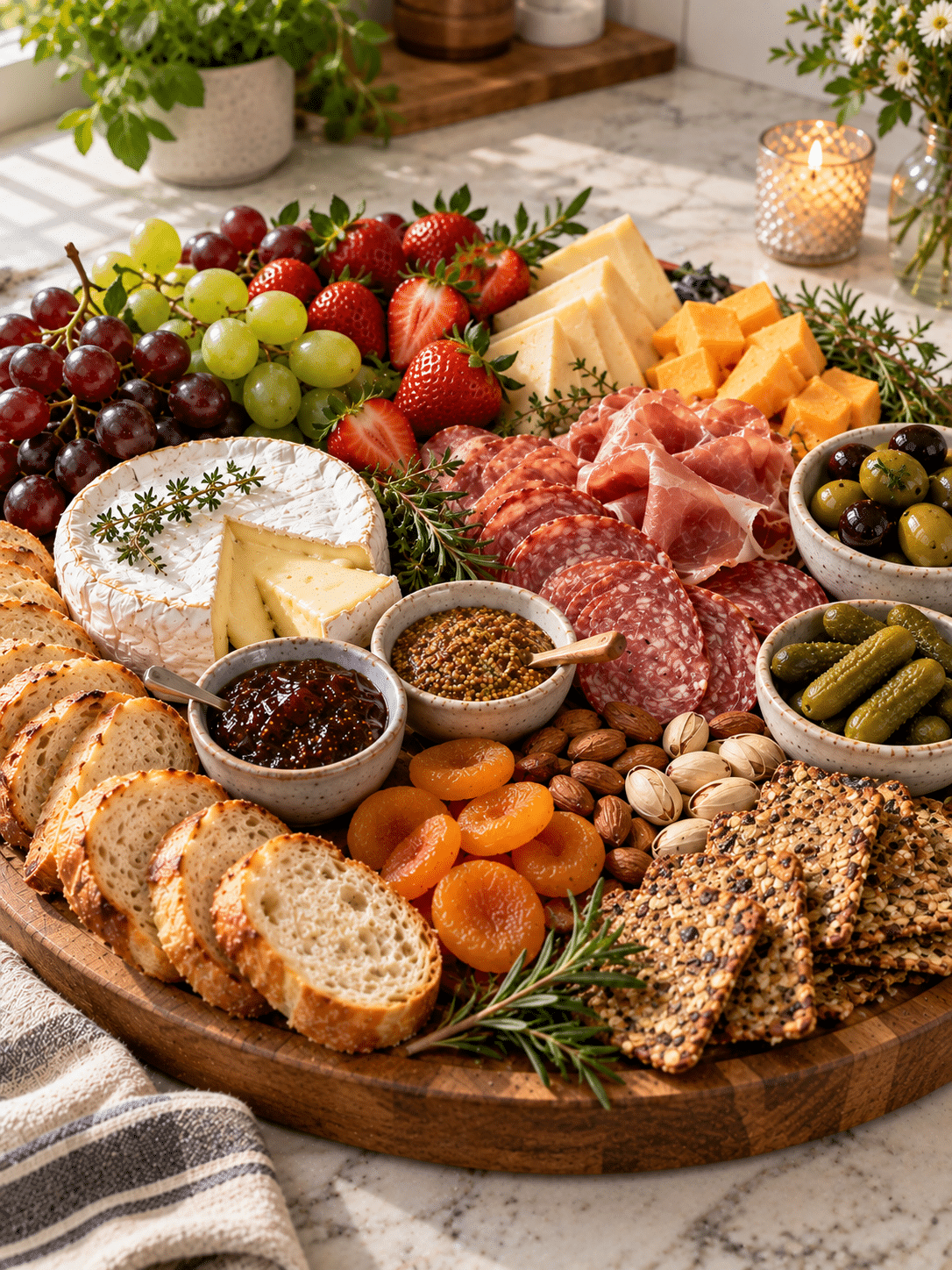

How to Make a Charcuterie Board
Ingredients
Equipment
Method
- Choose a clean wooden board, large platter, slate board, or suitable serving tray and match its size to your gathering. Wash and thoroughly dry the fruit. Slice firm cheeses into a few easy-to-grab pieces, fold or loosely roll the cured meats, and place olives, cornichons, jam, mustard, and other wet or loose ingredients into small bowls. Have cheese knives, small spoons, picks, or tongs ready where needed. Keep wet fruit and briny foods away from crackers.
- Arrange everything from largest to smallest: bowls → cheeses → meats → crackers → fruit → pickles → nuts and dried fruit → herbs. Spread the small bowls across the board, then place the cheeses as visual anchors. Add folded prosciutto and fanned or overlapping salami. Arrange crackers or bread in short rows or gentle curves and cluster fruit in the larger spaces. Fill smaller gaps with nuts and dried fruit, then finish with a few sprigs of rosemary or thyme if desired.
Notes
Step 1: Choose Your Board and Prepare the Ingredients
You don’t need a specialty charcuterie board. A clean wooden board, large platter, slate board, or suitable serving tray can work.
Match its size to your gathering. A smaller surface works well for two to four people. For a crowd, use a larger platter or multiple smaller boards rather than piling ingredients so high that guests can’t reach them.
Next, prepare everything before you start arranging.
Wash fruit and dry it well. Slice firm cheeses into a few easy-to-grab pieces while leaving enough intact to keep the presentation attractive. Fold or loosely roll cured meats. Put olives, cornichons, jam, mustard, and other wet or loose ingredients into small bowls.
Have cheese knives, small spoons, picks, or tongs ready where needed.
One little detail makes a noticeable difference: keep wet fruit and briny foods away from crackers. Nobody wants to reach for a beautiful cracker only to discover that it has gone soft.
Step 2: Arrange Everything From Largest to Smallest
I find this order easy to remember:
Bowls → cheeses → meats → crackers → fruit → pickles → nuts and dried fruit → herbs
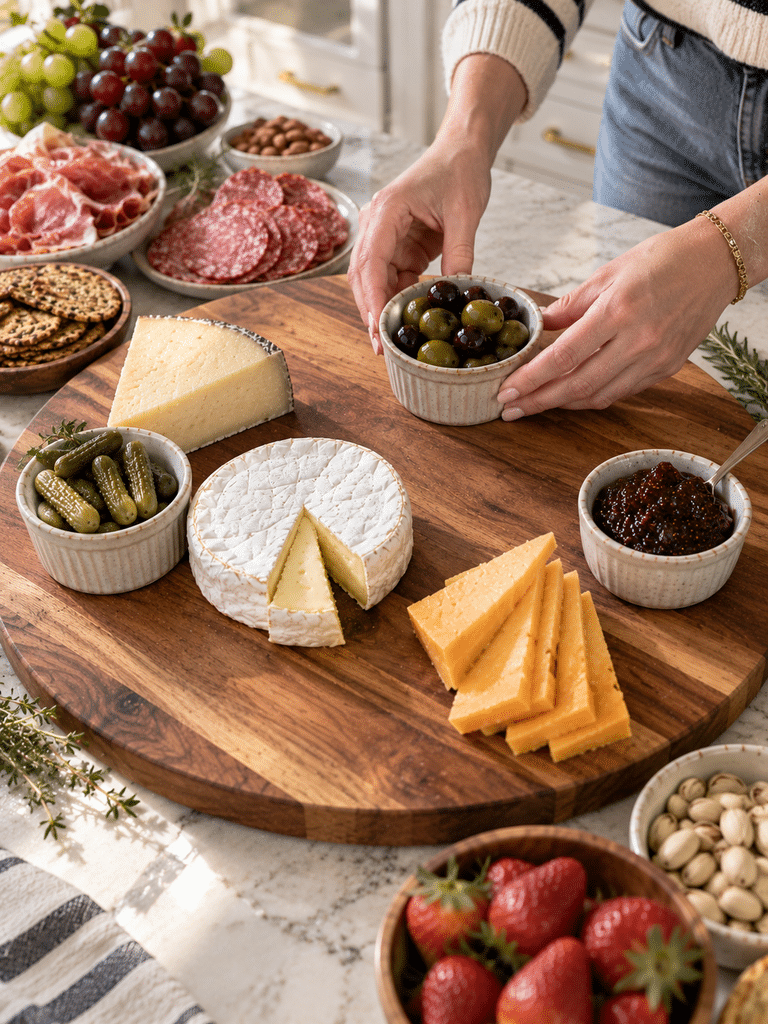
Start with your ramekins or small bowls. Spread them across the board rather than putting them all in one corner.
Place the cheeses next. They act as visual anchors. If you have three cheeses, give each one its own area.
Now add the cured meats. Loosely fold prosciutto to give it height and make individual pieces easier to grab. Fan slices of salami into a curved line or arrange them in small overlapping groups.
Add crackers and bread in short rows or gentle curves. Cluster grapes and other fruit in the larger spaces.
At this stage, you’ll see small gaps. That’s where almonds, pistachios, dried apricots, and similar bite-size ingredients become useful.
Finish with a few sprigs of rosemary or thyme if you like the look.
You don’t need to cover every visible inch. A board should look generous, but your guests still need to use it.
How Do You Make the Best Charcuterie Board for Beginners?
What Is the 3-3-3 Rule for Charcuterie Boards?
The 3-3-3 rule for a charcuterie board generally uses groups of three to make choosing ingredients easier. A beginner-friendly interpretation uses three cheeses, three meats, and three types or groups of accompaniments, such as fruit, crunchy foods, and condiments.
You’ll also encounter expanded versions of the idea, including a 3-3-3-3 rule. There isn’t one universal culinary formula that every charcuterie board must follow.
Treat the rule as a shopping and variety guide, not a requirement.
For a small board, I wouldn’t buy nine different ingredients just because a formula tells me to. Two cheeses, two meats, good crackers, fruit, olives, and a condiment can create an excellent small board.
What matters more is contrast. Pair mild with bold, creamy with crunchy, salty with sweet, and rich foods with fresh or tangy ones.
What Are 5 Tips for Making a Charcuterie Board?
- Mix your textures. Combine creamy cheese, firm cheese, tender cured meat, crisp crackers, juicy fruit, and crunchy nuts.
- Balance the flavors. Salty and savory ingredients taste better when you give guests sweet, fresh, or tangy options alongside them.
- Add natural color. Grapes, berries, dried apricots, olives, cornichons, and herbs prevent the board from becoming a sea of beige.
- Place large ingredients first. Bowls and cheeses give the arrangement structure before smaller foods fill the spaces.
- Make everything easy to eat. Partially slice firm cheeses, fold meats into manageable portions, and provide the appropriate knives, picks, and spoons.
For a party with several appetizers, something fresh such as homemade pico de gallo can provide another bright, tangy option alongside richer meats and cheeses.
What Should You Avoid on a Charcuterie Board?
What Are 5 Things to Avoid on a Charcuterie Board?
First, avoid too many similar foods. Three firm, mild cheeses don’t create as much interest as cheeses with different textures and flavor profiles.
Second, avoid pieces that are awkward to eat. Cut large or very firm ingredients into practical portions, or provide the right serving knife.
Third, keep excess moisture away from crackers and bread. Brine, juicy cut fruit, and wet condiments quickly affect crisp textures.
Fourth, don’t prepare every ingredient too early. Freshly cut fruit and crisp bread or crackers look and taste better when you handle them closer to serving.
Finally, don’t forget food safety. Charcuterie boards commonly contain perishable meat and cheese. Follow current FoodSafety.gov guidance for keeping food safe during parties and gatherings and don’t leave perishable ingredients sitting at room temperature indefinitely.
Can You Make a Charcuterie Board Ahead of Time?
Yes, you can do much of the work ahead.
Slice suitable cheeses, portion cured meats, prepare bowls, and organize refrigerated ingredients in advance. Keep perishable components covered and chilled until you’re ready to serve them.
I prefer adding crackers and sliced bread closer to serving. Keeping them away from refrigerated moisture helps preserve their dry, crisp texture.
Fruit depends on the type. Grapes and berries can be washed ahead, but dry them thoroughly. Apples and pears can discolor after cutting, so I prepare those closer to serving.
If I’m entertaining, I like getting most of the board ready before guests arrive and saving only the delicate, crisp, or freshly cut elements for the end. That keeps the final few minutes easy without sacrificing texture.
Frequently Asked Questions About Charcuterie Boards
What is the 3-3-3 rule for charcuterie boards?
The 3-3-3 rule is a simple board-building formula based on groups of three. One common beginner interpretation uses three cheeses, three meats, and three types of accompaniments. Variations exist, including expanded 3-3-3-3 formulas, so use the rule as a planning guide rather than a strict requirement.
What items should you put on a charcuterie board?
A charcuterie board typically includes cured meats, contrasting cheeses, crackers or bread, fresh or dried fruit, nuts, olives or pickles, and a condiment such as mustard, honey, or jam. Choose ingredients with different flavors, colors, and textures so guests can create several combinations.
What are 5 things to avoid on a charcuterie board?
Avoid using too many similar ingredients, serving awkwardly large pieces, putting wet foods beside crackers, preparing delicate foods too early, and overlooking serving utensils or food safety. A good board should taste balanced, remain easy to eat, and stay practical for guests throughout the gathering.
What are 5 tips for making a charcuterie board?
Use contrasting textures, balance salty foods with sweet or tangy flavors, include colorful ingredients, arrange bowls and cheeses before smaller items, and make everything easy to serve. You don’t need dozens of ingredients. A smaller selection with thoughtful contrast often makes a more practical board.
What cheese is best for a charcuterie board?
Rather than choosing one best cheese, combine different textures and flavor strengths. Try a soft, creamy cheese such as Brie or goat cheese with a firmer option such as aged cheddar, Gouda, or Manchego. Add a third distinct cheese when you’re making a larger board.
How far ahead can I make a charcuterie board?
You can prepare many refrigerated components ahead and keep them covered and chilled. Add crackers and bread closer to serving so they stay crisp, and cut fruits such as apples or pears near serving time. Keep perishable meats and cheeses refrigerated until appropriate for serving.
Final Thoughts: Build a Charcuterie Board Your Guests Can Actually Enjoy
Learning how to make a charcuterie board isn’t about creating the biggest board or buying the most expensive cheese.
A good board gives people choices that work together.
Creamy cheese against a crisp cracker. Salty prosciutto with sweet fruit. Sharp cheddar followed by a tangy cornichon. A little fig jam beside something savory.
That’s the kind of food I love sharing.
It also reflects one of the most useful lessons I learned from my mom: food brings people together because of the care behind it, not because you made it complicated.
A charcuterie board requires little actual cooking, but it uses plenty of the food-preparation skills I discuss in my how to cook guide: slicing, pairing flavors, balancing textures, planning portions, and presenting ingredients so people can enjoy them easily.
And if you’re building a casual snack table rather than a formal appetizer spread, a bowl of homemade stovetop popcorn makes a warm, crisp companion to the cooler foods on the board.
Choose a few meats and cheeses you genuinely like. Add contrast. Arrange the big ingredients first.
Then invite everyone to dig in.