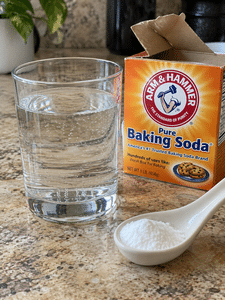
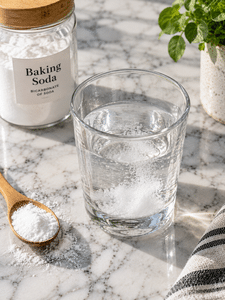
The baking soda horse trick is a viral name for mixtures that usually combine baking soda, or sodium bicarbonate, with water. Some online versions add lemon, salt, gelatin, or other ingredients. There isn’t one verified formula, and evidence doesn’t establish the trend as a treatment for erectile dysfunction, testosterone, or weight loss.
In this Article
The Story & Intro
Why I Started Looking Into the Baking Soda Horse Trick
I’m Abby Pinkmann, a 36-year-old chef just outside Austin, Texas, and the founder of EAT WELL WELL. When I first came across the phrase baking soda horse trick, the ingredient caught my attention before the promises did.
Baking soda is hardly mysterious in a kitchen.
I grew up in a big, busy family where my mom could take basic pantry ingredients and turn them into a comforting meal in about 30 minutes. She taught me to pay attention to what ingredients actually do. That lesson still shapes the way I cook today.
With baking soda, I know its kitchen behavior firsthand. Add sodium bicarbonate to an acidic ingredient, and you can watch the reaction begin. Bubbles form as carbon dioxide develops. In the right recipe, that reaction helps batters and doughs rise and contributes to the texture and browning we want.
That familiar box in the pantry, however, becomes a very different subject when someone attaches promises about sexual performance, testosterone, stamina, or weight loss to it.
That’s why I wanted to examine this trend ingredient by ingredient rather than repeat the nickname.
Cooking has always been my love language, and I believe good food doesn’t need unnecessary complication. But I also believe we should separate what an ingredient reliably does in a recipe from what social-media posts claim it can do inside the body.
Why Is This Pantry Ingredient Suddenly Called a “Horse Trick”?
The confusing part is that horse soda trick doesn’t describe one established recipe.
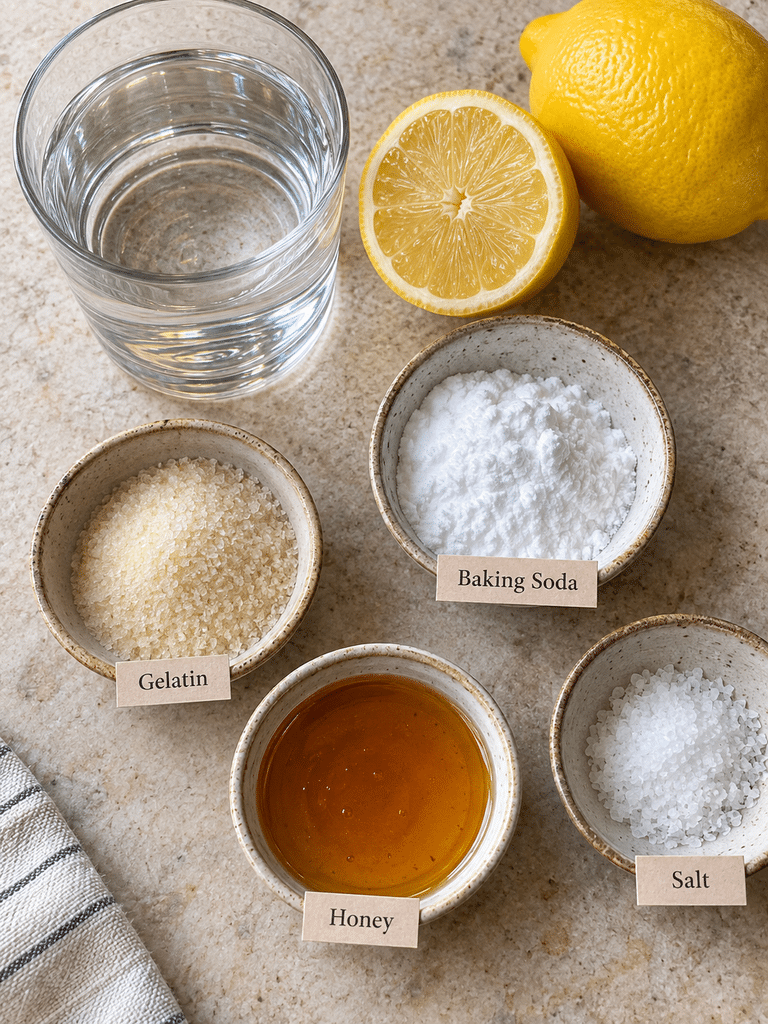
Current pages using the term describe several variations. Baking soda and water appear frequently, while other versions mention gelatin, lemon, salt, honey, or combinations of those ingredients. That means two people searching for the horse baking soda trick may actually be reading about different mixtures.
The ingredients aren’t interchangeable.
Baking soda is sodium bicarbonate, an alkaline compound commonly used as a leavening agent in cooking. Gelatin is a protein derived from collagen. Lemon juice supplies acid and a bright, tart flavor. Honey primarily contributes sweetness in a recipe. Each behaves differently in food, so combining them under one viral nickname can blur an important distinction.
That distinction also matters when someone makes a health claim. Research about one ingredient doesn’t automatically prove a claim about another ingredient or a homemade mixture containing several of them.
If you’re specifically trying to identify the baking-soda version, my horse soda trick with baking soda guide focuses more closely on that variation. I also break down the broader baking soda trick because the same pantry ingredient appears under several online names.
For this article, I’m focusing on a simpler question: What can we actually establish about the baking soda horse trick once we separate the ingredient from the viral claims?
KEY TAKEAWAYS: What You Need to Know
The baking soda horse trick usually describes an online mixture of baking soda and water, though some versions add gelatin, lemon, salt, or honey. No standardized formula defines the trend. Claims about erections, testosterone, stamina, or weight loss need evidence for those specific outcomes rather than assumptions based on a viral name.
Baking Soda Horse Trick at a Glance
The easiest way to understand this trend is to separate the catchy name from the ingredients.
What is it? The baking soda version centers on sodium bicarbonate, usually mixed with water. However, recipes circulating under similar names don’t always contain the same ingredients.
Why does it matter? Baking soda has established culinary uses, but that doesn’t establish the medical-style benefits sometimes attached to the horse soda trend.
Who is this information for? It’s useful for anyone who has encountered the recipe online and wants to understand the ingredients, claims, and safety questions before deciding what to do with that information.
When should you use it? In my kitchen, I use baking soda when its alkalinity or leavening action serves a specific culinary purpose. That familiar food use shouldn’t get confused with taking sodium bicarbonate as a daily wellness remedy.
How do online versions describe making it? Many descriptions start with baking soda and water. Others add ingredients such as lemon, salt, honey, or gelatin. Because those formulas differ, I don’t consider any one of them an established “original” recipe.
| Ingredient | What It Actually Does |
|---|---|
| Baking soda | Sodium bicarbonate acts as an alkaline ingredient and reacts with acids in cooking. |
| Water | Dissolves or disperses ingredients and forms the base of many versions described online. |
| Gelatin | A collagen-derived protein used to create gels and change texture in foods. |
| Lemon | Adds acidity and tart flavor. Its acid also reacts with sodium bicarbonate. |
| Honey | Adds sweetness, flavor, and body to a drink or recipe. |
| Salt | Adds sodium and changes flavor, but it isn’t the same ingredient as sodium bicarbonate. |
One kitchen detail makes the differences easy to see. When I stir baking soda into an acidic mixture, I can see the bubbling reaction almost immediately. Gelatin behaves nothing like that. It hydrates, dissolves with appropriate heat, and can form a gel as it cools. Calling both ingredients part of the same “horse trick” doesn’t make them equivalent.
Horse Soda Trick vs. Horse Baking Soda Trick
Searchers often encounter horse soda trick, horse baking soda trick, and baking soda horse trick as though they describe one fixed formula. Current online usage doesn’t support that assumption.
The word soda can also create another layer of confusion. In this context, it generally points toward baking soda, not baking powder or ordinary carbonated soda water.
Baking soda contains sodium bicarbonate. Baking powder typically combines sodium bicarbonate with one or more acids and other ingredients. They serve related purposes in baking, but you can’t treat the names as interchangeable.
The gelatin variation differs even more.
Food-grade gelatin comes from collagen and acts primarily as a gelling ingredient in cooking. If the version you encountered centers on gelatin rather than sodium bicarbonate, my horse gelatin for men article covers that separate trend.
That distinction becomes especially important when assessing benefit claims. Evidence concerning sodium bicarbonate can’t prove that gelatin produces the same effect, and information about gelatin can’t establish what a baking-soda drink does.
For the horse soda trick, start by identifying what’s actually in the mixture. The ingredient list tells you far more than the nickname.
What Is Actually in the Horse Baking Soda Trick?
The baking soda horse trick most often refers to baking soda mixed with water, but there isn’t one verified formula. Online versions may add lemon, gelatin, salt, or honey. Those changes matter because each ingredient behaves differently, and evidence about one mixture doesn’t automatically support claims made about another.
Is There an Original Baking Soda Horse Trick Recipe?
This is where the trend gets messy.
I couldn’t identify a single verified original recipe behind the baking soda horse trick. The versions circulating online vary in both ingredients and claimed purpose. Some center on sodium bicarbonate and water. Others introduce lemon, salt, honey, or gelatin.
So, I wouldn’t present one precise mixture as the authentic recipe.
That also means I won’t give an invented therapeutic dose simply because a viral post calls it the baking soda horse trick. A kitchen measurement isn’t automatically an appropriate amount to consume for a health goal.
The basic ingredient itself is much easier to define. Baking soda is sodium bicarbonate (NaHCO₃). It’s an alkaline compound that I regularly encounter as a chef, especially in recipes where I want controlled leavening, browning, or a change in acidity.
One of the most useful observations happens right in the bowl.
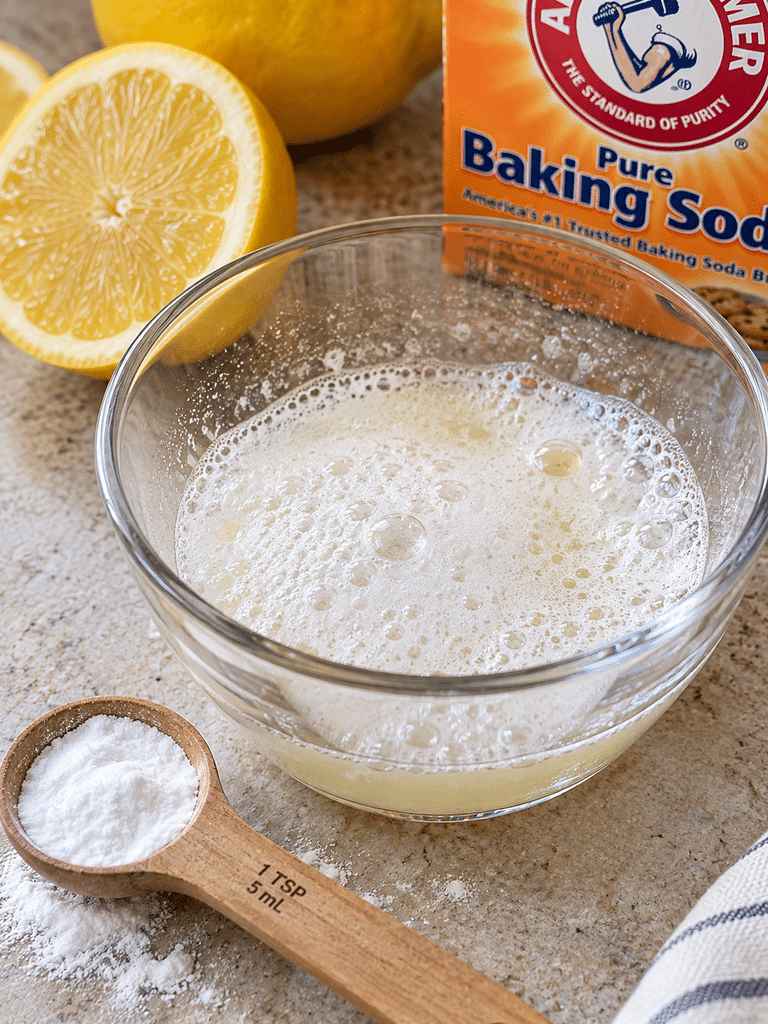
Mix baking soda with an acidic ingredient such as lemon juice, and you’ll see vigorous bubbling. The acid reacts with sodium bicarbonate and releases carbon dioxide gas. That visible reaction has a real culinary purpose. It doesn’t, however, demonstrate that a baking soda horse trick drink improves testosterone, erections, fat loss, or another unrelated health outcome.
It’s also worth checking the box before experimenting with any recipe. Baking soda, baking powder, and soda water aren’t the same thing.
Baking powder contains sodium bicarbonate plus other components, including an acid. Carbonated water contains dissolved carbon dioxide. Swapping one for another changes the mixture.
I cover other versions of these online formulas in my baking soda trick guide. You can also compare the more specific horse soda trick with baking soda if that’s the variation you originally encountered.
Why Do Some Recipes Add Gelatin, Lemon, Salt, or Honey?
The baking soda horse trick becomes harder to assess when additional ingredients enter the recipe.
From a cooking standpoint, these ingredients don’t perform the same job.
Lemon juice contributes acidity, a sharp citrus aroma, and tart flavor. Add it directly to baking soda and the mixture quickly foams as carbon dioxide forms.
Gelatin behaves differently. When I work with powdered gelatin, I first let it hydrate in cool liquid. It swells before dissolving with warmth. As the mixture cools, gelatin can create anything from a softly set texture to a firmer gel, depending on concentration.
That’s a completely different kitchen process from the bubbling reaction between acid and baking soda.
Honey contributes sweetness and a thicker mouthfeel. Salt changes flavor and adds sodium. Neither ingredient turns the horse baking soda trick into a clinically established treatment.
This distinction sounds simple, but it’s one of the most useful ways to assess viral recipes: identify each ingredient before judging the claim attached to the mixture.
For example, adding gelatin to a baking soda horse trick doesn’t mean research concerning gelatin suddenly applies to sodium bicarbonate. Adding honey doesn’t establish a new medical effect either.
The same principle applies across other pantry trends. I treat my ginger trick recipe and honey trick recipe as separate topics because changing the main ingredient changes the question we need to answer.
For the baking soda horse trick, that leaves us with a clear starting point: baking soda has identifiable chemical and culinary properties, while the viral recipe itself has no single established formula. The next question matters more, does credible evidence support the benefits people claim for it?
Does the Baking Soda Horse Trick Really Work?
The baking soda horse trick attracts attention because online posts connect a cheap pantry ingredient with big outcomes. The key question isn’t whether baking soda has effects in the body—it does. The question is whether evidence supports the specific claims attached to this viral mixture.
What Does Evidence Say About the Claims for Men?
Claims about the baking soda horse trick for men often combine several different outcomes: better erections, higher testosterone, more stamina, increased energy, or improved physical performance.
Those outcomes aren’t interchangeable.
Current research does give sodium bicarbonate a legitimate place in a narrow area of sports nutrition. The NIH Office of Dietary Supplements reports that sodium bicarbonate may provide a minor to moderate performance benefit during short-term or intermittent high-intensity activity, particularly in trained athletes. Researchers study that effect because sodium bicarbonate can help buffer hydrogen ions generated during intense muscular activity.
That finding doesn’t show that the baking soda horse trick treats erectile dysfunction or raises testosterone.
This distinction matters. A study measuring performance during intense exercise can answer questions about that exercise protocol. It can’t establish an effect on erections simply because people online use the word “performance” for both.
The current NIH Office of Dietary Supplements fact sheet also notes that research on sports supplements often involves trained athletes and that results don’t necessarily apply to forms of physical performance that researchers didn’t study.
As a chef, I find this distinction useful because it’s similar to how I think about recipes. If I know baking soda changes the browning of one food, I don’t assume it will produce every other effect I want from an ingredient. I look at the specific reaction and the conditions around it.
Health evidence deserves the same precision.
If your interest in the horse baking soda trick comes specifically from sexual-performance claims, my salt trick for erection and honey trick for men recipe cover related viral searches. They shouldn’t replace medical assessment for persistent erection problems.
Does the Horse Soda Trick Help With Weight Loss?
Another version of the baking soda horse trick claims that drinking sodium bicarbonate can speed fat loss.
I found no reliable evidence establishing the viral baking soda horse trick itself as a fat-loss method.
That distinction matters because short-term changes after drinking something don’t necessarily represent changes in body fat. Fullness, fluid shifts, digestive reactions, and changes in food intake can all affect how someone feels or what a scale displays.
None proves that baking soda caused meaningful fat loss.
The same problem appears when a viral recipe gets a new name. A horse soda trick, Brazilian version, or celebrity-associated version can sound different while still depending on unsupported conclusions about the same pantry ingredient.
I examine those variations separately in my baking soda recipe for weight loss, Brazilian baking soda trick, and Dr. Oz baking soda trick articles.
For me, the practical rule stays simple: judge the claimed outcome, not the catchy recipe name.
Is the Baking Soda Horse Trick Safe?
The baking soda horse trick uses a familiar kitchen ingredient, but familiar doesn’t mean suitable in every amount or situation. Sodium bicarbonate adds sodium and changes acid-base chemistry. Larger or repeated amounts can also cause digestive side effects, so a viral drink deserves different consideration from baking soda used in food.
What Happens When You Drink Baking Soda?
Baking soda is sodium bicarbonate, an alkaline compound with the chemical formula NaHCO₃.
In the kitchen, I can see one of its best-known reactions in seconds.
When baking soda meets enough acid and moisture, carbon dioxide develops. In a batter, those gas bubbles can contribute to lift and a tender texture. In a glass containing an acidic liquid, you may instead see immediate fizzing and foaming.
That visible reaction sometimes gives the baking soda horse trick an impressive appearance. Fizz isn’t evidence of fat burning, testosterone changes, or improved erectile function. It shows a chemical reaction.
Drinking sodium bicarbonate can also produce gastrointestinal effects. The NIH lists nausea, stomach pain, diarrhea, and vomiting among reported adverse effects associated with sodium bicarbonate use in exercise research.
That’s another reason I wouldn’t treat the horse soda trick like an ordinary flavored drink.
A teaspoon used across a batch of baked food and a concentrated amount swallowed in water create very different eating situations. Amount, frequency, medications, existing health conditions, and total sodium intake all matter.
Who Should Be Especially Careful?
Anyone considering repeated use of the baking soda horse trick for a health purpose should treat the question differently from ordinary culinary use.
People managing kidney disease, heart conditions, high blood pressure, sodium restrictions, or regular medications have additional reasons to discuss sodium bicarbonate use with a qualified clinician or pharmacist.
The same applies when someone wants the drink to treat a persistent symptom.
| Situation | Practical Consideration |
|---|---|
| Normal culinary use | Use the amount specified by the food recipe. |
| Viral wellness drink | Check the ingredients, amount, claimed outcome, and supporting evidence. |
| Regular medications | Ask a clinician or pharmacist about possible interactions. |
| Sodium restriction | Remember that sodium bicarbonate contributes sodium. |
| Persistent erection problems | Seek medical assessment rather than relying on a viral mixture. |
I keep coming back to the same distinction I learned from years of working with ingredients: purpose matters.
Baking soda can help me create golden-brown surfaces, change acidity, or produce a light crumb in the right recipe. Those real culinary properties don’t turn the baking soda horse trick into a medical treatment.
Frequently Asked Questions About the Baking Soda Horse Trick
What Do People Ask Most About the Horse Soda Trick?
What is the baking soda horse trick?
The baking soda horse trick is a viral term commonly used for mixtures containing baking soda and water. Some versions add lemon, salt, honey, or gelatin. There isn’t one verified original recipe, and the nickname doesn’t establish that the mixture has the health effects claimed in online posts.
What ingredients are in the horse soda trick?
Baking soda and water commonly appear in descriptions of the horse soda trick. Other versions mention lemon, gelatin, honey, or salt. Because the ingredient lists vary, check the exact recipe rather than assuming every post refers to the same drink.
Does the baking soda horse trick work for men?
Research on sodium bicarbonate in certain high-intensity exercise settings doesn’t establish that the baking soda horse trick treats erectile dysfunction or raises testosterone. Those are separate outcomes that require relevant evidence. Persistent sexual-health concerns deserve appropriate medical assessment rather than reliance on a viral drink.
Is It Safe and Does It Help With Weight Loss?
Is the horse soda trick the same as the horse gelatin trick?
No. The baking soda horse trick centers on sodium bicarbonate, while a horse gelatin trick centers on gelatin, a collagen-derived protein. Online content sometimes mixes the terms, but the ingredients have different culinary properties and shouldn’t get treated as the same substance.
Can the baking soda horse trick help with weight loss?
There isn’t reliable evidence establishing the viral baking soda horse trick as a fat-loss method. A temporary change in fullness, digestion, fluid balance, or scale weight doesn’t prove body-fat loss. Sustainable weight management depends on a much broader pattern than one pantry ingredient.
Is it safe to drink baking soda every day?
Don’t assume daily consumption is appropriate because baking soda sits in the pantry. Sodium bicarbonate adds sodium and can cause gastrointestinal side effects. Health conditions, medications, amount, and frequency matter. Ask a clinician or pharmacist before using it regularly for a health purpose.
Final Thoughts on the Baking Soda Horse Trick
What Should You Remember Before Trying a Viral Recipe?
The biggest thing I want you to remember about the baking soda horse trick is surprisingly ordinary: start with the ingredient, not the promise.
Baking soda is real. Its culinary chemistry is real. I’ve watched it foam against acidic ingredients countless times in the kitchen, and I rely on that chemistry when a recipe needs the reaction.
But visible activity in a mixing bowl doesn’t prove a medical benefit inside the body.
The baking soda horse trick doesn’t have one verified original formula, either. That alone should make us careful when comparing reviews or claims. A person drinking baking soda and water isn’t testing the same mixture as someone using gelatin, honey, lemon, and salt.
Before acting on any version, ask three specific questions: What exactly is in it? What outcome does the person claim? Does evidence actually measure that outcome?
Those questions cut through much of the confusion.
The EAT WELL WELL Approach
I’m Abby Pinkmann, a 36-year-old chef just outside Austin, Texas, and founder of EAT WELL WELL. My mom taught me early that pantry basics can make wonderful food without unnecessary complication. That experience still shapes how I look at trends such as the baking soda horse trick.
I respect simple ingredients enough not to give them powers they haven’t earned.
Baking soda belongs in plenty of useful recipes. Sodium bicarbonate also has studied uses outside cooking. Neither fact proves every benefit attached to a viral drink.
At EAT WELL WELL, I’d rather tell you exactly what an ingredient does, where the evidence stops, and why the difference matters.
That gives you something far more useful than another secret “trick”: clear information about what’s actually in the glass.