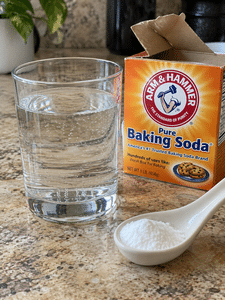
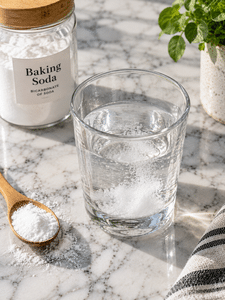
The horse soda trick with baking soda is a viral name for several homemade mixtures involving baking soda, water, and, in some versions, gelatin. There isn’t one established recipe. Baking soda has real culinary and physiological effects, but that doesn’t prove the broader wellness claims attached to this trend.
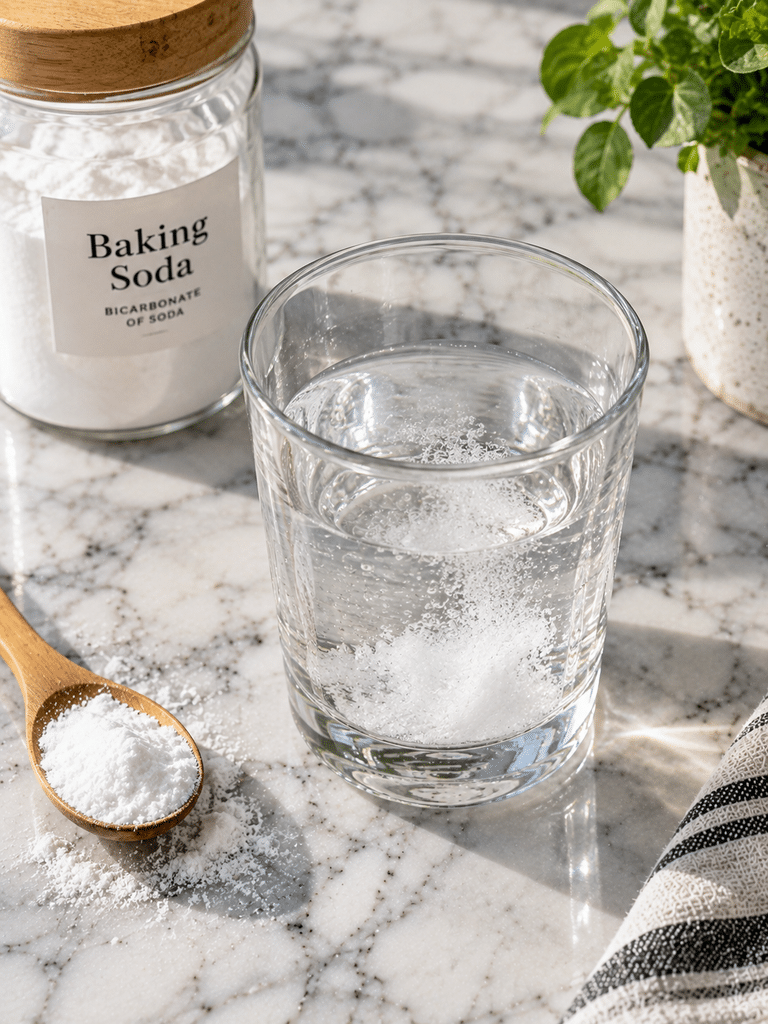
In this Article
The Story & Intro
Why I Started Looking Into the Horse Soda Trick With Baking Soda
I’m Abby Pinkmann, a 36-year-old chef just outside Austin, Texas, and the founder of EAT WELL WELL. When I first came across the phrase horse soda trick, my first question wasn’t about the promises surrounding it. I wanted to know what people were actually putting in the glass.
That matters here because I’ve worked with baking soda in the kitchen for years. It’s one of those plain pantry staples that can create a dramatic reaction under the right conditions.
Add baking soda to an acidic ingredient and you can watch the chemistry happen. Tiny bubbles form as carbon dioxide develops. In batters, that reaction can help create a tender crumb and lighter texture. Put unflavored gelatin in cool water, on the other hand, and you see something completely different. The dry granules swell as they absorb moisture before dissolving into warm liquid.
Those are ordinary, observable kitchen reactions. They’re also a good reminder that baking soda and gelatin aren’t interchangeable simply because online versions of the horse baking soda trick sometimes group them together.
My mom taught me to pay attention to details like these. I grew up in a big, busy family where she could turn pantry basics into comforting food in about 30 minutes. Cooking became my love language, and that practical approach still shapes what I share at EAT WELL WELL: understand the ingredient first, then decide what it belongs in.
That’s especially useful with viral recipes.
What Does “Horse Soda Trick” Actually Mean?
The horse soda trick with baking soda doesn’t describe one standardized formula. Current pages discussing the trend use several overlapping names, including horse soda trick, horse baking soda trick, baking soda horse trick recipe, and horse gelatin trick. Ingredient lists also change from one version to another.
Some versions center on baking soda, or sodium bicarbonate, mixed with water. Others mention unflavored food-grade gelatin. Lemon and honey also appear in variations.
So, the name alone doesn’t tell you what’s in the glass.
Baking soda itself has a clear identity. Sodium bicarbonate is an alkaline compound used in cooking and in specific medical contexts. Its chemistry is real. That fact, however, doesn’t establish claims that a viral mixture improves testosterone, erections, fat loss, or general male performance.
The gelatin variation creates another point of confusion. Gelatin is a collagen-derived protein used in foods such as desserts, gummies, sauces, and aspics. It behaves nothing like sodium bicarbonate in a recipe. I’ll separate those two ingredients carefully rather than treating every version circulating online as the same drink.
If you’ve already seen other versions of this trend, my broader guide to the baking soda trick gives useful context for how these pantry-based recipes overlap.
The practical question, then, isn’t whether the horse soda trick recipe has a catchy name. It’s what the ingredients actually do, how people prepare the different versions, what current evidence supports, and where online claims run ahead of that evidence. That’s what I’ll sort out here.
KEY TAKEAWAYS: What You Need to Know
The horse soda trick with baking soda isn’t one established recipe. The name covers several online mixtures that may contain baking soda, water, gelatin, lemon, or honey. Baking soda can neutralize acids, while gelatin supplies protein. Those properties don’t prove claims about testosterone, erections, rapid weight loss, or sexual stamina.
When I look at a viral recipe as a chef, I start with the ingredient list, not the name attached to it. That simple habit matters with this trend because changing one ingredient can completely change what happens in the glass.
- Baking soda is sodium bicarbonate. It reacts with acids and releases carbon dioxide, which explains the familiar fizz you see when it meets lemon juice or another acidic ingredient.
- Gelatin is a different ingredient. Food-grade gelatin absorbs cool water, swells, then dissolves in warm liquid. As the mixture cools, its texture starts to thicken.
- There’s no single horse soda trick recipe. The three current competitor pages reviewed for this article describe conflicting versions rather than one agreed formula.
- The word “horse” doesn’t establish an ingredient source. A recipe carrying that nickname doesn’t automatically contain anything derived from a horse. Check the actual ingredient label when the source of gelatin matters.
- A real chemical effect isn’t proof of every health claim attached to it. Baking soda’s ability to react with acid doesn’t demonstrate that a homemade drink raises testosterone, treats erectile dysfunction, or burns body fat.
- Kitchen use and repeated medicinal use aren’t the same thing. The amount, frequency, medications, sodium intake, and a person’s health conditions all matter when someone consumes sodium bicarbonate rather than simply using it in food.
| Question | Quick Answer |
|---|---|
| What is the horse soda trick? | A viral name used for several homemade mixtures involving baking soda or, in some versions, gelatin. |
| Is there one official recipe? | No. Current versions use different ingredients and preparation methods. |
| Does it contain horse ingredients? | The name alone doesn’t establish that. Ingredient labels identify the actual source. |
| Does the baking soda trick work? | Baking soda has established chemical effects, but that doesn’t prove the broader wellness claims made about this viral mixture. |
For me, that distinction is the useful takeaway. I keep baking soda in my own kitchen because I understand what it does in food. I don’t treat the familiar orange box as evidence for every benefit attached to the horse baking soda trick online.
What Is the Horse Soda Trick With Baking Soda?
The horse soda trick with baking soda is an online wellness trend rather than one established recipe. Depending on the source, the mixture may combine baking soda with water or add gelatin, lemon, or honey. The ingredients have familiar culinary properties, but the horse soda trick itself doesn’t have one verified formula or proven medical effect.
That distinction became obvious when I compared current versions of the trend for EAT WELL WELL. The recipes don’t line up. One version focuses on sodium bicarbonate and water. Another starts with gelatin. Others bring lemon or honey into the glass.
As a chef, that immediately catches my attention because those ingredients don’t perform the same job.
I can see the difference before I even taste a mixture. Baking soda disappears quickly into water and leaves a thin drink. Gelatin first swells in cool water, then turns smoother when I stir in warm water. Give that gelatin mixture time to cool and it begins to develop body.
That kitchen behavior gives us something concrete to work with. A viral name doesn’t change the chemistry of the ingredients.
What Ingredients Appear in a Horse Soda Trick Recipe?
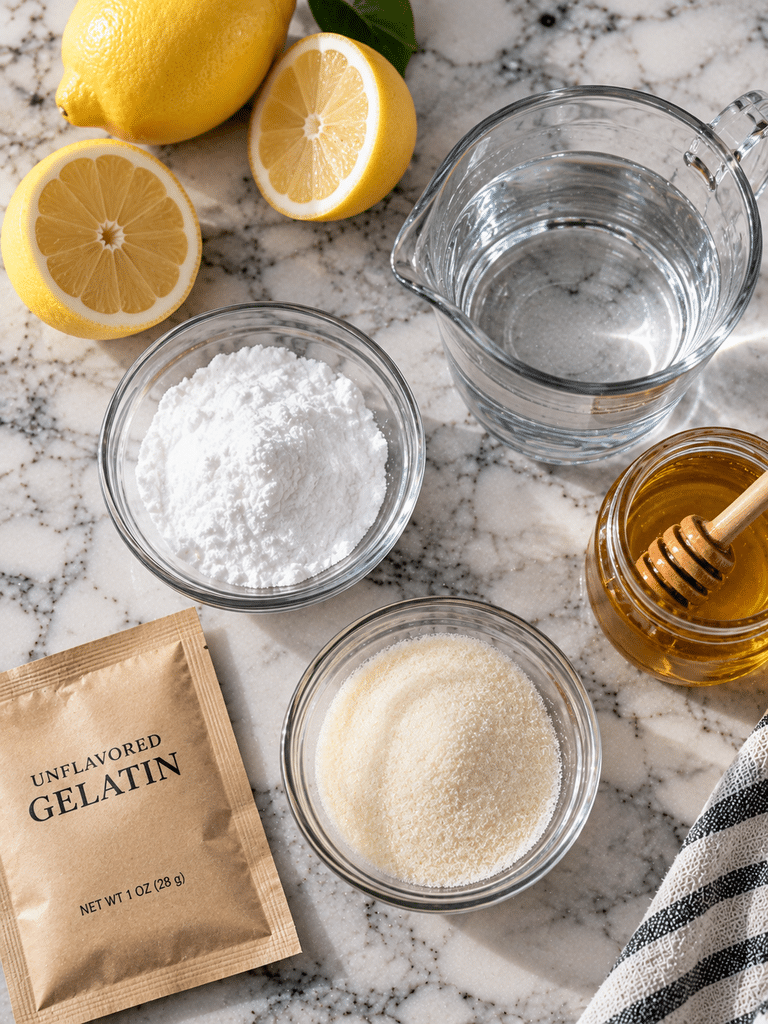
There’s no universal ingredient list for the horse soda trick recipe. Current versions repeatedly mention baking soda, water, gelatin, lemon, and honey, but they don’t always put them together.
Here’s what each ingredient actually contributes.
Baking soda, also called sodium bicarbonate, is the ingredient behind the “soda” part of the horse soda trick with baking soda. In my kitchen, I normally reach for it when a recipe contains enough acid to create the reaction I want. When sodium bicarbonate meets an acid, the reaction produces carbon dioxide. In baking, those gas bubbles can help give a batter lift and a lighter crumb.
Water acts as the liquid base in many versions. Warm water also helps dissolve bloomed gelatin.
Unflavored gelatin changes the texture rather than acting like baking soda. I always bloom gelatin in cool liquid first when I want an even result. Sprinkle it directly into hot liquid and you can end up chasing stubborn little clumps around the cup. Blooming lets the granules hydrate before warm liquid dissolves them.
That’s a small kitchen detail, but it’s exactly why I don’t treat the horse baking soda trick and gelatin versions as identical recipes.
Lemon juice appears in some variations. It adds acidity and a sharp citrus flavor. Because lemon juice contains acids, adding it directly to baking soda can also create visible fizzing. The bubbles show an acid-base reaction; they don’t demonstrate that the drink has suddenly gained a special wellness property.
Honey appears as a sweetener in some versions. It softens the tartness of lemon and adds sweetness, but it doesn’t turn the mixture into a medically established treatment.
This ingredient confusion also explains why searches for the baking soda horse trick recipe sometimes overlap with the horse gelatin for men trend. The names may overlap online, but the ingredients still deserve separate explanations.
| Ingredient | What It Does in the Mixture |
|---|---|
| Baking soda | Supplies sodium bicarbonate and reacts with acidic ingredients. |
| Water | Provides the liquid base and helps dissolve ingredients. |
| Unflavored gelatin | Adds protein and develops a thicker texture as it hydrates and cools. |
| Lemon | Adds acidity and bright citrus flavor. |
| Honey | Adds sweetness and changes the flavor profile. |
One more distinction matters: baking soda isn’t baking powder. Baking soda contains sodium bicarbonate, while baking powder combines a base with acidic components and other ingredients. Swapping one for the other changes a recipe.
Horse Soda Trick vs. Horse Gelatin Trick: What’s the Difference?
The horse soda trick and horse gelatin trick frequently appear beside each other online, but the simplest way to separate them is by looking at the main ingredient.
The horse soda trick with baking soda centers on sodium bicarbonate in the versions that actually match the phrase. The horse gelatin trick centers on food-grade gelatin dissolved in liquid. Some online recipes combine the two, which appears to have helped blur the terminology.
From my chef’s perspective, I wouldn’t group them together simply because both can come from the pantry.
Baking soda changes acid-base chemistry. Gelatin changes protein content and texture. If I remove baking soda from a batter, I may change its rise, browning, and final crumb. If I remove gelatin from a mixture designed to set, I lose the gel structure. They solve completely different culinary problems.
That difference matters even more when someone attaches a health claim to the horse baking soda trick. Evidence about gelatin can’t prove a claim about sodium bicarbonate, and research involving sodium bicarbonate can’t automatically prove a claim about a gelatin drink.
The same rule applies when a trend acquires another catchy name. My article about the Brazilian baking soda trick covers another variation, but a shared pantry ingredient doesn’t make two internet trends scientifically equivalent.
| Horse Soda Trick | Horse Gelatin Trick |
|---|---|
| Usually centers on baking soda in water. | Usually centers on unflavored gelatin and liquid. |
| Baking soda is sodium bicarbonate. | Gelatin is a collagen-derived food protein. |
| Remains thin when dissolved in water. | Can thicken as the hydrated mixture cools. |
| Reacts visibly with acidic ingredients. | Blooms in cool water and dissolves with warmth. |
For EAT WELL WELL, I use that ingredient-first distinction throughout this guide. It keeps the horse soda trick with baking soda grounded in what we can identify and observe rather than letting the viral name do the explaining.
By Abby Pinkmann, chef and founder of EAT WELL WELL, based just outside Austin, Texas. Abby approaches viral food trends from a working cook’s perspective, focusing on ingredient behavior, preparation, texture, flavor, and the difference between what happens in a kitchen and what health evidence can actually support.

How Is the Baking Soda Horse Trick Recipe Made?
The horse soda trick with baking soda has no single verified recipe or established wellness dose. Online versions mix baking soda with water, while others add gelatin, lemon, or honey. For that reason, I separate the food-style preparation from claims that a specific amount of baking soda produces a health or sexual-performance benefit.
That distinction matters when you search for a baking soda horse trick recipe. A recipe tells us how ingredients come together. It doesn’t prove what the finished drink will do inside the body.
In my kitchen, I also wouldn’t combine these ingredients blindly. Baking soda, gelatin, lemon, and honey each behave differently. Temperature matters with gelatin. Acidity matters with baking soda. The order you add them can change the texture, fizz, and final taste.
How Do You Make the Food-Style Horse Soda Trick Recipe?
When people describe a horse soda trick recipe that contains gelatin, the practical food preparation starts with unflavored food-grade gelatin and water. Some variations then mention baking soda, lemon, or honey.
For the gelatin base, I start with cool water rather than hot water. Sprinkle the gelatin evenly across the surface and give it several minutes to hydrate. In chef terms, this is blooming.
I know the gelatin has bloomed properly when the dry powder disappears and the surface looks swollen and slightly wrinkled. That visual cue is more useful in my kitchen than simply watching the clock.
Next, stir in warm water until the gelatin dissolves. I prefer comfortably warm liquid rather than aggressively boiling water for a simple gelatin drink. Stir until the mixture looks smooth and you can’t see dry granules around the sides or bottom of the cup.
At this stage, the drink remains fluid while warm. Leave it sitting and you’ll notice more body as the gelatin cools.
That is the food-preparation side of versions sometimes grouped under the horse soda trick with baking soda. It doesn’t require a health claim to explain what’s happening: gelatin hydrates, warm water helps it dissolve, and cooling changes its texture.
The baking soda component needs a separate explanation.
I’m not giving the horse baking soda trick an invented “correct” medicinal amount because current versions of the trend don’t establish one validated dose for the benefits being advertised. Copying a measurement from a viral post would make that number look more authoritative than the evidence supports.
If baking soda and lemon appear together in a horse soda trick recipe, expect visible bubbling. I see the same basic reaction whenever sodium bicarbonate meets enough acid in cooking. The fizz comes from carbon dioxide formation.
It can look dramatic in a glass.
It isn’t proof that the horse soda trick with baking soda has become more effective.
| Preparation Point | What I Look For in the Kitchen |
|---|---|
| Blooming gelatin | The granules absorb cool water and develop a swollen, wrinkled surface. |
| Adding warm water | The hydrated gelatin dissolves into a smoother, fluid mixture. |
| Cooling | The gelatin mixture gradually gains body and starts to thicken. |
| Baking soda plus acid | Bubbles and foam can appear as carbon dioxide forms. |
This is also why I treat the Dr. Oz baking soda trick and other named versions as separate claims that need their own evidence. Attaching a person, country, or memorable label to baking soda doesn’t change the chemistry in the cup.
What Can Go Wrong With a Horse Baking Soda Trick?
The biggest mistake with the horse soda trick with baking soda is assuming that a familiar pantry ingredient deserves casual dosing.
I use baking soda frequently as a chef, but culinary use gives me no reason to treat spoonfuls of it like an everyday wellness supplement. The intended use matters.
Another common problem involves confusing baking soda with baking powder. They aren’t interchangeable. Baking soda is sodium bicarbonate. Baking powder contains sodium bicarbonate alongside acidic components and other ingredients.
Gelatin creates a different set of recipe mistakes.
If you dump dry gelatin straight into hot liquid, you can get stubborn clumps instead of a smooth drink. Blooming it first gives me a much more even texture. Likewise, letting a gelatin-based horse soda trick recipe sit too long can make it noticeably thicker as it cools.
Then there’s lemon.
Adding acidic lemon juice to baking soda can create rapid fizzing. In a tall, narrow glass, enough bubbling can push foam upward quickly. I use a larger vessel whenever I expect an acid-base reaction in the kitchen because extra headspace keeps the mixture easier to control.
That’s practical cooking knowledge, not evidence of a wellness effect.
The most important mistake, however, happens when someone assumes that increasing the amount of baking soda will make the horse baking soda trick “work better.” More sodium bicarbonate means more sodium bicarbonate. It doesn’t turn an unsupported claim into a proven one.
The same caution applies when people combine several viral recipes. A baking soda horse trick recipe may start appearing beside salt, gelatin, honey, lemon, vinegar, or other ingredients online. Adding more components makes the drink more complicated without establishing the advertised result.
For example, the Brazilian baking soda trick represents another baking-soda-centered search trend. Similar ingredients don’t mean two viral recipes have the same preparation, purpose, evidence, or safety considerations.
At EAT WELL WELL, my rule is simple: identify every ingredient before judging the trick attached to it.
That’s how I approach the horse soda trick with baking soda as Abby Pinkmann, a chef who has spent years watching these ingredients behave in real food. I can tell you what blooming gelatin looks like, what sodium bicarbonate does when it meets acid, and what changes in the cup. I won’t turn those kitchen observations into health results they don’t establish.


Horse Soda Trick With Baking Soda
Ingredients
Equipment
Method
- Sprinkle the unflavored food-grade gelatin evenly across the surface of cool water and give it several minutes to hydrate. The gelatin has bloomed properly when the dry powder disappears and the surface looks swollen and slightly wrinkled.
- Stir in comfortably warm water until the bloomed gelatin dissolves. Continue stirring until the mixture looks smooth and no dry granules remain around the sides or bottom of the cup.
- The mixture remains fluid while warm and gradually develops more body as the gelatin cools. If using a variation containing baking soda and lemon, expect visible bubbling as the sodium bicarbonate reacts with the acid. The fizz is an acid-base reaction and does not establish a wellness effect.
Notes
Does the Horse Soda Trick With Baking Soda Work?
The horse soda trick with baking soda has a real ingredient behind it, but that doesn’t mean every claim surrounding the trend has evidence behind it. Sodium bicarbonate changes acid-base chemistry. Researchers have also studied it in specific high-intensity exercise settings. Those findings don’t establish the viral drink as a treatment for erections, testosterone, weight loss, or sexual stamina.
What Does Baking Soda Actually Do in the Body?
Baking soda is sodium bicarbonate, with the chemical formula NaHCO3. When sodium bicarbonate meets an acid, the reaction can produce carbon dioxide and water. That explains the fizz I see in my kitchen when baking soda meets an acidic ingredient.
The current Wikipedia entry for sodium bicarbonate describes the same basic chemistry and its familiar role as a leavening agent.
This is where discussions about the horse soda trick with baking soda can jump too quickly from chemistry to health claims.
A visible reaction proves that sodium bicarbonate reacts with acid. It doesn’t prove that a horse soda trick recipe raises testosterone or improves erections.
There is one area where sodium bicarbonate has received serious research attention: exercise.
The U.S. National Institutes of Health Office of Dietary Supplements reports that sodium bicarbonate may provide a minor to moderate performance benefit during some short-term or intermittent high-intensity activities, particularly among trained athletes. The same NIH fact sheet lists nausea, stomach pain, diarrhea, and vomiting among reported adverse effects.
That evidence matters, but so does its context.
Researchers studying athletic performance aren’t testing the viral horse baking soda trick for erectile dysfunction or testosterone. Evidence for one specific exercise outcome can’t establish an unrelated sexual-health claim.
What About Weight Loss, Testosterone, and Men’s Health?
This is where I draw the firmest line between an ingredient and the story built around it.
Current versions of the horse soda trick with baking soda attach the drink to claims involving male stamina, testosterone, erections, energy, and weight loss. I found no reliable evidence in the material reviewed for this article establishing this named recipe as a treatment for those outcomes.
Baking soda doesn’t become a fat-burning ingredient simply because someone drinks it in water.
Likewise, carbon dioxide bubbles don’t tell us anything about testosterone.
If a horse soda trick recipe contains honey, the honey contributes sugars and sweetness. If it contains gelatin, gelatin contributes protein. Water contributes fluid. Those ordinary characteristics can change the taste, texture, or nutritional composition of a drink without proving the larger claim attached to the recipe.
This distinction also applies to the baking soda recipe for weight loss. A scale-related claim needs evidence about body weight or body fat. An acid-base reaction alone can’t supply that evidence.
As a chef, I find the glass itself much easier to read than the viral marketing. I can watch gelatin hydrate. I can see baking soda fizz against acid. I can taste honey soften lemon’s sharp edge. Those observations tell me what the ingredients are doing in the recipe.
They don’t tell me someone’s testosterone level.
Is the Horse Baking Soda Trick Safe?
The horse soda trick with baking soda deserves more caution than an ordinary flavored drink because sodium bicarbonate has physiological effects. Kitchen familiarity doesn’t make unlimited consumption harmless. Quantity, frequency, medications, health conditions, and total sodium intake can change the risk.
Who Should Be Careful With Baking Soda Drinks?
Using a small amount of baking soda as part of cooking isn’t the same situation as repeatedly drinking sodium bicarbonate for a supposed health effect.
That distinction is easy for me to make as a chef.
When I add baking soda to food, I use it for a specific culinary job. I might want leavening, browning, or a particular reaction with an acidic ingredient. I measure according to the recipe rather than assuming more will produce a better result.
The same “more is better” assumption makes little sense with the horse soda trick with baking soda.
The NIH exercise-performance review notes gastrointestinal effects such as nausea, stomach pain, diarrhea, and vomiting with sodium bicarbonate supplementation. That alone gives me a practical reason not to turn an undefined social-media recipe into a casual daily routine.
People managing kidney or heart conditions, high blood pressure, sodium restrictions, or regular medications have additional reasons to discuss medicinal sodium bicarbonate use with a qualified healthcare professional.
This is also why I won’t give the baking soda horse trick recipe a supposedly effective wellness dose. The trend doesn’t supply a clinically established dose for its advertised sexual-health or weight-loss effects.
When Should You Skip a Viral Baking Soda Recipe?
Skip the assumption that the horse baking soda trick can diagnose or treat a persistent symptom.
Ongoing erection difficulties, unusual fatigue, low libido, digestive symptoms, or unexplained changes in weight can have many causes. A viral pantry drink can’t identify those causes.
That matters because the online men’s-wellness space often places unrelated recipes side by side. You may see the horse soda trick with baking soda beside a salt trick for erection, a honey trick for men recipe, or another homemade mixture.
A catchy name isn’t clinical evidence.
I use the same rule at EAT WELL WELL that I use when testing food: isolate what changed.
If I change four ingredients in a recipe at once, I make it harder to identify why the texture or flavor changed. The same logic makes multi-ingredient wellness anecdotes difficult to interpret. Someone who changes a drink, diet, sleep schedule, exercise routine, and supplements simultaneously can’t reliably identify which change produced a reported result.
That’s why the horse soda trick recipe makes more sense when we judge the actual ingredients rather than testimonials surrounding the name.
Frequently Asked Questions About the Horse Soda Trick
Does the Baking Soda Trick Work?
Baking soda works for established purposes that depend on sodium bicarbonate’s chemistry, including reacting with acids. Researchers have also studied sodium bicarbonate for certain high-intensity exercise situations. However, current evidence doesn’t establish the horse soda trick with baking soda as a treatment for erectile dysfunction, low testosterone, or weight loss.
What Is the Horse Soda Trick With Baking Soda?
The horse soda trick with baking soda is a viral name used for different homemade mixtures involving sodium bicarbonate and water. Some versions also mention gelatin, lemon, or honey. There is no single standardized horse soda trick recipe across current online descriptions.
What Is in the Horse Soda Trick Recipe?
Ingredients vary. Baking soda and water appear in versions centered on the horse baking soda trick, while other recipes include food-grade gelatin, lemon, or honey. Check the actual recipe rather than relying on the viral name because the term covers different mixtures.
Is the Horse Soda Trick the Same as the Horse Gelatin Trick?
Not necessarily. The horse soda trick with baking soda centers on sodium bicarbonate, while the horse gelatin trick centers on gelatin, a collagen-derived food protein. Some online recipes combine the terms or ingredients, which has blurred the distinction.
Why Is It Called the Horse Soda Trick?
The current sources reviewed for this article don’t establish one verified origin for the “horse” name. Online creators use several overlapping terms, including horse soda trick, horse baking soda trick, and horse gelatin trick. The nickname alone doesn’t establish that a recipe contains a horse-derived ingredient.
Is It Safe to Drink Baking Soda Every Day?
Don’t turn an unverified baking soda horse trick recipe into a daily medicinal routine based only on online claims. Sodium bicarbonate can cause gastrointestinal side effects, and individual health conditions, medications, sodium restrictions, quantity, and frequency matter. Ask a clinician or pharmacist about regular medicinal use.
Final Thoughts: What to Know Before Trying the Horse Soda Trick
The horse soda trick with baking soda sounds more mysterious than its ingredients.
Strip away the name and you’re dealing with familiar materials: sodium bicarbonate, water and, depending on the version, gelatin, lemon, or honey.
That’s how I prefer to approach it.
I’m Abby Pinkmann, a 36-year-old chef just outside Austin, Texas, and founder of EAT WELL WELL. Cooking has always been my love language. Growing up, I watched my mom turn pantry basics into comforting meals in about 30 minutes. She taught me that simple ingredients can do remarkable things when you understand how to use them.
Baking soda proves that point beautifully.
I’ve watched a small amount change browning, crumb, rise, and acidity in food. I’ve also watched gelatin transform from dry granules into a hydrated, silky mixture that gains body as it cools. Those experiences give me useful information about a horse soda trick recipe.
They don’t give me evidence for a medical outcome.
That difference sits at the heart of this guide.
The horse baking soda trick isn’t one standardized recipe, and the available evidence doesn’t turn it into a proven shortcut for testosterone, erections, or fat loss. Sodium bicarbonate has genuine chemistry and specific researched uses. Those facts stand on their own without adding promises they can’t support.
At EAT WELL WELL, I’d rather tell you exactly what an ingredient can do than make an ordinary pantry staple sound miraculous.
That’s cooking with care. And for me, that’s still what good food information should look like.