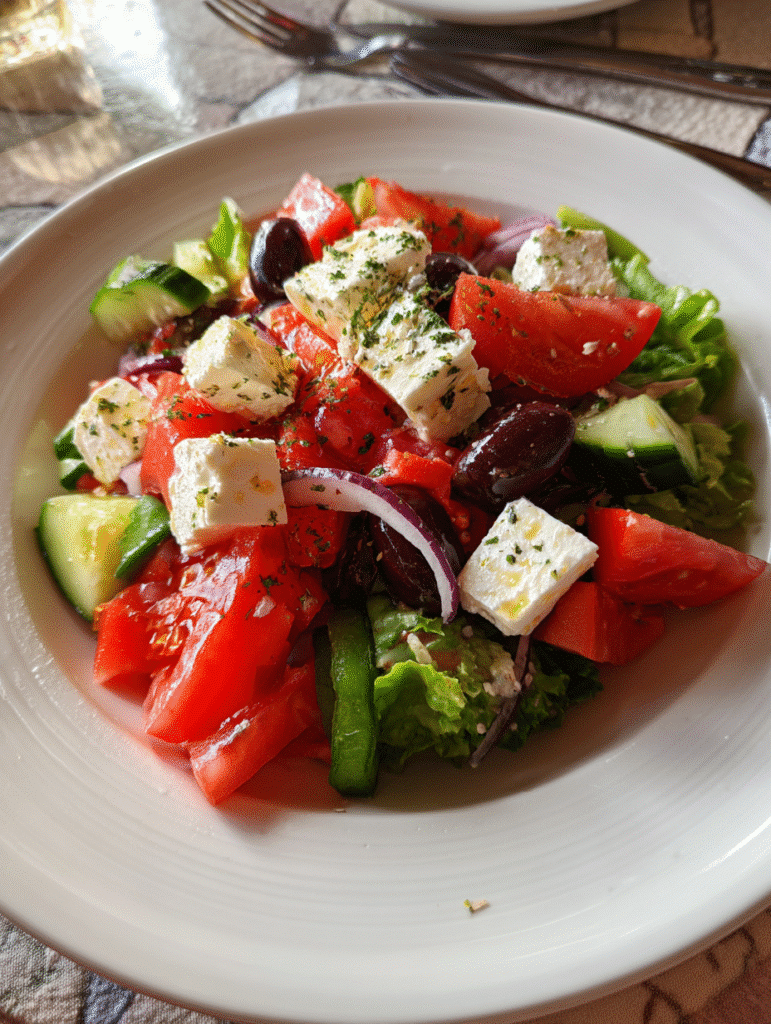
There’s something timeless and effortless about a classic Greek salad recipe. It’s fresh, it’s bold, and it brings people to the table. Whether you’re planning a weeknight dinner or a weekend BBQ, this salad earns its place on the menu. In this post, I’ll share the story behind my first real Greek salad, break down the Greek salad ingredients, and walk you through the best Greek salad recipe, with no fluff, no filler, and absolutely no lettuce.
Let’s make eating well simple, joyful, and full of flavor, just how it should be.
In this Article
Key Takeaways: What You Need to Know
- A traditional Greek salad recipe uses no lettuce, just tomatoes, cucumbers, red onion, olives, and feta.
- The dressing is a simple mix of olive oil, red wine vinegar, oregano, and lemon juice.
- Serve it with grilled chicken, crusty bread, or as a light lunch on its own.
- This is an easy Greek salad recipe that comes together in 10 minutes.
- Keep it authentic with block feta (not crumbles!) and skip the romaine.
The Story Behind the Best Greek Salad Recipe
What Makes a Greek Salad So Special?
A proper Greek salad recipe hits that rare balance: bold flavors, bright textures, and zero fuss. No mayo. No sugar. Just ripe, in-season produce and a tangy vinaigrette that pulls everything together. The real magic? Simplicity.
The Greek salad ingredients are humble, juicy tomatoes, crisp cucumbers, briny olives, sharp onion, creamy feta. But when they meet in a bowl, it’s like a mini-vacation to the Mediterranean.
And here’s the secret: It’s not a chopped salad. Traditional Horiatiki (that’s the Greek name) is chunky and rustic. The ingredients should be big enough to spear with a fork, not hidden in a shredded mix.
That’s what makes this the best Greek salad recipe for busy weeknights, cookouts, and everything in between.
My First Taste of Real Greek Salad
I was 22, freshly moved into my first apartment, and wildly under-equipped in the kitchen. A friend from college, half-Greek, all genius, invited me over for dinner. No takeout, no microwave magic. She handed me a knife and said, “We’re making Greek salad.”
I expected lettuce. Maybe some ranch.
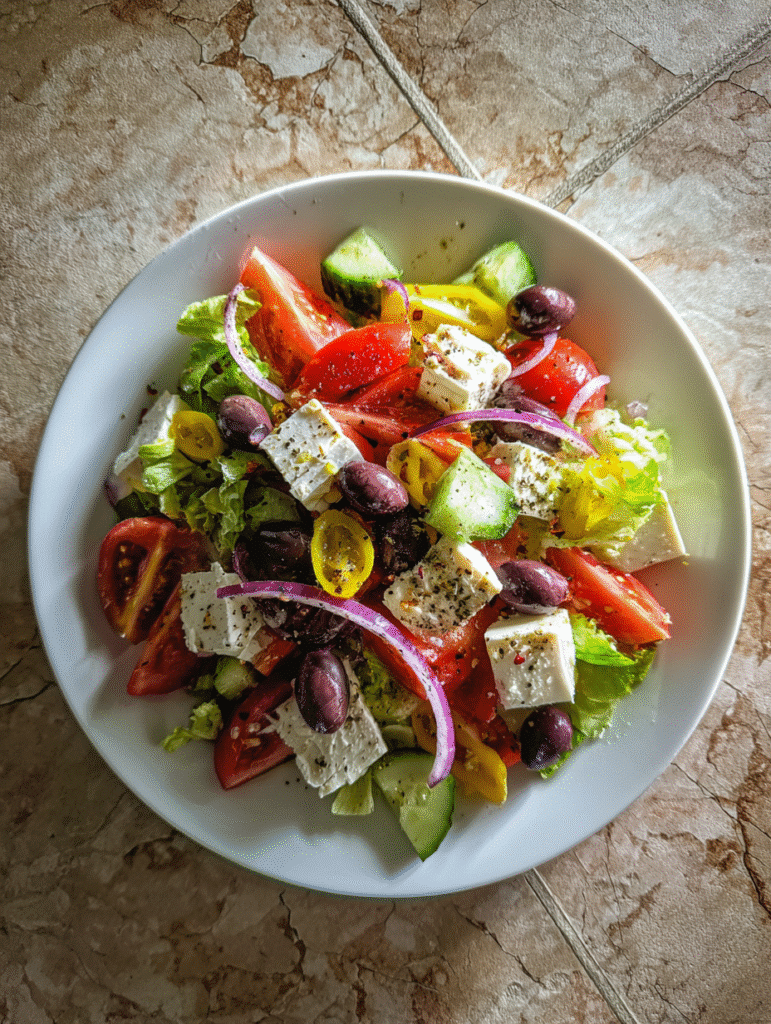
Instead, I watched her layer thick tomato wedges, half-moons of cucumber, and purple onions like she was building a mosaic. She crumbled block feta with her fingers, added a fistful of Kalamata olives, and drizzled over this golden olive oil like it was liquid gold. She didn’t measure a thing.
Then she handed me a plate and a hunk of crusty bread.
I still remember that bite, cool, crunchy, tangy, creamy, and bright all at once. It tasted like summer. And ever since, I’ve been chasing that first, perfect forkful. Now I make it at least once a week when tomatoes are in season.
What’s in a Traditional Greek Salad Recipe?
What Are the Classic Greek Salad Ingredients?
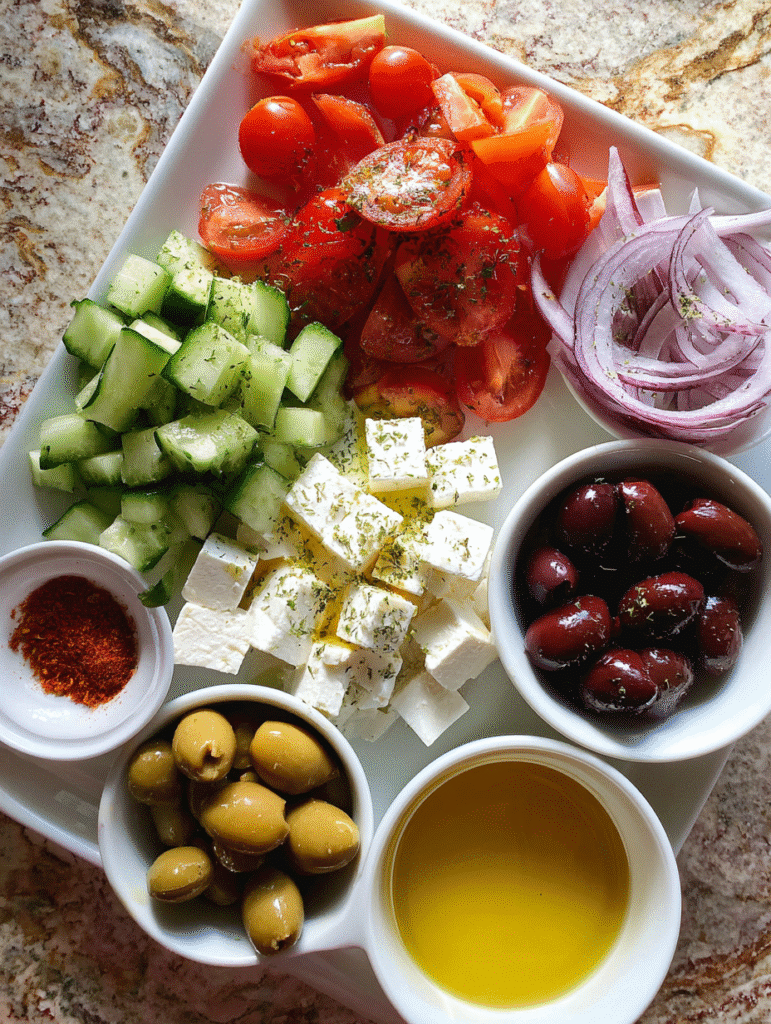
A true Greek salad, or Horiatiki, doesn’t need dressing tricks or trendy toppings. It relies on just a handful of fresh, high-quality ingredients. That’s what makes this the best Greek salad recipe, it’s simple, honest, and doesn’t cut corners.
Here’s what you’ll need:
| Ingredient | Notes |
|---|---|
| Tomatoes | Ripe and juicy. Roma or heirloom varieties work beautifully. |
| Cucumbers | Crisp and cool. Peel only if skin is tough. Slice into half-moons. |
| Red Onion | Sharp and punchy. Slice thin and soak in water if too strong. |
| Kalamata Olives | Briny and meaty. Use pitted for easier eating. |
| Feta Cheese | Block-style in brine. Crumble by hand, skip the pre-crumbled stuff. |
| Green Bell Pepper | Optional, but common in Greece. Adds crunch. |
| Oregano | Dried, not fresh. Authentic and earthy. |
| Olive Oil | Extra virgin. Use the good stuff here. |
| Red Wine Vinegar | A few splashes to brighten. |
| Sea Salt | Just a pinch, feta and olives do most of the salting. |
| Lemon Juice | Optional, but brightens the whole bowl. |
Every one of these Greek salad ingredients pulls its weight. When you toss them together, you don’t just get salad, you get flavor that tells a story.
What Ingredients Are Not in a Greek Salad?
Let’s clear up some common American-style mix-ups. A traditional Greek salad recipe does not include:
- Lettuce of any kind
- Croutons
- Carrots
- Chickpeas
- Creamy dressings
- Sugar in the vinaigrette
Does Greek salad have lettuce? Absolutely not. If you’re adding romaine or spring mix, you’re making a leafy Mediterranean salad, not Horiatiki.
If you’re craving greens, try something like this Caesar salad recipe, or even a fresh broccoli salad recipe for a veggie-forward option. But for this recipe, keep it clean and crisp.
How to Make the Best Greek Salad Dressing at Home
What’s in Traditional Greek Salad Dressing?
You don’t need a blender or a fancy bottle. The best Greek salad dressing is simple, pantry-based, and takes less than two minutes. Here’s what you’ll need for a classic version:
| Ingredient | Purpose |
|---|---|
| Extra Virgin Olive Oil | Smooth base, adds body and richness |
| Red Wine Vinegar | Bright acidity to balance the fat |
| Fresh Lemon Juice | Optional, but gives freshness |
| Dried Oregano | Earthy and classic |
| Garlic (optional) | Minced or grated for kick |
| Sea Salt + Black Pepper | Essential seasoning |
This easy Greek salad recipe is all about balance. The oil softens the punch of vinegar and lemon, while oregano ties it all to its Mediterranean roots.
Here’s my ratio:
- 3 tablespoons olive oil
- 1 tablespoon red wine vinegar
- 1 teaspoon lemon juice
- ½ teaspoon dried oregano
- Pinch of salt and pepper
- Optional: 1 clove garlic, minced
Whisk it in a bowl, or shake in a jar until emulsified. Drizzle over the salad just before serving. And don’t forget to save a little for dipping with crusty bread, because you’ll want to soak up every last drop.
Why Homemade Dressing Tastes Better
Bottled dressings often sneak in added sugars, preservatives, and gums that drown out the freshness. When you make your own Greek salad dressing, the flavor is sharper, the oil richer, and every bite more honest.
Plus, it’s cheaper. One bottle of good olive oil and vinegar can make weeks’ worth of dressings, not just for this salad but for others too, like a pasta salad dressing that’s just as clean and punchy.
And if you’re meal-prepping or making multiple salads (think chicken salad or egg salad), you can easily double or triple this dressing and keep it chilled for up to a week.
How to Make This Greek Salad Step-by-Step
Step-by-Step Greek Salad Assembly
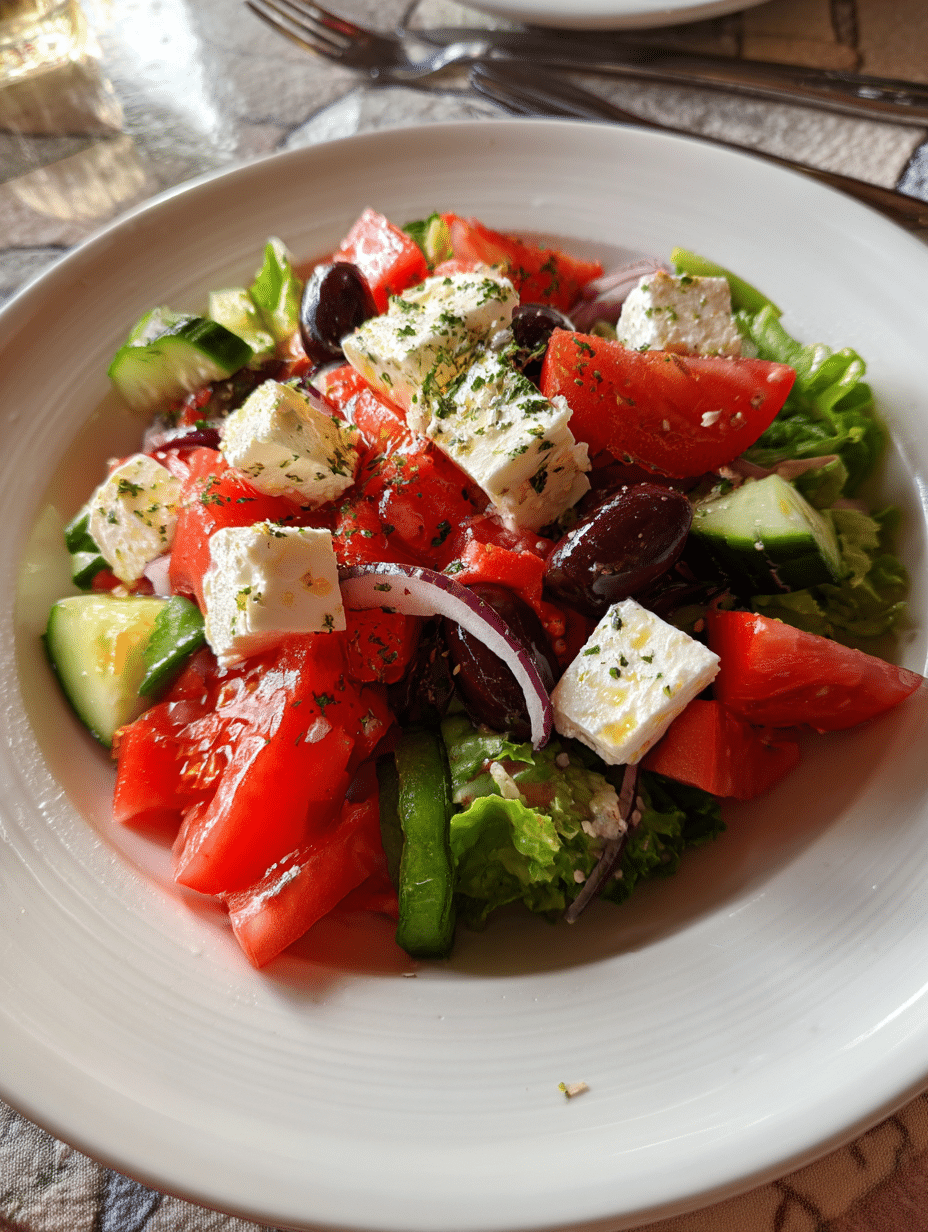
When it comes to making the best Greek salad recipe, don’t overthink it. This isn’t a tossed-till-mushy bowl. Think of it more like arranging ingredients with care.
Follow these steps for peak flavor and perfect texture.
Step 1: Prep your vegetables
- Cut tomatoes into thick wedges or large chunks.
- Slice cucumbers into thick half-moons (peel only if needed).
- Thinly slice red onions and soak in cold water for 10 minutes if too sharp.
- Cut green bell pepper (if using) into thin strips.
Step 2: Layer in a wide, shallow bowl
- Start with tomatoes and cucumbers at the base.
- Scatter red onions and olives across the top.
- Add green pepper slices.
Step 3: Add the feta
- Place one or two large blocks of feta right on top, don’t crumble yet. It softens beautifully once dressed.
Step 4: Drizzle the dressing
- Whisk the dressing again and spoon it evenly over everything.
- Let sit 5 minutes to let the flavors mingle.
Step 5: Finish with oregano and cracked pepper
- Sprinkle dried oregano generously over the top.
- Add a final twist of fresh black pepper.
This salad doesn’t need to be tossed. Just serve it as-is and let your guests dive in.
Real-Life Testimonial: “The Salad That Saved My Thursday”
Last spring, I had friends dropping by unexpectedly. I had no meat thawed, no plans, and barely 30 minutes. I grabbed a loaf of bread, a bottle of red wine, and whatever veggies I had.
I whipped up this easy Greek salad recipe using cherry tomatoes, Persian cucumbers, red onion, and a hunk of feta I’d been saving. We sat out on the patio, pulled apart pieces of warm bread, and scooped the salad right from the bowl.
Halfway through, my friend Sam said, “This tastes like summer in a bowl. I could eat this every day.”
We didn’t miss the main dish. Not even a little.
Sometimes, the best meals are the ones that don’t try too hard.
What to Eat With Greek Salad
What Goes Well With Greek Salad?
Greek salad is bold enough to stand alone but versatile enough to play well with just about any main. It adds brightness, crunch, and acid to heavier dishes, which makes it the perfect contrast to grilled meats, baked pastas, or even soups.
Here are my go-to pairings:
- Grilled Chicken or Lamb – The cool crispness of the salad cuts through smoky, charred meats.
- Roasted Potatoes or Greek Lemon Potatoes – Double down on Mediterranean flavors.
- Baked Feta Pasta – Adds a creamy, cozy element beside the crisp salad.
- Crusty Bread or Pita – Soak up the dressing at the bottom of the bowl (don’t skip this).
- Spanakopita or Stuffed Peppers – Great for vegetarian-friendly meals.
In summer, I’ll pair this salad with grilled chicken skewers and fresh lemon wedges. In cooler months, I serve it next to warm bowls of soup and toasted sourdough.
For more side inspiration, check out these tangy potato salad recipes or the crisp and hearty German potato salad, both of which can live happily on the same table.
Can Greek Salad Be a Main Dish?
Absolutely. This Greek salad recipe is protein-packed thanks to the feta and olives. To turn it into a meal, simply:
- Add grilled chicken, shrimp, or chickpeas for extra protein.
- Serve it over a scoop of quinoa or farro.
- Toss in a few boiled eggs for a Mediterranean spin on a Cobb salad.
If you’re prepping ahead, keep the dressing separate until serving and skip adding the salt until the last minute, it keeps the veggies crisp and vibrant.
For another main-worthy salad, try our pasta salad recipes, great for lunchboxes, picnics, or big-batch entertaining.
Greek Salad Tips, Storage, and Mistakes to Avoid
How Do You Store Greek Salad Without Getting Soggy?
Greek salad is one of the few that stores well, if you build it the right way.
Here’s how I do it:
- Store the dressing separately. This is rule number one. If you toss the salad in advance, the salt and acid will break down the vegetables and pull out water. You’ll end up with a soggy mess by day two.
- Leave the feta in big chunks. Crumbled feta gets mushy in the fridge. Keep it whole, and add it right before serving.
- Use a paper towel. If you’re making the salad in advance, line your container with a paper towel to absorb excess moisture.
- Keep it in an airtight glass container. This keeps the veggies crisp and the flavors pure.
Properly stored, the undressed salad will keep in the fridge for up to 3 days. The dressing lasts up to a week in a sealed jar.
For longer freshness, follow the same tips I use when prepping make-ahead dishes like this caprese salad recipe or a sturdy macaroni salad.
Common Mistakes to Avoid in a Greek Salad Recipe
Let’s save you from soggy, bland, or just plain wrong bowls. Here are the top missteps I see (and have made myself):
1. Using pre-crumbled feta
Skip it. It’s dry, coated in anti-caking agents, and lacks that briny punch. Use block feta in brine and crumble it fresh.
2. Adding lettuce
We’ve talked about this, but it’s worth repeating. Lettuce is not part of a traditional Greek salad recipe. Ever.
3. Overdressing the salad
This isn’t slaw. A light drizzle goes a long way. Let the veggies shine.
4. Using flavorless tomatoes
If your tomatoes are out of season, consider cherry tomatoes or heirlooms. Bland tomatoes ruin the whole bowl.
5. Skipping the rest time
Letting the salad sit 5–10 minutes after dressing lets the flavors meld beautifully.
6. Serving cold from the fridge
This salad is best slightly cool or room temp. Cold fat (olive oil + feta) mutes flavor.
For more tips like these, I use the same mindset when preparing other chilled salads like our crowd-favorite cucumber salad recipe.
Greek Salad Recipe
Ingredients
Equipment
Method
- Prepare vegetables: Chop the tomatoes, slice cucumbers, red onion, and green pepper (if using).
- Layer salad: In a wide bowl, arrange tomatoes and cucumbers first, then layer onions, olives, and pepper strips.
- Add feta: Place whole blocks or thick slabs of feta on top.
- Make dressing: In a small jar, combine olive oil, red wine vinegar, lemon juice, oregano, garlic (if using), salt, and pepper. Shake well.
- Dress the salad: Drizzle dressing over the salad. Do not toss. Let sit for 5–10 minutes before serving.
- Finish and serve: Sprinkle extra oregano and black pepper to finish. Serve with crusty bread or grilled chicken.
Notes
Greek Salad Recipe FAQs
How do you make a Greek salad?
To make a Greek salad, chop ripe tomatoes, crisp cucumbers, red onion, and green bell pepper into large pieces. Add Kalamata olives and a thick slab of feta cheese. Drizzle with a simple dressing made from olive oil, red wine vinegar, lemon juice, and dried oregano. This traditional Greek salad recipe takes just 10 minutes and requires no cooking.
What is in a Greek salad?
A classic Greek salad includes tomatoes, cucumbers, red onion, Kalamata olives, green bell pepper, block feta cheese, and a simple vinaigrette. The Greek salad ingredients are always fresh, rustic, and never mixed with lettuce. Oregano and olive oil finish the dish.
What to eat with Greek salad?
This Greek salad recipe pairs well with grilled chicken, lamb, roasted potatoes, or crusty bread. It’s also excellent next to pasta or baked feta dishes. You can serve it as a side or make it a main meal by adding chickpeas, grains, or boiled eggs. The bold, briny flavors complement rich or smoky foods perfectly.
What ingredients are not included in a Greek salad?
Traditional Greek salad recipes do not include lettuce, carrots, creamy dressings, sugar, or croutons. Authentic versions skip leafy greens and focus on firm, chunky vegetables, real feta, and a vinegar-based dressing. Stick to the essentials for the best results.
Does Greek salad have lettuce?
No, a real Greek salad does not have lettuce. If your Greek salad recipe includes romaine or mixed greens, it’s a modern variation, not authentic. The original Greek version focuses on chopped vegetables, feta, olives, and simple dressing with no leafy base.
How do you make a Romaine salad?
To make a romaine salad, chop romaine lettuce into bite-sized pieces. Add toppings like cucumber, tomato, and feta, if desired. Toss with a vinaigrette or creamy dressing. While this can be inspired by Mediterranean flavors, it’s not a true Greek salad recipe.
Final Thoughts: Why This Greek Salad Recipe Belongs in Your Rotation
When I think about the meals I return to week after week, this Greek salad recipe always makes the cut. It’s fast, fresh, and wildly flavorful. You can serve it in 10 minutes, scale it for a crowd, or stretch it into dinner with a few grilled additions.
Even better, it’s forgiving. No perfect measurements. No exacting techniques. Just real ingredients that sing when brought together.
Whether you’re cooking for your family, hosting friends, or just want a clean, satisfying lunch, this Greek salad delivers every time.