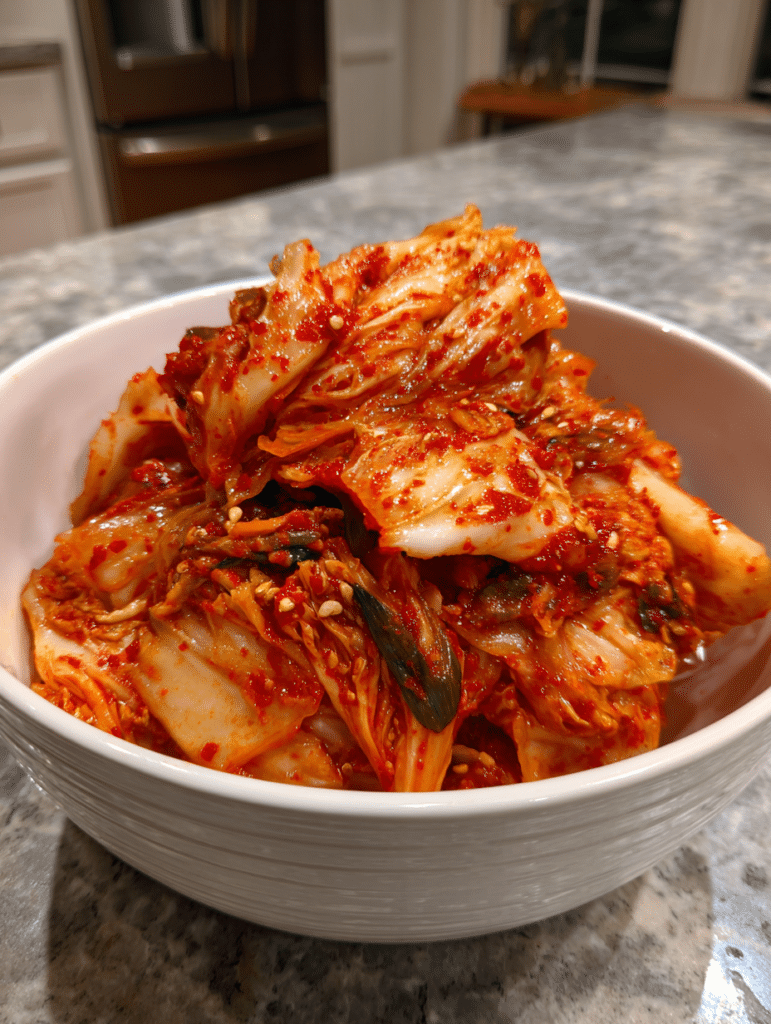
The first time I made fermented cabbage kimchi, I stood in my small Texas kitchen just outside Austin, hands covered in chili paste, wondering if I had gone too far. My mom always believed simple food brought people together, but this felt different. It was bold. It had personality.
At EATWELLWELL, I’ve always leaned into recipes that feel doable, even on busy nights. This one surprised me. The crunch of napa cabbage, the tang from fermentation, and that deep savory kick—it all comes together in a way that feels both comforting and exciting.
That’s when it clicked. Great food doesn’t need to be complicated. It just needs care. And this fermented cabbage kimchi recipe proves it every time.
In this Article
KEY TAKEAWAYS: What You Need To Know
- Fermented cabbage kimchi is a spicy, tangy fermented dish made with napa cabbage
- It matters because fermentation builds flavor and supports balanced eating
- Perfect for beginners, busy families, and anyone who loves bold flavors
- Best used for meal prep, side dishes, or quick flavor boosts
- You can make it at home with simple ingredients and a few easy steps
What Is Fermented Cabbage Kimchi and Why Does It Matter?
Fermented cabbage kimchi is a traditional Korean side dish made by salting napa cabbage and fermenting it with spices. It develops a tangy, savory flavor over time. This process creates depth, texture, and a natural balance of flavors that fresh dishes cannot match.
What makes fermented cabbage kimchi unique?
Kimchi stands out because of its fermentation. Unlike fresh cabbage dishes, fermented cabbage kimchi changes over time. It starts crisp and mildly spicy. Then it becomes tangy, rich, and layered in flavor.
Traditionally, families in Korea prepare kimchi in large batches. They use napa cabbage, also called kimchi napa cabbage, along with garlic, ginger, and chili flakes. Each ingredient plays a role. Together, they create a bold and balanced dish.
Fermentation also gives kimchi its signature taste. Natural bacteria break down sugars in the cabbage. This creates that slightly sour flavor many people love.
Why is fermented cabbage kimchi important for everyday cooking?
First, it adds instant flavor. You can take a simple bowl of rice and turn it into something exciting with just a spoonful of kimchi.
Second, it fits modern cooking needs. You can make a batch once and use it all week. It works well with quick meals like eggs, bowls, or even alongside dishes like this corned beef and cabbage slow cooker recipe.
Finally, it connects food to tradition. At EATWELLWELL, I always come back to what my mom taught me. Food is about care and connection. This dish carries both. Even today, when I make kimchi with my sister, it feels like we’re continuing that story—simple ingredients, shared moments, and food that brings people together.
Ingredients for the Best Fermented Cabbage Kimchi Recipe
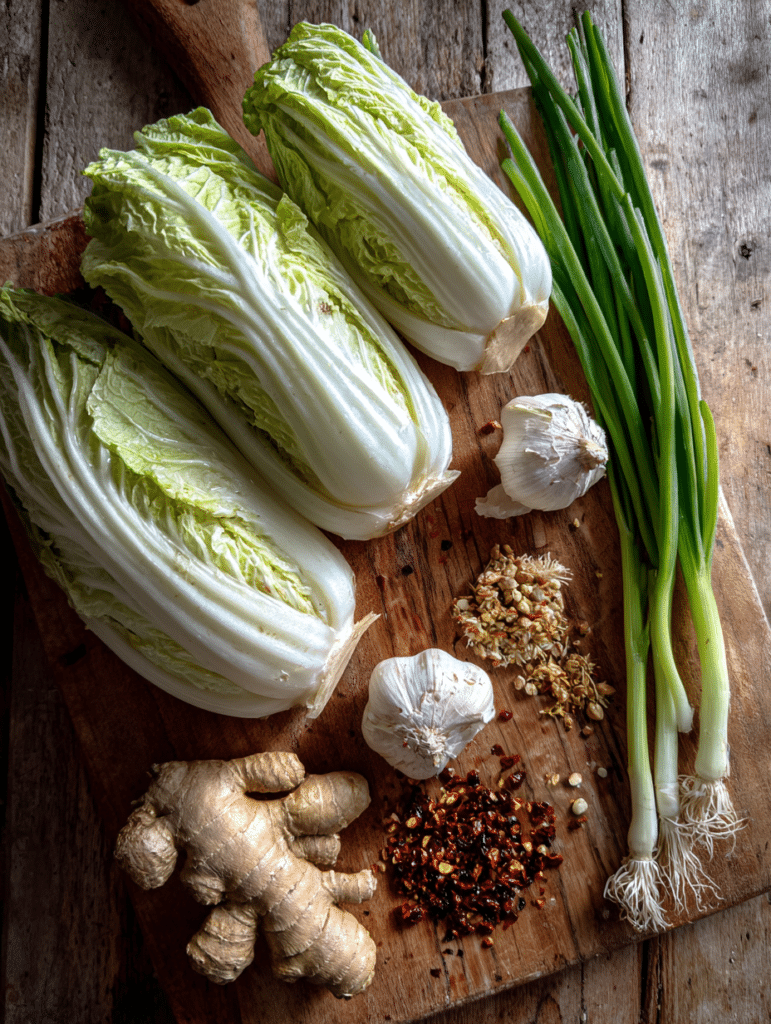
Fermented cabbage kimchi recipe ingredients are simple and accessible. You need napa cabbage, salt, garlic, ginger, and chili flakes. Each ingredient plays a clear role in flavor and fermentation. When combined, they create the bold, tangy taste that defines kimchi.
Essential ingredients for authentic flavor
When I first started making fermented cabbage kimchi, I worried I’d need hard-to-find ingredients. That wasn’t the case. My mom always taught me to start with what you have, and this recipe follows that same idea.
Here’s what you’ll need:
- Napa cabbage – The base of every great kimchi napa cabbage recipe
- Salt – Draws out moisture and starts fermentation
- Garlic – Adds depth and sharp flavor
- Fresh ginger – Brings warmth and balance
- Korean chili flakes (gochugaru) – Gives color and heat
- Green onions – Add freshness and texture
- Fish sauce or soy sauce – Builds savory richness
If you prefer a milder version, you can reduce the chili flakes. If you want a plant-based option, skip fish sauce and use soy sauce instead.
This approach keeps the recipe flexible, just like many dishes on EATWELLWELL, where simple swaps make cooking feel doable on any day.
How to choose quality ingredients for kimchi napa cabbage
Choosing the right ingredients makes a noticeable difference. You don’t need anything fancy, but freshness matters.
- Pick firm napa cabbage with crisp leaves and no dark spots
- Use fresh garlic and ginger for stronger flavor
- Check your chili flakes for bright color, not dull or faded
Here’s a quick breakdown to make it even clearer:
| Ingredient | Purpose |
|---|---|
| Napa Cabbage | Provides crunch and absorbs flavors |
| Salt | Starts fermentation and softens cabbage |
| Garlic & Ginger | Add depth and aroma |
| Chili Flakes | Bring heat and color |
| Fish Sauce / Soy Sauce | Adds savory umami flavor |
I often remind readers that simple ingredients can still create something deeply satisfying. That belief comes straight from my childhood kitchen, where quick meals still felt meaningful.
If you enjoy simple ingredient-based recipes, you might also like this ginger trick recipe, which uses similar pantry staples in a different way.
How to Make Fermented Cabbage Kimchi Step by Step
Fermented cabbage kimchi is easy to make at home. You salt napa cabbage, prepare a simple seasoning paste, mix everything together, and let it ferment. The process takes a little time, but each step is simple and manageable, even for beginners.
Simple step-by-step fermented cabbage kimchi recipe
When I make fermented cabbage kimchi, I like to slow down and enjoy the process. It reminds me of those early days cooking with my mom, where even basic steps felt meaningful.
Here’s how to do it:
Step 1: Prepare and salt the cabbage
Cut your kimchi napa cabbage into quarters. Rinse it, then sprinkle salt between the leaves. Let it sit for 1–2 hours until it softens. This step draws out water and starts the fermentation process.
Step 2: Rinse and drain
After salting, rinse the cabbage well to remove excess salt. Let it drain fully. You want it moist, not dripping.
Step 3: Make the seasoning paste
In a bowl, mix garlic, ginger, chili flakes, and your fish sauce or soy sauce. Stir until it forms a thick, red paste.
Step 4: Combine everything
Rub the paste into the cabbage thoroughly. Make sure every leaf gets coated. This is where the flavor builds.
Step 5: Pack and store
Place the coated cabbage into a clean jar. Press it down tightly so there are no air gaps. Seal the container loosely.
Step 6: Let it ferment
Leave the jar at room temperature for 1–3 days. Then move it to the fridge. The longer it sits, the deeper the flavor becomes.
If you enjoy hands-on recipes like this, you might also like this turmeric golden milk recipe, which brings the same comforting, homemade feel.
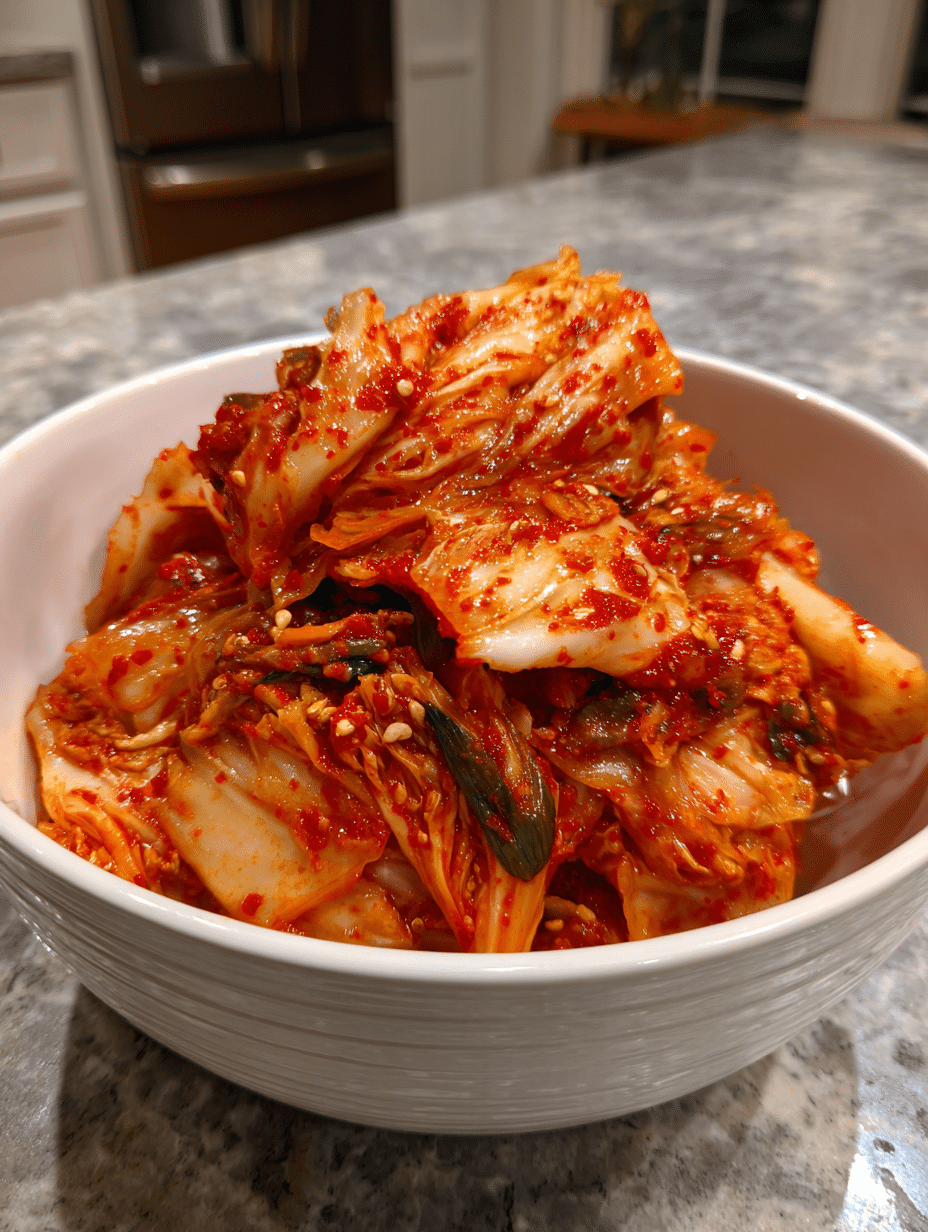

Fermented Cabbage Kimchi
Ingredients
Equipment
Method
- Cut napa cabbage into quarters, rinse, and sprinkle salt between the leaves. Let sit for 1–2 hours until softened.
- Rinse cabbage thoroughly to remove excess salt and let drain completely.
- In a bowl, mix garlic, ginger, chili flakes, and fish sauce or soy sauce to form a paste.
- Rub the seasoning paste evenly into the cabbage, coating all leaves thoroughly.
- Add chopped green onions and mix gently.
- Pack cabbage tightly into a clean jar, pressing down to remove air pockets.
- Leave at room temperature for 1–3 days to ferment, then transfer to the refrigerator.
Notes
Common mistakes and how to avoid them
Even though this fermented cabbage kimchi recipe is simple, a few small mistakes can affect the final result.
- Over-salting the cabbage
Too much salt can overpower the flavor. Stick to moderate amounts and rinse well. - Not fermenting long enough
Kimchi needs time. If it tastes flat, give it another day. - Leaving too much air in the jar
Air can affect fermentation. Press the cabbage down firmly. - Using unclean containers
Always use clean jars to keep the process safe and consistent.
| Step | Key Tip |
|---|---|
| Salting | Let cabbage soften fully |
| Rinsing | Remove excess salt |
| Mixing | Coat evenly for best flavor |
| Fermenting | Taste daily to check progress |
At EATWELLWELL, I always remind readers that cooking doesn’t need perfection. It just needs attention and care. Even if your first batch isn’t perfect, you’ll learn quickly and improve each time.
How Long Should You Ferment Kimchi?
Fermented cabbage kimchi typically ferments for 1 to 3 days at room temperature, then continues developing flavor in the fridge. The timing depends on your taste preference. Short fermentation gives a mild flavor, while longer fermentation creates a deeper, tangy profile.
Fermentation time explained clearly
When I first made fermented cabbage kimchi, I kept checking the jar every few hours. I wasn’t sure what I was looking for, but over time, I learned to trust the process.
Here’s how fermentation works in a simple way:
- Day 1: The kimchi tastes fresh, slightly salty, and mildly spicy
- Day 2–3: It starts to develop a tangy flavor and a stronger aroma
- After refrigeration: The flavor deepens slowly over days and even weeks
Temperature plays a role too. A warmer kitchen speeds things up. A cooler space slows it down.
How do you know it’s ready?
- You’ll notice a slight sour smell
- The cabbage softens but still keeps some crunch
- Small bubbles may appear, showing active fermentation
If you prefer a lighter taste, move it to the fridge earlier. If you want bold flavor, let it sit longer before chilling.
This flexibility makes fermented cabbage kimchi recipe perfect for different tastes and schedules.
How to store fermented cabbage kimchi safely
Once your kimchi reaches a flavor you enjoy, proper storage keeps it fresh and safe.
- Use airtight glass containers to maintain quality
- Keep it refrigerated to slow fermentation
- Press cabbage below liquid to reduce air exposure
According to food safety basics from the USDA, keeping fermented foods at proper cold temperatures helps maintain quality and reduces spoilage risks.
Kimchi can last for weeks or even months in the fridge. Over time, it becomes more tangy and softer. Many people actually prefer aged kimchi for cooking.
| Stage | Flavor Profile |
|---|---|
| Fresh (Day 1) | Mild, crisp, lightly salty |
| Early Ferment (Day 2–3) | Tangy, balanced, flavorful |
| Aged (1+ weeks) | Deep, sour, rich |
If you enjoy recipes that evolve over time like this, you might also find interest in simple pantry-based ideas such as this apple cider vinegar gummies recipe for weight loss, which also focuses on everyday ingredients used in practical ways.
At EATWELLWELL, I always come back to one idea: food should work with your life, not against it. This recipe fits right in. You prepare it once, and it keeps giving back all week.
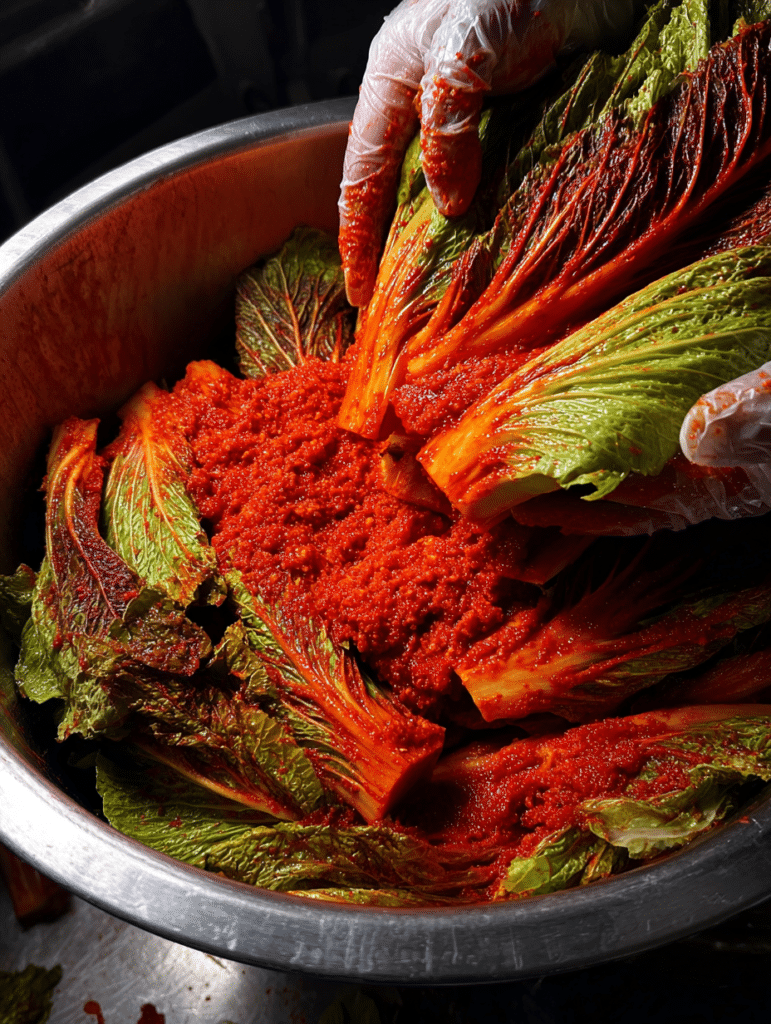
Ways to Use Fermented Cabbage Kimchi in Daily Meals
Fermented cabbage kimchi adds bold flavor to simple meals. You can use it in rice bowls, eggs, soups, or quick lunches. It works as a side dish or a main ingredient. Its tangy taste brings balance and depth to everyday cooking without extra effort.
Easy meal ideas using fermented cabbage kimchi
When I keep a jar of fermented cabbage kimchi in my fridge, meals come together faster. That’s something I learned early on. My mom always kept a few staples ready, and it made cooking feel easy, even on busy days.
Here are simple ways to use it:
- Rice bowls – Add kimchi over warm rice with a fried egg
- Scrambled eggs – Mix chopped kimchi into eggs for a quick breakfast
- Soups and stews – Stir it into broth for instant depth
- Tacos or wraps – Use it as a tangy topping
It also pairs well with hearty dishes. For example, serving it alongside this corned beef and cabbage slow cooker recipe creates a balanced plate with both rich and tangy flavors.
If you enjoy quick kitchen ideas, you can also try simple recipes like this ginger trick recipe or this oat trick for weight loss, which follow the same idea of keeping meals practical and approachable.
For a slightly different twist, I sometimes add kimchi to bowls inspired by sweet-savory combinations like this asian honey protocol recipe. The contrast works surprisingly well.
Why fermented foods support balanced eating
Fermented cabbage kimchi matters because it brings natural flavor and variety to meals. It helps you rely less on heavy sauces and still enjoy satisfying food.
Fermented foods like kimchi have been part of traditional diets for generations. They develop flavor naturally through time and simple ingredients. You can read more about its cultural background and preparation on Wikipedia.
From my experience, adding fermented cabbage kimchi recipe into weekly meals encourages more home cooking. It makes simple food feel complete.
At EATWELLWELL, that’s always the goal. Cooking should feel realistic and rewarding, not overwhelming.
Real reader testimonial:
“I tried Abby’s fermented cabbage kimchi recipe last weekend, and I couldn’t believe how easy it was. I’ve been adding it to my lunches all week, and it makes everything taste better without extra work.” – Jessica M., reader
If you like building simple habits around food, recipes like this jello weight loss recipe or this turmeric golden milk recipe also fit naturally into a balanced routine.
Frequently Asked Questions
What is fermented cabbage kimchi and how is it made?
Fermented cabbage kimchi is a traditional Korean dish made by salting napa cabbage and mixing it with garlic, ginger, and chili flakes. It ferments over time, creating a tangy, rich flavor. You prepare it by salting, seasoning, and storing it to ferment.
How long does fermented cabbage kimchi last in the fridge?
Fermented cabbage kimchi can last several weeks to months in the fridge. It stays safe to eat as long as it remains properly stored in an airtight container. Over time, it becomes more tangy and softer, which many people enjoy.
Can beginners make fermented cabbage kimchi at home?
Yes, beginners can easily make fermented cabbage kimchi at home. The process uses simple ingredients and basic steps. With a little patience during fermentation, anyone can create a flavorful batch.
What are the main ingredients in kimchi napa cabbage recipes?
Kimchi napa cabbage recipes typically include napa cabbage, salt, garlic, ginger, chili flakes, and fish sauce or soy sauce. These ingredients work together to create the signature spicy and tangy flavor.
Is fermented cabbage kimchi good for everyday meals?
Fermented cabbage kimchi works well in everyday meals because it adds bold flavor quickly. You can use it as a side dish or mix it into rice, eggs, or soups to make simple meals more satisfying.
How do you know when kimchi is fully fermented?
You know fermented cabbage kimchi is ready when it smells slightly sour, tastes tangy, and shows small bubbles. The cabbage will soften but still have some crunch. Taste it daily to decide when it reaches your preferred flavor.
Final Thoughts on Making Fermented Cabbage Kimchi at Home
Fermented cabbage kimchi is a simple, flavorful dish you can make with basic ingredients and time. It brings bold taste, fits into everyday meals, and connects you to a long tradition of home cooking. Anyone can make it, and each batch gets better with practice.
When I think about this recipe, I always come back to where it started for me. A small kitchen, a handful of ingredients, and a willingness to try something new. That’s exactly what EATWELLWELL stands for. Simple food made with care.
My mom used to turn pantry basics into something comforting in under 30 minutes. This recipe follows that same spirit, even though it takes a little patience. The steps are easy. The ingredients are familiar. And the result feels deeply satisfying.
Now, I make fermented cabbage kimchi regularly with my sister. It’s part of our routine. We prepare a batch, store it, and use it throughout the week. It saves time and adds flavor without extra effort.
If you enjoy practical recipes like this, you might also like trying simple ideas such as this honey trick recipe, this dr gupta gelatin recipe, or this apple cider vinegar gummies recipe for weight loss. Each one follows the same idea: keep things simple and make food work for your life.