Disclaimer: This content is for educational purposes only, not medical advice. Always consult with a doctor before making significant changes to your diet, especially if you have pre-existing health conditions.
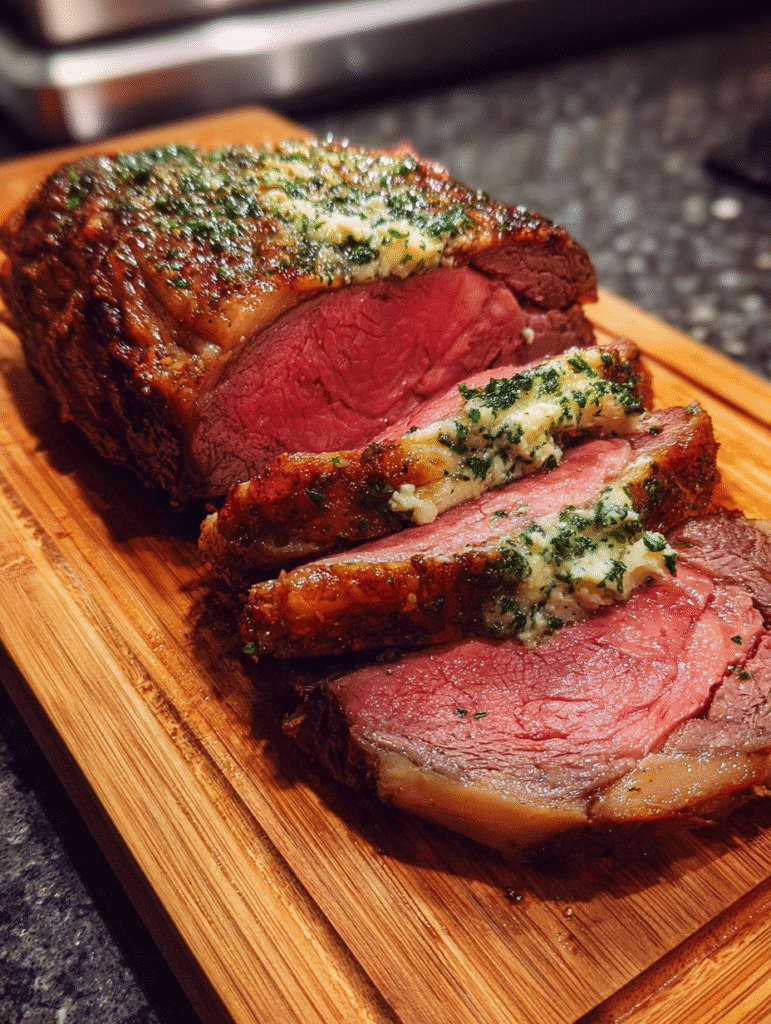
The first time I cooked a prime rib roast recipe, I was terrified. My family was waiting, the oven timer ticked, and I kept peeking through the glass like it might talk back. But once that golden crust and deep marbling hit the table, it was magic. Cooking prime rib doesn’t need to be complicated or expensive, it’s all about timing, temperature, and trust. In this guide, I’ll show you how to make the juiciest, most tender roast that turns any dinner into a celebration, with step-by-step details for oven roasting and smoking perfection.
In this Article
Key Takeaways: What You Need To Know
- Prime rib roast is a tender, flavorful cut from the beef rib section, perfect for special occasions.
- The best way to cook prime rib roast in the oven is slow-roasting at a low temperature, then finishing with a high-heat sear.
- Internal temperature determines doneness: rare (120°F), medium-rare (130°F), medium (135°F).
- Always rest your roast for at least 20 minutes before carving.
- You can adapt this method for boneless or smoked prime rib roast recipes with minimal changes.
The Story Behind My Favorite Prime Rib Roast Recipe
Why Prime Rib Roast Feels Like Home
A prime rib roast recipe transforms simple ingredients into a restaurant-quality meal. It’s slow-cooked to tender perfection with a caramelized crust and juicy pink center that melts in your mouth, ideal for holidays, gatherings, or an unforgettable Sunday dinner.
I still remember the first Christmas I made it on my own. My mom’s kitchen smelled of garlic, rosemary, and a touch of butter sizzling against marbled beef. I followed her old notebook, smudged with gravy fingerprints, and hoped I wouldn’t ruin the roast.
When I sliced through that tender rib and saw the rosy center, I realized something important: good food doesn’t just fill a plate; it brings everyone closer.
That’s the kind of joy I want you to feel when you make this prime rib roast, whether it’s your first time or your fiftieth.
What Makes a Prime Rib Roast So Special?
A prime rib roast is cut from the primal rib section of beef, known for rich marbling and buttery tenderness. It’s often called a standing rib roast and can be cooked bone-in or boneless for versatile flavor and texture.
Prime rib isn’t just another roast, it’s the crown jewel of beef. It comes from the rib section, one of the most flavorful cuts of the cow. The fat marbles through the meat, keeping it juicy even after hours in the oven.
Unlike a beef stew that slowly breaks down over time (see my Beef Stew Recipe), this roast holds its structure, locking in juices while building that signature crust that’s pure heaven.
I like to keep mine simple: kosher salt, cracked pepper, garlic, and herbs. That’s it. The oven does the rest.
How Do You Cook a Prime Rib in the Oven?
The Best Way to Cook Prime Rib Roast in the Oven
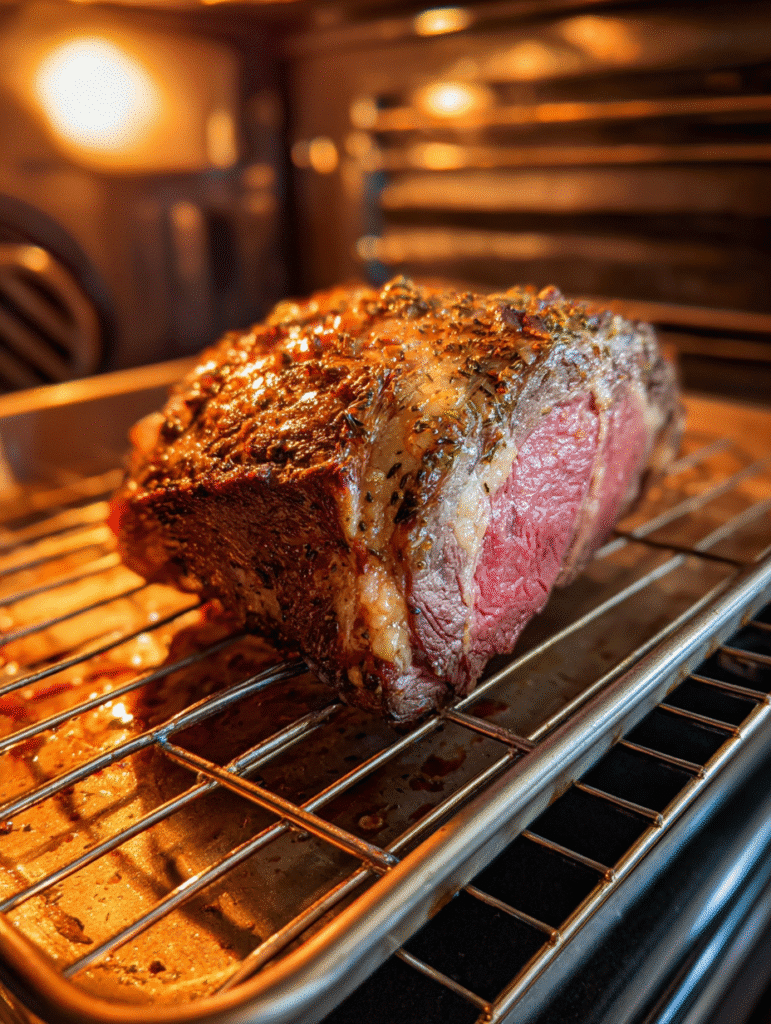
The best way to cook prime rib roast in the oven is to roast it low and slow at 250°F until it reaches your target internal temperature, then finish at 500°F for 10 minutes to crisp the crust. Always rest 20–30 minutes before carving.
Cooking a prime rib in the oven feels a little like alchemy. You start with a heavy, cold piece of beef, and through patience and heat, you create something deeply flavorful and tender.
I usually start with a 5–6 pound roast and let it come to room temperature for at least an hour before cooking. This ensures the meat cooks evenly.
Here’s the method I swear by after years of Sunday dinners and Christmas feasts:
- Preheat the oven to 250°F.
Slow, gentle heat helps the fat render and keeps the center pink. - Pat the roast dry and season generously.
I use salt, pepper, crushed garlic, and fresh rosemary. The seasoning forms that golden crust later. - Roast uncovered until it reaches your target internal temperature (see chart below).
- Rest for 20–30 minutes, tented with foil.
This step is key—the juices redistribute and keep the meat moist. - Crank the oven to 500°F for 10 minutes just before serving to crisp the outside.
It’s the same method I recommend when people ask me how to bring out deep, developed flavors—much like in my Beef Bourguignon recipe, where patience makes all the difference.
Prime Rib Roast Temperature Chart
This prime rib roast temperature chart shows when to remove your roast from the oven based on desired doneness. Always rest 20–30 minutes before slicing for the juiciest results.
| Doneness | Remove From Oven At | Final Temp After Rest | Appearance |
|---|---|---|---|
| Rare | 115°F | 120°F | Deep pink center |
| Medium-Rare | 125°F | 130°F | Warm pink throughout |
| Medium | 130°F | 135°F | Light pink, slightly firm |
| Medium-Well | 140°F | 145°F | Faint pink center |
| Well Done | 150°F+ | 155°F+ | Uniform brown |
Pro Tip: Always use a meat thermometer. Guessing leads to heartbreak, trust me, I’ve overcooked my share of roasts before learning that simple lesson.
If you’re roasting for a crowd, remember: you can always put it back in the oven, but you can’t undo overcooking.
For weeknights when I want that same comfort in less time, I turn to Beef Stroganoff or my Crockpot Beef Stew, each slow-simmered and soul-warming, but much easier to manage.
How Long Should You Cook Prime Rib Roast in the Oven?
Cook prime rib roast in the oven at 250°F for about 30 minutes per pound, or until the internal temperature reaches 125°F for medium-rare. Always rest before slicing for tender, juicy meat.
For a 5-pound roast at 250°F, expect about 2.5 hours in the oven. But every oven and roast behaves differently, so temperature, not time, is your truth.
I always say, the roast tells you when it’s done, not the clock.
If you’re cooking a smoked prime rib roast recipe, reduce oven time slightly since smoking partially cooks it. Finish in the oven at high heat to crisp that bark, just like you’d glaze stew beef at the end for extra flavor in Slow Cooker Beef Stew.
How Do You Cook a Boneless Rib Roast?
Why a Boneless Prime Rib Roast Recipe Can Be Even Better
A boneless prime rib roast recipe delivers the same rich flavor and tenderness as bone-in, but it cooks faster and slices evenly. Roast low and slow at 250°F, then finish hot for a perfect crust and juicy, pink center every time.
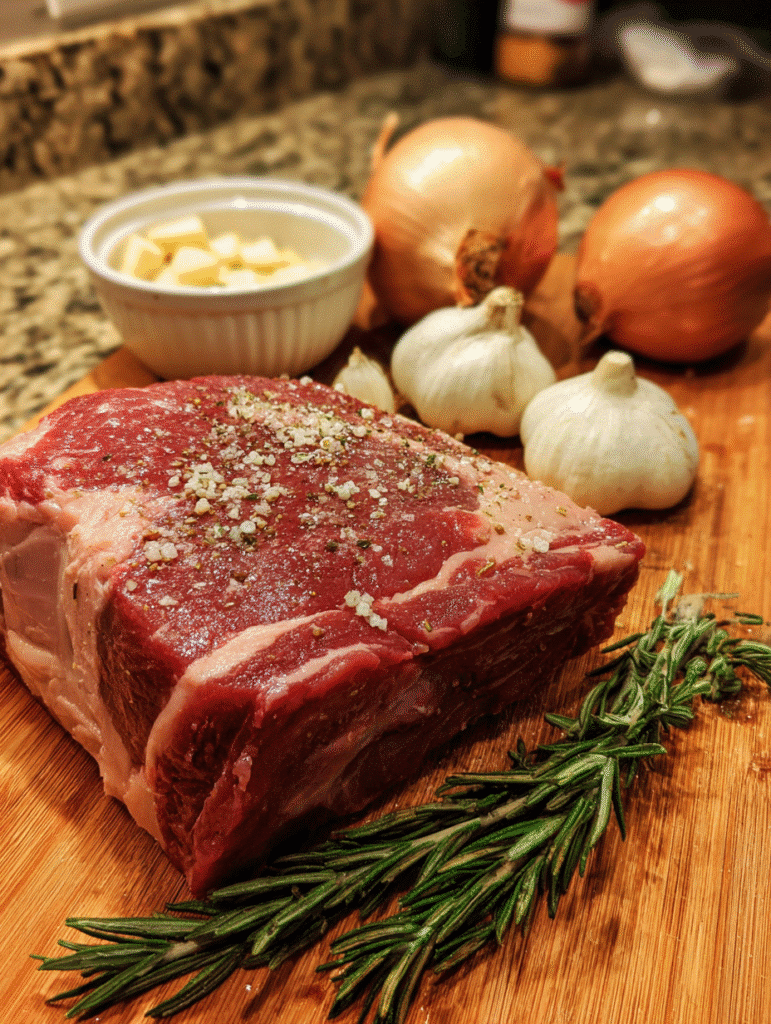
There’s a quiet confidence in mastering a prime rib roast recipe, especially when you go boneless. Without the bones, heat circulates evenly, giving you consistent color from edge to center. It also makes slicing clean and easy, perfect for serving guests or meal prepping leftovers.
When I first switched from bone-in to boneless, I worried it would lose that signature flavor. But the secret is in tying the roast tightly with butcher’s twine, which keeps its shape and locks in juices. A thin rub of butter, garlic, and rosemary transforms the crust into something spectacular, crisp on the outside, buttery inside.
The process mirrors my approach to slow-cooked comfort foods like my Beef Bourguignon, low heat, steady patience, and good seasoning make every bite worth the wait.
Step-by-Step Boneless Prime Rib Roast Recipe
For the perfect boneless prime rib roast recipe, season heavily, roast at 250°F until medium-rare, rest, then sear at 500°F. This two-step method creates a flavorful crust and a tender, evenly cooked center every single time.
Here’s the full method I use every holiday and Sunday dinner:
- Choose a high-quality roast. Look for good marbling, those white streaks mean flavor.
- Pat dry and rub generously with salt, pepper, minced garlic, and herbs.
- Roast at 250°F until internal temperature hits 125°F for medium-rare (use the same temperature chart from Part 2).
- Rest for 20–30 minutes under foil.
- Finish with a 10-minute sear at 500°F. This final blast crisps the crust and melts the surface fat into buttery flavor.
This method guarantees an even cook and a crust that shatters slightly under your knife. It’s the same precision that makes my Beef Stroganoff Recipe so rich, small details add up to big flavor.
Flavor Variations for Boneless Prime Rib Roast
Add smoky depth to your prime rib roast recipe by rubbing it with smoked paprika, garlic powder, and rosemary. For a smoked version, sear the roast briefly, then smoke at 225°F before finishing in the oven.
One of my favorite twists on a prime rib roast recipe is the smoked version. I’ll rub the roast with Dijon mustard, crushed pepper, and a touch of smoked paprika, then smoke it at 225°F for 3–4 hours. After that, I finish it in the oven at 500°F for 10 minutes, it’s pure perfection.
If you’re hosting, the aroma alone will draw everyone to the kitchen. The smoke deepens the beefy flavor while the crust turns into a smoky, savory shell. You can also experiment with a simple horseradish cream sauce or red wine jus, like the one I use in my Beef Stew Recipe.
Tips to Keep Boneless Prime Rib Roast Juicy
Keep your prime rib roast recipe juicy by bringing meat to room temperature before roasting, resting it after cooking, and slicing against the grain. Never cut into the roast too early or you’ll lose its flavorful juices.
Here’s what years of trial and error taught me:
- Let it rest before and after cooking. Cold meat into a hot oven equals uneven cooking.
- Use a thermometer. Internal temperature beats guessing every time.
- Don’t slice too soon. Those 20 resting minutes make or break your roast.
That last step, resting, is non-negotiable. When you wait, the juices that pooled in the center flow back through the meat. It’s the difference between good and unforgettable.
Real-Life Story: My First Boneless Prime Rib Win
The first time I tried a boneless prime rib roast recipe, I nearly cried from relief, it came out tender, pink, and juicy. My guests thought it was from a steakhouse, proof that with patience and a thermometer, anyone can master this dish.
One Christmas, I decided to risk it. No bone, no backup plan, just trust in the process. The smell of garlic and rosemary filled the kitchen. When I sliced through that roast, pink juices ran clear, and my family went quiet.
Then came the sound every cook dreams of: forks hitting plates, happy sighs, and my dad saying, “This might be the best thing you’ve ever made.”
That’s when I knew: a prime rib roast recipe isn’t about perfection, it’s about sharing something you made with care.
Prime Rib Roast Recipe
Equipment
- 1 Roasting Pan With rack for even heat circulation
- 1 Meat Thermometer Digital preferred for accuracy
- 1 Carving Knife Long and sharp for clean slices
- 1 Foil For resting roast
- 1 Small Bowl For mixing herb butter
Ingredients
- 1 5–6 lb Prime rib roast Bone-in or boneless
- 2 tbsp Kosher salt Seasoning base
- 1 tbsp Coarse black pepper Freshly cracked
- 4 cloves Garlic Minced
- 2 tbsp Fresh rosemary Chopped
- 1 tbsp Fresh thyme Optional
- 2 tbsp Unsalted butter Softened
- 1 tbsp Dijon mustard Adds depth optional
- — — Olive oil For light coating

Instructions
- 1 Preheat oven to 250°F. Let the roast sit at room temperature for 1 hour.
- 2 Pat dry and rub with olive oil, salt, pepper, garlic, rosemary, and thyme.
- 3 Place roast fat side up on a rack in a roasting pan. Insert meat thermometer.
- 4 Roast until internal temperature reaches 125°F for medium-rare (about 2½ hours).
- 5 Remove from oven and tent with foil. Rest 20–30 minutes.
- 6 Increase oven to 500°F and roast for 10 minutes for a crisp crust.
- 7 Slice against the grain and serve with horseradish cream or au jus.
Notes
Nutrition
Prime Rib Roast Recipe Mistakes to Avoid (and How to Fix Them)
Common Prime Rib Roast Recipe Mistakes
Avoid these prime rib roast recipe mistakes, over-seasoning, cutting too soon, skipping the thermometer, or using high heat too early. Gentle roasting and proper resting make the difference between dry disappointment and buttery, restaurant-quality beef every time.
Even the most confident cooks have stumbled on a prime rib roast recipe. I sure did. My first attempt came out dry, gray, and overdone. I’d cranked the oven too high, thinking it would sear faster, it didn’t. It just ruined a beautiful cut of meat.
Here’s what I’ve learned since:
- Don’t rush preheating. Start slow at 250°F to allow fat to melt evenly.
- Never skip the thermometer. Guesswork equals heartbreak. Pull at 125°F for medium-rare perfection.
- Avoid oversalting early. Season the night before or at least one hour ahead so the salt penetrates without drawing out moisture.
- Rest the roast. A prime rib roast recipe needs at least 20 minutes under foil before slicing. This step turns good into unforgettable.
A Real Home Cook’s Experience
After years of trial and error, home cook Hannah S. shared how Paula’s prime rib roast recipe turned her holiday dinner into a family tradition, proving that patience, precision, and simple ingredients truly pay off.
Last December, one of my readers, Hannah from Denver, messaged me:
“Paula, your prime rib roast recipe saved Christmas dinner. I followed every step, used a thermometer for once, and it came out juicy and pink. My mom thought I’d ordered catering!”
That’s the power of doing it right. A little guidance, a few key tools, and confidence can turn any cook into a weekend legend. Whether you’re hosting friends or cooking for two, the secret isn’t fancy ingredients, it’s patience and respect for the process.
If your roast doesn’t come out perfect the first time, don’t panic. Every great cook learns by burning, guessing, and trying again. Trust the method, trust the temperature, and you’ll master the prime rib roast recipe every time.
The Perfect Prime Rib Roast Recipe Seasonings and Flavor Add-Ons
How to Season a Prime Rib Roast Recipe for Maximum Flavor
The best prime rib roast recipe seasoning combines salt, pepper, garlic, and herbs like rosemary and thyme. Season at least one hour—or ideally overnight—for deep flavor penetration, and add a touch of butter before roasting for that signature golden crust.
Seasoning is where your prime rib roast recipe truly comes alive. I always say, “Salt early, trust your herbs, and let time do its thing.” For me, the perfect blend is a mix of kosher salt, coarse black pepper, crushed garlic, fresh rosemary, and a hint of thyme. Sometimes I whisk in a tablespoon of Dijon mustard for a little tang, it builds a savory crust that makes every slice sing.
Let your roast sit uncovered in the fridge overnight after seasoning. This dry-brine step draws moisture to the surface, creating that crisp, flavorful bark once roasted. And right before it goes into the oven, I rub it down with softened butter, it bastes itself as it cooks, adding a glossy, irresistible finish.
Prime Rib Roast Recipe Flavor Variations
Add variety to your prime rib roast recipe with rubs and marinades, try smoked paprika for depth, espresso powder for boldness, or balsamic glaze for sweetness. Each option enhances the natural richness of the beef.
Here’s my go-to flavor chart for inspiration:
| Flavor Style | Key Ingredients | Taste Profile |
|---|---|---|
| Classic Herb | Rosemary, garlic, butter | Traditional & aromatic |
| Smoky BBQ | Smoked paprika, brown sugar | Deep, caramelized flavor |
| Bold Espresso | Espresso powder, chili flakes | Savory & earthy |
| Wine-Infused | Red wine reduction, thyme | Rich & balanced |
These tweaks keep the prime rib roast recipe exciting every time you make it. If you love complex layers, pair it with a red wine gravy like the sauce I use in my Beef Bourguignon.
Serving, Sides & Sauces for Prime Rib Roast Recipe
How to Serve a Prime Rib Roast Recipe Like a Pro
To serve a prime rib roast recipe beautifully, slice against the grain in thick, even portions. Pair it with flavorful sauces and balanced sides that complement its richness, think roasted vegetables, buttery potatoes, and a light, tangy horseradish cream.
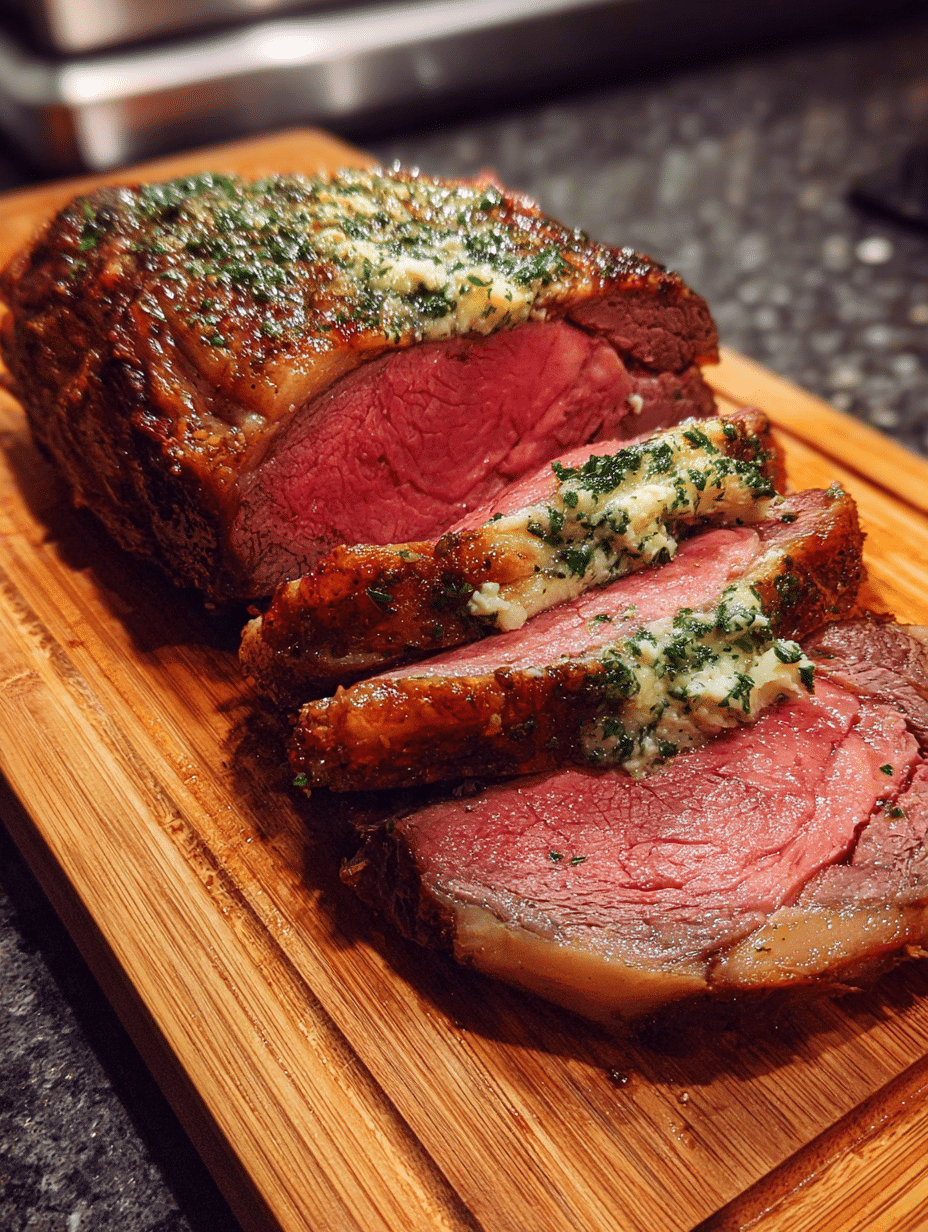
Once your prime rib roast recipe is rested and ready, the moment of truth begins. I like to carve mine at the table, it’s half performance, half tradition. Slice thickly, against the grain, using a long, sharp knife. Each piece should show that perfect gradient: a crisp crust leading into tender, pink perfection.
The key to a memorable meal isn’t just the meat, it’s the balance. That deep, beefy richness needs contrast. I always serve mine with roasted carrots and garlic mashed potatoes. For a cozier twist, try my Beef Stew Slow Cooker vegetables on the side, they soak up the roast’s juices like they were made for it.
Best Sauces for a Prime Rib Roast Recipe
Pair your prime rib roast recipe with sauces that cut through its richness. Horseradish cream adds tang, au jus highlights natural drippings, and red wine gravy deepens flavor. Each brings balance and elegance to your roast.
Here are my go-to sauce pairings for prime rib:
| Sauce | Flavor Profile | When to Use |
|---|---|---|
| Horseradish Cream | Cool, tangy, refreshing | Cuts through fat and balances richness |
| Au Jus | Light, beefy, natural | Everyday serving, uses pan drippings for pure flavor |
| Garlic Herb Butter | Luxurious, rich | Ideal for smoky or dry-roasted versions |
I love making a simple pan jus from the drippings, just deglaze the pan with beef stock and a splash of wine, whisk, and you’ve got gold.
Pro Serving Tip
Don’t forget presentation. Warm your plates before serving the prime rib roast recipe. A cold plate can dull all your effort. I also like to garnish with fresh herbs, it makes the meal feel intentional, even if it’s a Tuesday night feast.
FAQ: Prime Rib Roast Recipe Questions Answered
How do you cook a prime rib in the oven?
To cook a prime rib roast recipe in the oven, season the meat, then roast it at 250°F until the internal temperature reaches 125°F for medium-rare. Let it rest for 20–30 minutes before slicing. Finish with a 10-minute sear at 500°F for a perfect crust and juicy center.
How do you cook a boneless rib roast?
For a boneless prime rib roast recipe, roast at 250°F until the internal temperature reaches 125°F for medium-rare. Tie the roast with butcher’s twine to hold its shape, then rest it before a high-heat sear at 500°F. This method creates even cooking, tender texture, and a beautifully caramelized crust every time.
What is a prime rib roast?
A prime rib roast is a tender, marbled cut from the beef’s rib section, prized for its buttery flavor and rich texture. Often called a standing rib roast, it can be cooked bone-in or boneless. Slow-roasting brings out its natural juiciness and creates that classic steakhouse-style crust.
What’s the best temperature to cook prime rib roast?
The best temperature for a prime rib roast recipe is a slow 250°F oven roast for even cooking. For rare, remove at 115°F; for medium-rare, 125°F; and for medium, 130°F. Always rest the meat before carving, this redistributes juices for the most tender and flavorful results.
How long does it take to cook prime rib per pound?
Plan about 30 minutes per pound when roasting a prime rib roast recipe at 250°F. For example, a 5-pound roast takes roughly 2.5 hours to reach 125°F internal temperature. Always rely on a meat thermometer instead of time alone, since oven accuracy and roast size can vary significantly.
How do you reheat leftover prime rib roast without drying it out?
To reheat leftover prime rib roast recipe without losing moisture, wrap slices in foil with a spoonful of broth or drippings. Warm in a 250°F oven for 10–15 minutes. Avoid microwaving, which dries the meat. This gentle reheating keeps the beef tender and preserves its rich, original flavor.